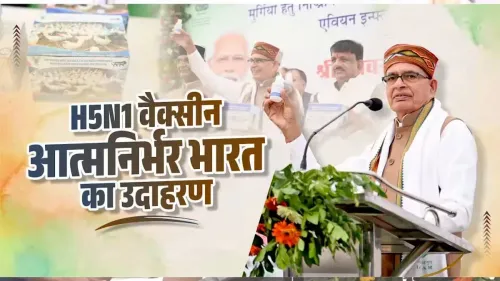
Shivraj Singh Chouhan hails scientists behind India's first indigenous bird flu vaccine
Synopsis
Union Agriculture Minister Shivraj Singh Chouhan has hailed the scientists behind India's first indigenous bird flu vaccine, crediting months of uninterrupted research. The development marks a significant push toward self-reliance in animal health and could protect India's vast poultry sector from economically devastating avian influenza outbreaks.
Key Takeaways
Union Agriculture Minister Shivraj Singh Chouhan publicly praised the scientists who developed India's first indigenous bird flu vaccine on November 20, 2026 .
The minister described the effort as months of continuous work without holidays, comparing the scientists' dedication to that of a soldier.
The vaccine, tagged #SwadeshiVaccine , aligns with the Atmanirbhar Bharat framework of reducing dependence on imported solutions.
Avian influenza has caused repeated outbreaks across Indian poultry states, making a domestic vaccine a strategic priority for the Agriculture Ministry.
Regulatory approvals, field trials, and commercial rollout to affected states remain the critical next steps before the vaccine benefits farmers.
Months of sleepless nights, zero holidays, and round-the-clock research — that is what Union Agriculture Minister Shivraj Singh Chouhan says stands behind India's first indigenously developed bird flu vaccine, a milestone he celebrated on Friday, November 20, 2026.
Chouhan posted a tribute in Hindi, writing: 'Bharat ki pehli swadeshi bird flu vaccine ke peeche hamare vaigyanikon ki kai mahino ki mehnat, sadhana aur tapasya hai' — 'Behind India's first indigenous bird flu vaccine lies the months of hard work, dedication, and penance of our scientists.' He added that the researchers had shown the devotion of a soldier, working day and night without taking a single leave, under the hashtag #SwadeshiVaccine.
Why a homegrown avian flu vaccine matters for Indian poultry
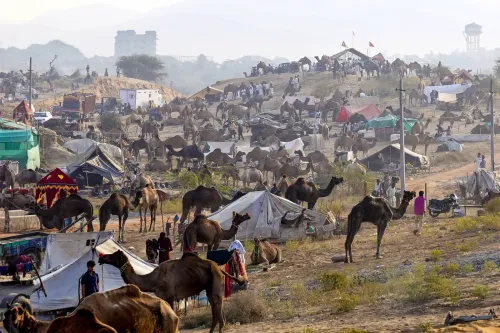
Avian influenza — bird flu — has triggered periodic, economically devastating outbreaks across Indian poultry belts, from Maharashtra and Kerala to Himachal Pradesh and West Bengal. Each outbreak forces mass cullings and hammers livelihoods for millions of small-scale poultry farmers who operate on razor-thin margins. Until now, India's response has largely depended on imported diagnostic tools and control measures, with no domestic vaccine in the arsenal.
An indigenous vaccine changes that equation. It could cut procurement costs, enable faster stockpiling, and give India sovereign control over supply in a crisis — the same logic that drove the Atmanirbhar Bharat framework into the human health space, most visibly with Covaxin in 2021. The same philosophy is now extending to animal health.
ICAR's role and the road to farmers' fields
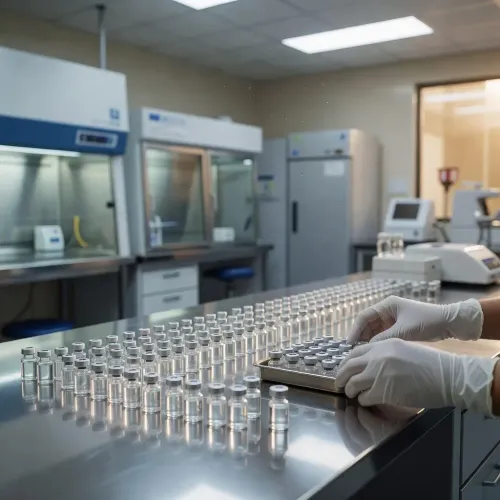
Institutes under the Indian Council of Agricultural Research (ICAR) have long worked on avian disease management, and domestic scientific capacity in this area has been a stated priority for the Agriculture Ministry. Chouhan's tribute to scientists working without breaks signals that this vaccine is the product of an intensive, sustained push — not a routine laboratory exercise.
The critical next steps are regulatory clearances, robust field trials across geographically diverse poultry zones, and a commercial rollout plan that can actually reach smallholder farmers in affected states. How quickly those hurdles are cleared will determine whether this achievement translates from a laboratory milestone into real protection on the ground.
India's poultry sector — worth hundreds of billions of rupees and employing millions — deserves nothing less than a fast follow-through.
Point of View
Reinforcing the Atmanirbhar Bharat brand in agriculture. The timing also matters: with periodic bird flu scares battering poultry farmers, any credible domestic vaccine is both a welfare win and a political asset in rural constituencies. The real test, however, lies in regulatory speed and equitable rollout — two areas where India's animal-health infrastructure has historically lagged behind ambition.
NationPress
20 Nov 2026
Frequently Asked Questions
What is India's first indigenous bird flu vaccine?
It is a domestically developed avian influenza vaccine created by Indian scientists, hailed by Agriculture Minister Shivraj Singh Chouhan in November 2026 as a milestone in self-reliant animal health.
Why is a swadeshi bird flu vaccine important for India?
India's poultry sector has suffered repeated avian influenza outbreaks that force mass cullings and hurt millions of smallholder farmers. An indigenous vaccine would reduce import dependence, lower costs, and give India sovereign control over emergency supplies.
Which ministry or institution developed the bird flu vaccine in India?
The specific institute has not been officially confirmed in public records, but institutes under the Indian Council of Agricultural Research have been central to avian disease research in India.
What happens next after India develops the bird flu vaccine?
Regulatory clearances, field trials across diverse poultry zones, and a commercial rollout plan are the key steps before the vaccine can be deployed to farmers in bird-flu-affected states.
What is the Atmanirbhar Bharat connection to this vaccine?
Atmanirbhar Bharat is India's self-reliance policy framework; the bird flu vaccine is part of its extension into animal health, mirroring the domestic human vaccine push that produced Covaxin in 2021.