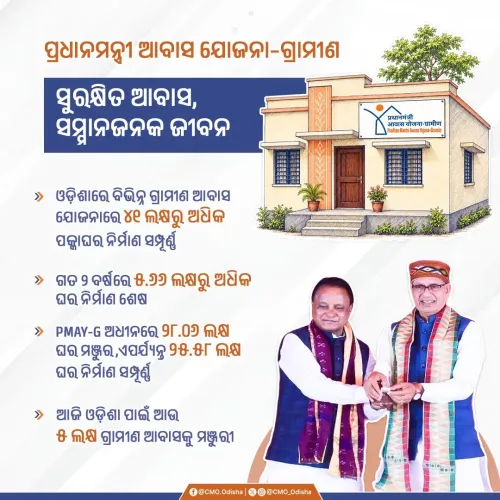
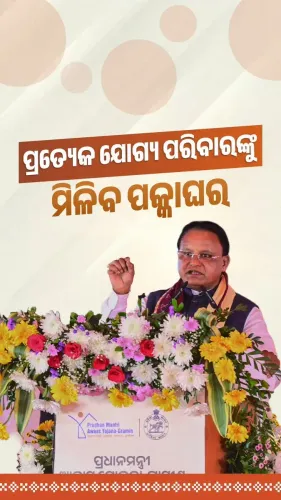
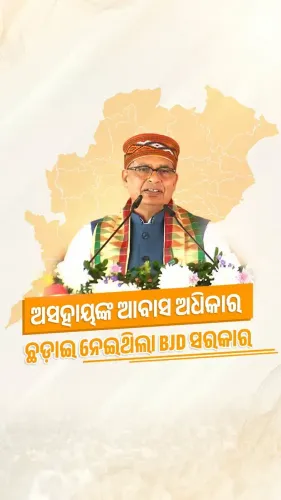
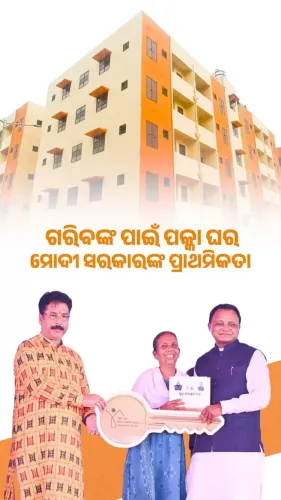
Odisha CMO Highlights PMAY-G Push for Rural Pucca Homes
Synopsis
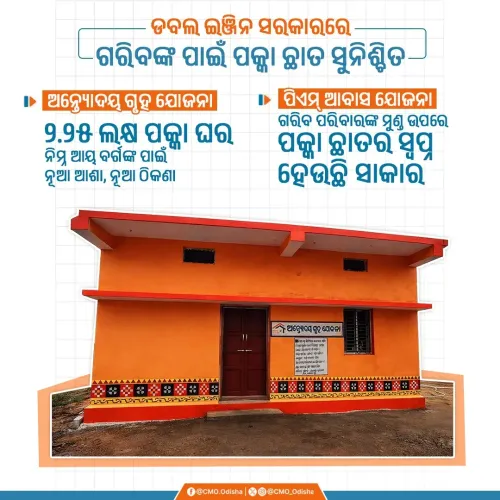
The Chief Minister's Office of Odisha amplified the Pradhan Mantri Awas Yojana (Gramin) on 14 November 2026, highlighting the scheme's bundled delivery of pucca homes, toilets, tap water, LPG connections and electricity to eligible rural families under PM Modi's leadership.
Key Takeaways
The Chief Minister's Office of Odisha posted on 14 November 2026 spotlighting PMAY-G .
Pradhan Mantri Awas Yojana (Gramin) was operationalised in 2016 as the rural component of the Housing for All mission.
The scheme bundles pucca house construction with toilets, tap water, LPG connections and electricity for eligible families.
Complementary programmes include Swachh Bharat Mission (2014) for sanitation and Ujjwala Yojana (2016) for cooking gas.
Odisha's official amplification reflects cooperative federal implementation of central welfare schemes at the state level.
A roof over every head — and a dignified life beneath it. The Chief Minister's Office of Odisha on Saturday, 14 November 2026 spotlighted the Pradhan Mantri Awas Yojana (Gramin), framing the central rural housing scheme as a comprehensive uplift mission that goes well beyond four walls and a ceiling.
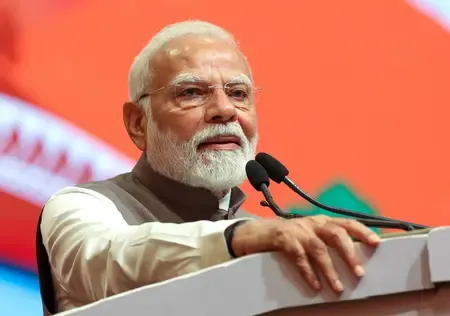
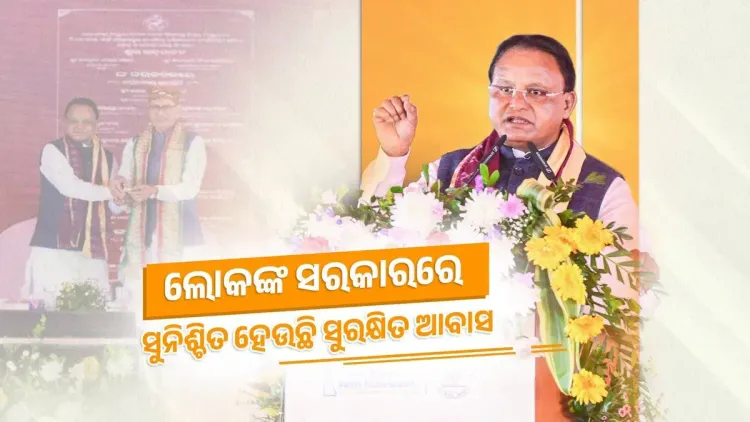
The post, shared in both Odia and English, credited Prime Minister Narendra Modi's 'visionary leadership' for ensuring that every eligible rural family receives a pucca house alongside a suite of essential amenities. The official message stated: 'The People's Government is committed to improving living standards by providing essential facilities like toilets, tap water, LPG connections and electricity.'
What PMAY-G Actually Delivers — and Why the Bundle Matters
Pradhan Mantri Awas Yojana (Gramin) was launched in 2016 as the rural arm of the broader Housing for All mission announced in 2015. The scheme provides direct financial assistance to below-poverty-line households to construct permanent, weather-proof homes. What distinguishes its current form is convergence: beneficiaries are simultaneously enrolled in Swachh Bharat Mission for toilet construction and Ujjwala Yojana for LPG connections — schemes introduced in 2014 and 2016 respectively — turning a single housing transfer into a multi-utility intervention.
The logic is straightforward: a pucca house without running water or sanitation still leaves a family exposed to disease and indignity. Bundling tap water, electricity, cooking gas and toilets into the same delivery chain is the policy architecture that successive Union governments have pursued since 2014 to close that gap.
Odisha's Role in a Federal Implementation Chain
Odisha is among the states that regularly amplify central welfare schemes through official channels — a pattern of cooperative federal implementation where state governments translate Union programme messaging for local audiences. The CMO's post is consistent with that practice, signalling active state-level ownership of PMAY-G delivery to rural households across the state.
The Odia-language portion of the post reinforced the same message for a vernacular audience, underlining the scheme's reach into communities where English-language government communication rarely lands.
With rural housing saturation remaining a live policy benchmark, the pressure on states to report completion numbers — and close the gap between sanctioned and constructed homes — will only intensify. Odisha's public reaffirmation of commitment is, in that sense, also a signal of accountability.
Point of View
Water, energy), the messaging aligns with the Union government's 'saturation' framing, which aims to close last-mile gaps rather than merely count sanctioned units. For Odisha, a state with significant rural poverty, publicly owning PMAY-G delivery is also a hedge against accountability pressure if completion targets slip. The broader pattern suggests welfare scheme communication has become as important a governance tool as the scheme itself.
NationPress
14 Nov 2026
Frequently Asked Questions
What is Pradhan Mantri Awas Yojana Gramin (PMAY-G)?
PMAY-G is the rural component of India's Housing for All mission, launched in 2016, that provides financial assistance to below-poverty-line families to build permanent pucca homes along with access to toilets, tap water, LPG and electricity.
Who is eligible for PMAY-G in Odisha?
Eligible beneficiaries are rural households identified as below the poverty line or in specific vulnerable categories under the Socio-Economic Caste Census, subject to central and state government verification norms.
What facilities come with a PMAY-G house?
Under the convergence model, PMAY-G beneficiaries are also enrolled in Swachh Bharat Mission for toilets, Jal Jeevan Mission for tap water, Ujjwala Yojana for LPG connections, and Saubhagya scheme for electricity.
When was PMAY-G launched and by whom?
PMAY-G was operationalised in 2016 under the Narendra Modi-led Union government as the rural arm of the broader Pradhan Mantri Awas Yojana announced in 2015.
Why is Odisha CMO promoting a central government scheme?
State governments routinely amplify centrally-funded schemes on official channels as part of cooperative federal implementation, signalling active ownership of delivery and communicating programme benefits to local audiences.