Odisha Heatwave: CM's Grievance Hearing Postponed as Temps Hit 43.8°C
Synopsis
Odisha's brutal heatwave — with Jharsuguda hitting 43.8°C — has forced the postponement of CM Mohan Charan Majhi's public grievance hearing, early school closures, and suspension of census work. Western Odisha's industrial belt is bearing the worst of the heat, exposing governance vulnerabilities and rising climate risks.
Key Takeaways
Odisha's CM public grievance hearing , scheduled for Monday, April 28 , has been postponed due to severe heatwave conditions across the state.
Jharsuguda recorded Odisha's highest temperature at 43.8°C at 2:30 PM on Sunday, April 27, 2025.
The GA&PG Department confirmed that pre-registered applicants do not need to re-register ; the new date will be announced via newspapers.
CM Mohan Charan Majhi declared early summer vacation for all schools in Odisha starting April 27 .
The state government has halted census enumeration work between 11 AM and 3 PM to protect field enumerators from heatstroke.
IMD Bhubaneswar predicts a temperature drop of 2 to 4°C in Odisha after the next two to three days, with no major relief expected immediately.
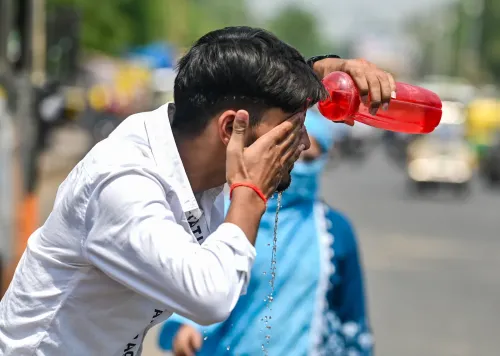
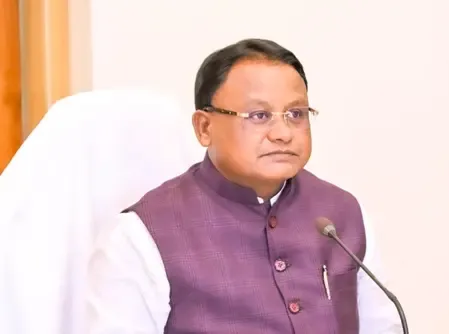
Bhubaneswar, April 27 (NationPress) — A brutal heatwave sweeping across Odisha has forced the state government to postpone the Chief Minister's public grievance hearing, originally scheduled for Monday, April 28. The General Administration and Public Grievance (GA&PG) Department confirmed the decision on Sunday, citing dangerous temperature levels that have paralysed normal life across the state. This is among the most visible administrative disruptions caused by the ongoing heat emergency in eastern India.
Official Announcement and Relief for Registered Applicants
The GA&PG Department of Odisha issued an official statement on Sunday, April 27, notifying citizens about the rescheduling of the grievance programme. Importantly, the department clarified that applicants who had already registered online to meet Chief Minister Mohan Charan Majhi in person at the grievance cell do not need to re-register.
Those who had registered online to meet the Chief Minister on the said date need not register again for the next grievance hearing. The date of the next grievance hearing in Bhubaneswar will be communicated to them through newspapers, the department stated.
This assurance is significant for rural and semi-urban applicants who often travel long distances and navigate complex online systems to access the grievance mechanism — a process that can be daunting for first-time users.
Temperature Records: Jharsuguda Tops the Heat Chart
Jharsuguda, one of Odisha's major industrial hubs, recorded the state's highest daytime temperature at 43.8 degrees Celsius at 2:30 PM on Sunday. The city has consistently topped temperature charts across the ongoing heatwave period, reflecting the intense thermal stress in western Odisha's industrial belt.
Other cities recorded alarming figures: Sambalpur at 42.8°C, Rourkela at 42.6°C, and Hirakud at 42.4°C. Even the state capital, Bhubaneswar, registered 34.4°C, while Keonjhar hit 39.6°C, Chandbali recorded 36.4°C, and Balasore stood at 34.8°C at the same time.
The pattern reveals a stark west-east temperature gradient — with western and central Odisha bearing the brunt of the extreme heat, regions that also happen to be home to large migrant labour populations working in mines, smelters, and power plants.
IMD Forecast and Expected Relief
The India Meteorological Department (IMD), Bhubaneswar has forecast that maximum temperatures will remain largely unchanged over the next two to three days. However, the department predicts a drop of 2 to 4 degrees Celsius thereafter across Odisha's districts, offering a window of relief to the heat-battered population.
Meteorologists note that such prolonged high-temperature spells in April — before the monsoon arrives — are becoming increasingly common in Odisha, raising questions about long-term climate adaptation strategies for the state.
Government Response: Schools Shut, Census Halted
The Odisha government has taken several emergency measures in response to the escalating heatwave. Chief Minister Mohan Charan Majhi announced on Friday, April 25, that schools across the state would observe early summer vacation starting April 27, shielding millions of children from dangerous outdoor exposure.
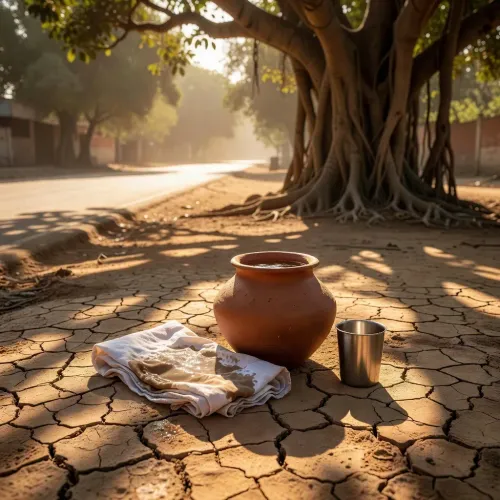
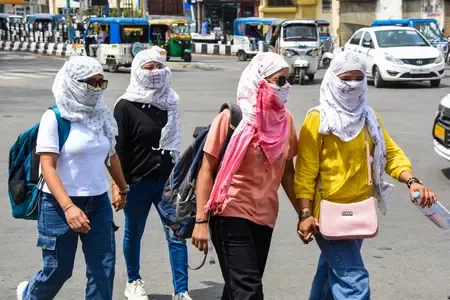
Additionally, the state has suspended census enumeration work between 11 AM and 3 PM daily, protecting field enumerators from heatstroke risk during peak temperature hours. Roads across urban and rural Odisha have been largely deserted after 11 AM, with residents staying indoors to avoid heat exposure.
These measures reflect a broader administrative acknowledgement that the heatwave is not merely a meteorological event but a public health emergency — one that demands proactive governance rather than reactive crisis management.
Broader Context: A Pattern of Escalating Heat Emergencies
This is not the first time that extreme heat has disrupted governance and daily life in Odisha. The state has historically ranked among India's most heatwave-prone regions, with the National Disaster Management Authority (NDMA) identifying it as a high-risk zone. However, the frequency and intensity of such events appear to be increasing year on year, consistent with broader climate change projections for the Indian subcontinent.
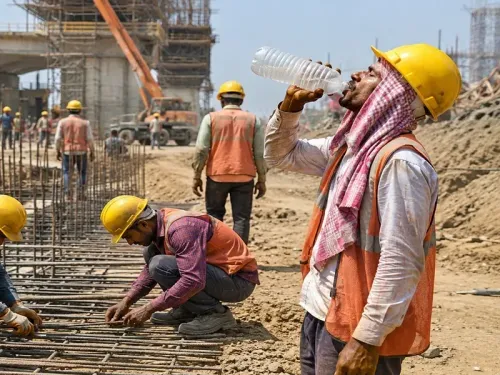
Notably, the regions recording the highest temperatures — Jharsuguda, Sambalpur, Rourkela — are also among Odisha's most economically active industrial zones. The human cost of sustained heatwaves in these areas, particularly on informal and contractual workers, often goes undocumented in official data.
As Odisha awaits a temperature drop and the rescheduling of the CM's grievance hearing, citizens and administrators alike are watching the IMD forecast closely. The next grievance hearing date will be communicated via newspapers, and affected applicants are advised to stay updated through official channels.
Point of View
It signals something far deeper than an administrative inconvenience — it reveals how climate change is now directly disrupting democratic access. Odisha's western industrial belt, where temperatures routinely breach 43°C, is home to India's most economically vulnerable workers, yet their heat-related suffering rarely makes national headlines. The government's reactive measures — shutting schools, halting census work, rescheduling hearings — are welcome, but they underscore the absence of a proactive, long-term heatwave resilience framework. As extreme heat events grow more frequent, Odisha's governance model must evolve from crisis response to climate-adaptive administration.
NationPress
29 Sept 2026
Frequently Asked Questions
Why was the Odisha CM's public grievance hearing postponed?
The Odisha CM's public grievance hearing , scheduled for Monday, April 28 , was postponed due to severe heatwave conditions across the state, with temperatures exceeding 40°C in multiple districts. The GA&PG Department made the official announcement on Sunday, April 27.
Do applicants need to re-register for the next CM grievance hearing in Odisha?
No. The GA&PG Department of Odisha confirmed that citizens who had already registered online for the postponed hearing do not need to register again . The new date will be communicated through newspapers.
Which city recorded the highest temperature in Odisha during the April 2025 heatwave?
Jharsuguda recorded the highest temperature in Odisha at 43.8 degrees Celsius at 2:30 PM on Sunday, April 27, 2025. It was followed by Sambalpur at 42.8°C and Rourkela at 42.6°C .
What measures has the Odisha government taken to address the heatwave?
The Odisha government has announced early summer vacation for schools from April 27 , suspended census work between 11 AM and 3 PM , and postponed the CM's public grievance hearing. These steps aim to protect students, field workers, and citizens from heatstroke.
When will temperatures drop in Odisha according to IMD?
The India Meteorological Department (IMD), Bhubaneswar has forecast that maximum temperatures will remain high for the next two to three days , after which a drop of 2 to 4 degrees Celsius is expected across Odisha's districts.