Odisha forms SEBC commission to study panchayat, ULB representation
Synopsis
Odisha has constituted a judicial commission under retired High Court judge Justice Pramath Patnaik to empirically study SEBC representation in panchayats and urban local bodies — a prerequisite the Supreme Court has insisted on before states can implement OBC/SEBC quotas in local elections. The findings could reshape grassroots political reservation across the state.
Key Takeaways
The Odisha government constituted an SEBC commission on 7 October 2026 to study political representation in panchayats and urban local bodies (ULBs) .
The commission is headed by retired Orissa High Court judge Justice Pramath Patnaik .
Retired IAS officer Bijay Kumar Prusty is a member; Special Secretary Sujata Mishra is Member-Secretary.
The panel will assess SEBC population share, political representation, and the nature of political backwardness in local bodies.
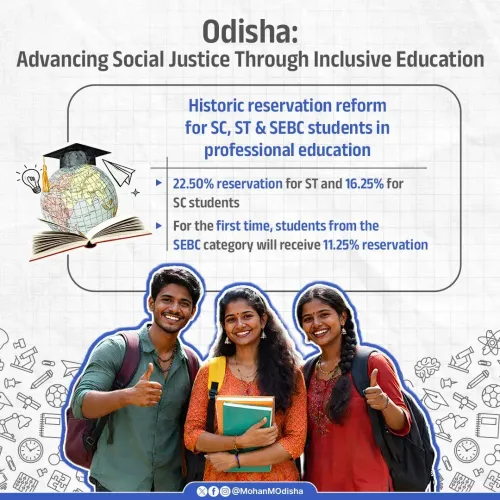
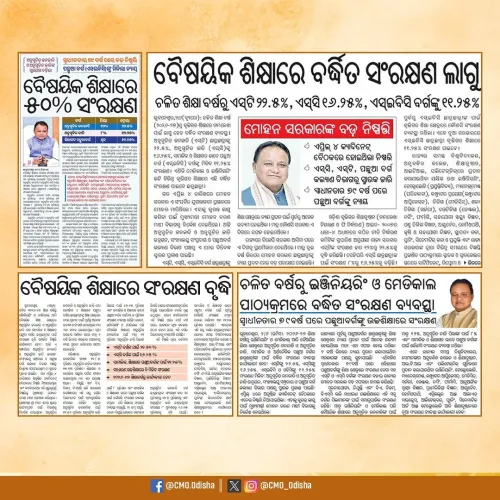
Odisha had earlier reserved 11.25 per cent seats for SEBC students in professional institutions including engineering and medical colleges.
Commission findings will inform the state government's decisions on reservation provisions for SEBCs in local self-government elections.
The Odisha government on Wednesday, 7 October 2026, constituted a dedicated commission to study the political representation of Socially and Educationally Backward Classes (SEBCs) in local self-government institutions across the state, covering both panchayats and urban local bodies (ULBs). The move, initiated on the direction of Chief Minister Mohan Charan Majhi, is aimed at assessing the extent of political backwardness among SEBCs and informing future reservation provisions.
Commission Composition and Mandate
Retired Orissa High Court judge Justice Pramath Patnaik has been appointed Chairman of the commission. Retired IAS officer Bijay Kumar Prusty will serve as a member, and Special Secretary Sujata Mishra of the ST and SC Development, Minorities and Backward Classes Welfare Department will function as Member-Secretary. The department issued a formal notification on the same day.
The commission's terms of reference include studying the proportion of SEBCs in rural and urban local bodies relative to the total population, examining their actual political representation, and assessing the nature and implications of their political backwardness in these institutions.
What the Study Will Cover
According to the Chief Minister's Office (CMO), the commission will conduct a state-wide survey of local self-government institutions. Its findings are expected to provide the government with a data-driven basis for making 'appropriate provisions' to ensure adequate representation and safeguard the rights of SEBCs at the grassroots level.
'Through this, appropriate provisions can be made regarding the adequate representation and rights of the socially and educationally backward classes of the state in local self-government institutions,' the CMO said in its statement.
Background and Policy Context
This is not the first policy step the state has taken for the SEBC community. The Odisha government had earlier reserved 11.25 per cent seats for SEBC students in professional higher educational institutions, including engineering and medical colleges. The commission constituted on Wednesday represents an extension of this broader push to address backwardness across education and political participation.
Notably, the Supreme Court has, in a series of landmark rulings, made it mandatory for states to conduct an empirical inquiry into the political backwardness of OBCs and SEBCs before implementing or restoring reservations in local body elections. Odisha's commission appears to be a direct response to this judicial framework, though the government has not explicitly cited any specific court direction in its statement.
Impact on Local Body Elections
Odisha's panchayat and urban local body elections are held periodically, and any reservation adjustments informed by the commission's findings could significantly alter the political landscape at the grassroots level. Communities falling under the SEBC bracket — which includes several intermediate caste groups not covered under Scheduled Castes or Scheduled Tribes — have historically argued that their representation in elected local bodies does not reflect their population share.
The commission's recommendations, once submitted, will be reviewed by the state government before any legislative or executive action is taken on reservation provisions.
Point of View
Not a discretionary one — the Supreme Court has repeatedly struck down OBC and SEBC reservations in local bodies where states failed to produce empirical data on political backwardness. Odisha is now doing what the law demands, but the real test will be how quickly the commission reports and whether the government acts on it before the next cycle of local body elections. With Chief Minister Majhi positioning himself as an advocate for backward communities, the political optics are clear; the harder question is whether the eventual reservation design will survive judicial scrutiny, given the triple-test standard the court applies.
NationPress
8 Oct 2026
Frequently Asked Questions
Why has the Odisha government formed an SEBC commission?
The Odisha government constituted the commission on 7 October 2026 to empirically study the political representation of Socially and Educationally Backward Classes (SEBCs) in panchayats and urban local bodies. The exercise is aimed at providing a factual basis for making reservation provisions for SEBCs in local self-government elections, in line with Supreme Court directives on OBC and SEBC quotas.
Who heads the Odisha SEBC commission?
Retired Orissa High Court judge Justice Pramath Patnaik has been appointed Chairman of the commission. Retired IAS officer Bijay Kumar Prusty is a member, and Special Secretary Sujata Mishra of the ST and SC Development, Minorities and Backward Classes Welfare Department serves as Member-Secretary.
What will the SEBC commission study?
The commission will examine the proportion of SEBCs in rural and urban local bodies relative to the total population, assess their actual political representation, and evaluate the nature and extent of their political backwardness. Its findings will guide the state government on appropriate reservation provisions.
What is Odisha's existing policy on SEBC reservation?
The Odisha government had previously reserved 11.25 per cent seats for SEBC students in professional higher educational institutions, including engineering and medical colleges. The new commission extends the government's focus on SEBCs to the political domain, specifically local body elections.
How will the commission's findings affect panchayat and ULB elections in Odisha?
Once the commission submits its report, the state government will use its findings to determine reservation provisions for SEBCs in panchayat and urban local body elections. Any changes to reservation could significantly alter the composition of elected local bodies across the state.