Arjun Ram Meghwal: Opposition agreed to 2-day wait, then fled debate
Synopsis
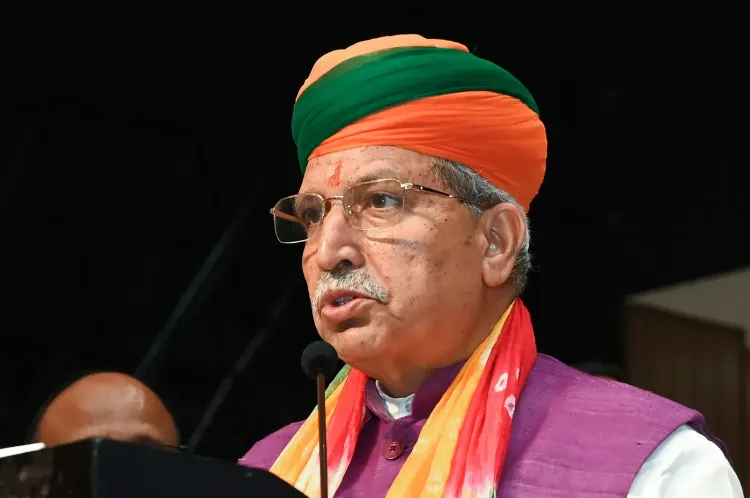
Union Minister Arjun Ram Meghwal has gone on the record with a pointed accusation: the Opposition agreed to a structured debate schedule before the Monsoon Session, then broke it repeatedly — shifting from NEET to lathi-charge to Ram Mandir donations — and ultimately fled the discussion. His direct naming of Rahul Gandhi as the architect of the disruption strategy sharpens what was already a fractious session into a personal accountability charge.
Key Takeaways
Arjun Ram Meghwal accused the Opposition of agreeing to a 2-day waiting period before a NEET debate on the third day, then refusing to participate when the slot was offered.
The Opposition reportedly shifted demands from NEET to the lathi-charge on students and then to the Ayodhya Ram Mandir donation issue, according to Meghwal.
Home Minister Amit Shah publicly offered to begin debate at 3 pm and remain in the House for an extended session — an offer the Opposition did not accept, Meghwal said.
Meghwal directly attributed the disruption strategy to Rahul Gandhi , calling it 'a direct indication' from the Congress leader.
Nadda condemned the alleged attack on Congress president Mallikarjun Kharge , distancing the party from the incident.
Two judiciary-related Bills — on increasing Supreme Court judges and reforming tribunals — were passed by the Law and Justice Ministry during the session.
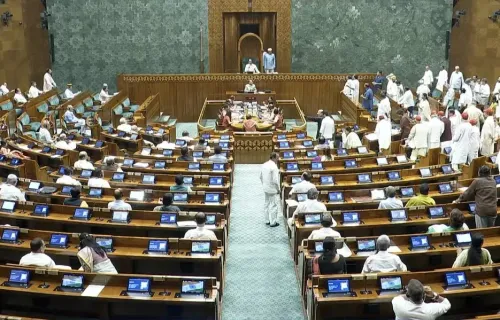
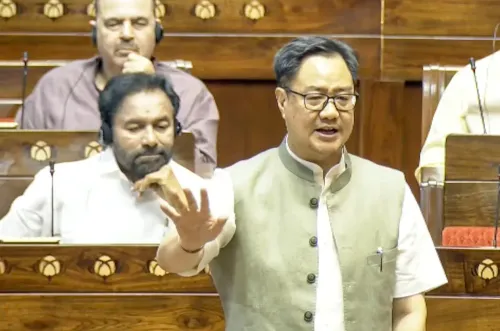
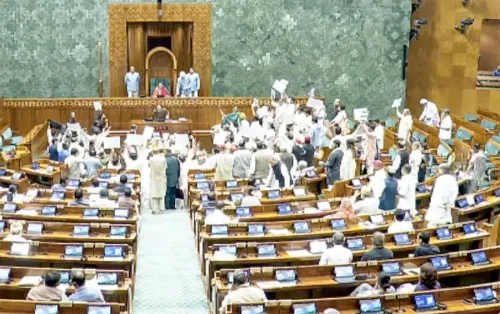
Union Minister of State for Law and Justice Arjun Ram Meghwal has squarely blamed the Opposition for the repeated disruptions during the Monsoon Session of Parliament, alleging that they deliberately avoided debate, shifted demands repeatedly, and ultimately chose to 'tell lies and run away' rather than engage substantively. Meghwal's remarks came in an interview on 14 August, ahead of Independence Day.
The Pre-Session Agreement That Fell Apart
According to Meghwal, an all-party floor leaders' meeting was held on the 19th — before the Monsoon Session commenced — where the Opposition's primary demand was that a discussion on the NEET paper leak be taken up first. They reportedly agreed to let the House function for two days, with the discussion scheduled on the third day.
'On the third day, as you must have seen, it did not run,' Meghwal said. The disruptions continued through the fourth and fifth days as well, he added. During this period, a significant Bill targeting paper leakers across states — aimed at making the offence more stringent and increasing punishment — was taken up and passed in both Lok Sabha and Rajya Sabha.
Shifting Goalposts and Missed Openings
Meghwal alleged that as soon as the paper leak Bill was discussed, the Opposition pivoted its demands. 'They said, "No, we want to discuss the lathi-charge on students,"' he said, adding that the Samajwadi Party (SP) separately sought a discussion on the Ayodhya Ram Mandir donation controversy.
He said the government made multiple attempts to facilitate debate. The Speaker intervened inside the House. Home Minister Amit Shah issued a public statement offering to sit in the House for an extended session and begin discussion at 3 pm. 'He said, "Start the discussion at 3 o'clock. I am ready to give a reply at 3 o'clock,"' Meghwal recalled. Despite these overtures, the Opposition did not engage, he claimed.
Meghwal's Charge: 'They Wanted to Create a Ruckus'
On the broader question of parliamentary disruption, Meghwal was direct: 'We did not want to pass laws without discussion. We wanted to discuss and then pass them. But legislative business is also important.' He cited constitutional timelines around ordinances and financial transactions as reasons the government had to proceed despite the impasse.
Responding to allegations by Congress leader Rahul Gandhi over the functioning of Parliament, Meghwal said: 'They are lying. What is their habit? It has become their character. They did not give any notice.' He directly attributed the direction of the disruption strategy to Gandhi, saying: 'It is a direct indication of Rahul Gandhi. There is no other indication. He himself did not want the debate to go on.'
On the Opposition's claim that its members lacked freedom to speak in Parliament, Meghwal pointed to an internal contradiction: 'On one hand, they say we do not have the freedom to speak, and on the other hand, they speak disrespectfully. If you do not have freedom, how can you speak?'
Kharge Attack Allegation and BJP's Response
Congress president Mallikarjun Kharge had raised an allegation of an attack on him during the session. Meghwal said Bharatiya Janata Party (BJP) president J.P. Nadda had clearly distanced the party from any such incident. 'Mr Nadda clearly said that the Bharatiya Janata Party is not in favour of such activities. "I condemn it." This is what he said,' Meghwal noted.
Judiciary Bills and Delimitation: What Was Passed
Amid the disruptions, the Law and Justice Ministry secured passage of two Bills concerning the Supreme Court — one to increase the number of judges and another to reform tribunals. Meghwal said increasing judicial strength would help clear long-pending cases and enable the formation of dedicated Benches for constitutional matters.
On the politically sensitive question of delimitation, Meghwal noted that the process is constitutionally mandated for 2026. 'The Opposition knows that 2026 is written in the Constitution and that delimitation will have to be done,' he said, suggesting critics were being selective in their reading of the document they publicly champion.
With Parliament's Monsoon Session now concluded, the standoff between the treasury benches and the Opposition over the terms of debate is likely to carry into the Winter Session.
Point of View
But it raises as many questions as it answers. If the government had the numbers to pass Bills without debate, the urgency of the Opposition's cooperation was always limited — which somewhat undercuts the claim that every effort was made to facilitate discussion. The direct attribution of the disruption strategy to Rahul Gandhi personalises what is structurally a systemic problem: Parliament has no enforceable mechanism to compel either side to debate. The delimitation remark is the most consequential aside in the interview — framing a constitutionally mandated exercise as something the Opposition must simply accept papers over the deep regional anxieties, particularly in southern states, that the process is expected to trigger.
NationPress
14 Aug 2026
Frequently Asked Questions
What did Arjun Ram Meghwal say about Parliament disruptions during the Monsoon Session?
Meghwal alleged that the Opposition deliberately disrupted proceedings, agreed to allow two days of normal business before a NEET debate on the third day, and then refused to participate even when offered that slot. He said they kept shifting their demands and ultimately avoided debate altogether.
What was the government's offer to the Opposition for a discussion?
According to Meghwal, the government made multiple overtures — including intervention by the Speaker and a public statement by Home Minister Amit Shah offering to begin a discussion at 3 pm and remain in the House for as long as needed. The Opposition did not take up any of these offers, he said.
Who does Meghwal blame for directing the Opposition's disruption strategy?
Meghwal directly named Congress leader Rahul Gandhi, saying: 'It is a direct indication of Rahul Gandhi. There is no other indication. He himself did not want the debate to go on.'
What Bills were passed by the Law and Justice Ministry during the Monsoon Session?
Two Bills related to the Supreme Court were passed — one to increase the number of judges and another to reform tribunals. Meghwal said the judge-strength Bill would help clear long-pending cases, while the tribunal reform would ensure uniform standards for chairpersons and faster dispute resolution.
What is the government's position on the upcoming delimitation exercise?
Meghwal said delimitation is constitutionally mandated for 2026 and is not a matter of political discretion. He dismissed Opposition warnings as selective, saying the Constitution clearly stipulates the exercise must be carried out.