Irfan Ansari 'regime change' remark sparks BJP-Opposition clash in Delhi
Synopsis
Jharkhand Health Minister Irfan Ansari's claim that 40 lakh youths are waiting for Rahul Gandhi's signal — and his warning of Bangladesh-style upheaval — has set off a full-blown BJP-Opposition confrontation. The BJP is calling it anti-national; Congress is calling protest a constitutional right. The row distils the sharpest fault line in Indian politics: where does legitimate dissent end and incitement begin?
Key Takeaways
Jharkhand Health Minister Irfan Ansari claimed 40 lakh youths were awaiting Rahul Gandhi's signal to take to the streets and warned of Bangladesh-style instability in India.
Congress leader Udit Raj distanced the party from any extra-constitutional model, saying 'Our path is one of non-violence.' Congress leader Rakesh Sinha defended the constitutional right to protest and warned that suppression of youth dissent historically leads to 'regime change.' BJP Bihar President Sanjay Saraogi called the remarks 'anti-national' and alleged a Congress-backed conspiracy to create anarchy.
Union Minister Rajiv Ranjan and BJP Jharkhand spokesperson Pratul Shah Deo dismissed the remarks, with NDA leaders demanding Ansari's removal from the Jharkhand cabinet.
The row echoes the politically charged Bangladesh reference, which has become a recurring flashpoint in Indian political discourse since the August 2024 government change in Dhaka.
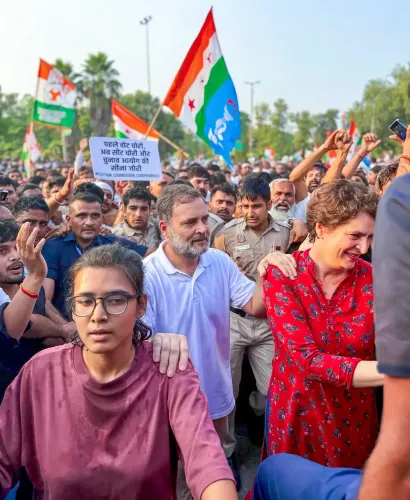
A sharp political controversy erupted on 6 November 2026 after Jharkhand Health Minister and Congress leader Irfan Ansari claimed that 40 lakh youths were awaiting a signal from Leader of the Opposition Rahul Gandhi to take to the streets, warning that India could witness developments worse than those in Bangladesh and Nepal. While Opposition leaders moved quickly to frame the remarks within constitutional limits, BJP leaders demanded Ansari's dismissal and accused him of inciting unrest.
What Ansari Said
During an interaction in New Delhi, Ansari alleged that farmers, workers, the middle class, Dalits, tribals and Muslims were facing hardship under the BJP-led government. He claimed that Rahul Gandhi had so far held back a restive young population and warned that if Prime Minister Narendra Modi did not take stock of the situation, India could see upheaval on the scale of recent political crises in Bangladesh and Nepal.
Opposition Distances Itself from Bangladesh, Nepal Comparison
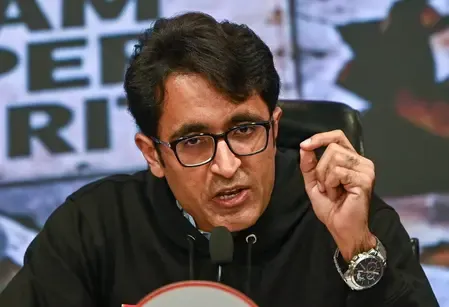
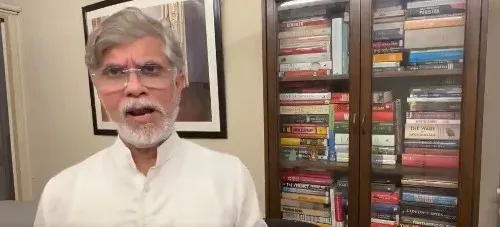
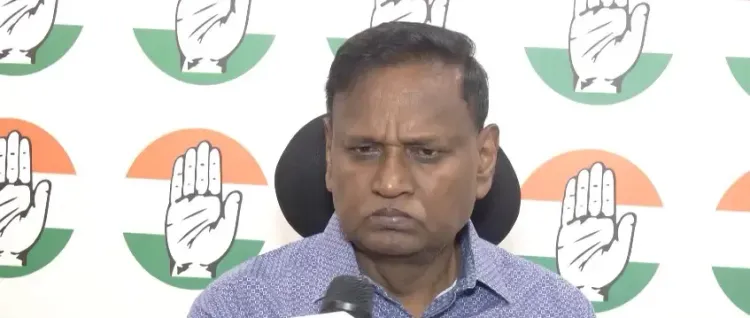
Congress leader Udit Raj responded by questioning Ansari's arithmetic and distancing the party from any extra-constitutional framing. 'Only Irfan Ansari would know where the 40 lakh youth are. It could be 40 lakh or even 4 crore. Our path of struggle is democratic and constitutional. It is neither the Bangladesh model nor the Nepal model. We believe in democracy. In Nepal, the country's own heritage was set on fire by its youth, while the situation in Bangladesh was also very disturbing. That is not our path. Our path is one of non-violence,' he said.
Congress leader Rakesh Sinha defended the constitutional right to protest but struck a sharper tone, warning of the consequences of suppressing youth dissent. 'Protesting is a constitutional right. If the youth put up their demands, will you shoot at them with pellet guns and take away their eyesight? You won't even file an FIR. If this situation continues, how are the youth going to suppress their emotions? And whenever the youth gets aggressive, there has been regime change, and we assure you that there will be change,' he said.
Samajwadi Party spokesperson Dr Ashutosh Verma said any change of government in India could only come through democratic processes. 'The Samajwadi Party is in support of this. We will defeat them the way they have defeated us. The Samajwadi Party is going to form a government with a clear mandate and the trust of people. This is the only way ahead,' he said.
BJP's Counterattack: 'Anti-National' and 'Anarchic'
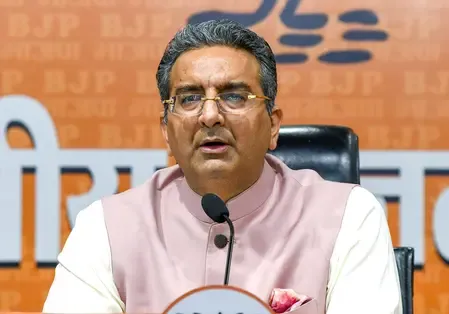
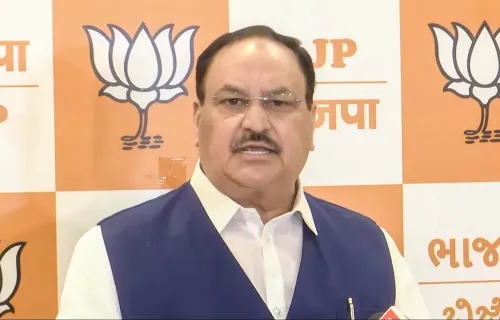
BJP Bihar President Sanjay Saraogi described Ansari's remarks as an open admission of what he alleged was a Congress-backed conspiracy. 'This anti-national and poisonous statement by Jharkhand government minister Irfan Ansari is an open admission of Congress' well-planned anarchic and violent conspiracy. Such anti-national statements, talking about regime change and turning India into Bangladesh or Nepal, will never succeed in a country like India,' he said, adding that no one would be allowed to create unrest at the behest of foreign powers.
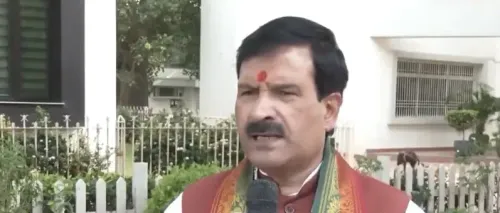
Union Minister Rajiv Ranjan dismissed the remarks as reflecting an ignorance of India's democratic strength. 'First, such leaders should be sent to Kanke, where there is a very good mental health facility. They are unfamiliar with democracy's power in this country. India is not Bangladesh or Sri Lanka. It is the world's largest democracy, with a population nearing 150 crore; you cannot repeat what happened in smaller nations here. These statements should not be taken that seriously,' he said.
BJP Jharkhand spokesperson Pratul Shah Deo alleged that the remarks signalled a Congress desire to pit students against security forces, while JD(U) MLA Vinay Chaudhary argued that Parliament remained the appropriate forum for raising grievances. 'Everything is marked in a democracy. If the Prime Minister does not listen to you there, then you can raise your voice. Indian citizens give a due reply in the elections,' he said.
Context and What Comes Next
The row comes amid a charged political climate ahead of state assembly elections, with both the ruling NDA and the INDIA bloc trading accusations over democratic accountability and street mobilisation. Notably, references to Bangladesh — where a student-led movement toppled the government in August 2024 — have become a recurring flashpoint in Indian political discourse, with the BJP framing any such comparison as seditious and the Opposition insisting democratic protest is a fundamental right. All NDA leaders who spoke publicly demanded that Ansari be removed from the Jharkhand cabinet, though the state government had not responded as of the time of reporting.
Point of View
But the BJP's 'anti-national' framing reveals a deeper discomfort with the legitimate vocabulary of democratic protest. The Bangladesh comparison has become a Rorschach test: the Opposition uses it to signal urgency, the BJP uses it to delegitimise dissent. What is striking is that Congress's own damage-control response — led by Udit Raj — was swift and categorical, suggesting the party recognises the remark overstepped. The real question the row raises is whether India's political class can distinguish between constitutional street politics and incitement, without either side weaponising the difference.
NationPress
6 Nov 2026
Frequently Asked Questions
What did Irfan Ansari say that triggered the controversy?
Jharkhand Health Minister Irfan Ansari claimed during a Delhi interaction that 40 lakh youths were ready to take to the streets and were awaiting a signal from Congress leader Rahul Gandhi. He warned that if Prime Minister Narendra Modi did not address the concerns of farmers, workers, Dalits, tribals and Muslims, India could witness developments worse than those in Bangladesh and Nepal.
How did the Congress respond to Ansari's remarks?
Congress leaders distanced the party from any extra-constitutional framing. Udit Raj stated that the Opposition's path was 'democratic and constitutional' and explicitly said 'it is neither the Bangladesh model nor the Nepal model.' Rakesh Sinha defended the right to protest but framed it within constitutional terms.
What has the BJP demanded over the controversy?
BJP leaders, including Bihar President Sanjay Saraogi and Jharkhand spokesperson Pratul Shah Deo, labelled the remarks 'anti-national' and demanded that Ansari be sacked from the Jharkhand cabinet. Union Minister Rajiv Ranjan also criticised the minister, saying India's democratic institutions were misunderstood by those making such comparisons.
Why does the Bangladesh comparison matter in Indian politics?
Bangladesh witnessed a student-led movement in August 2024 that toppled its government, making it a charged reference in Indian political discourse. The BJP frames any such comparison as seditious, while Opposition figures use it to underscore urgency around youth unemployment and political discontent. The reference has become a recurring flashpoint between the two sides.
What did the Samajwadi Party say about the controversy?
Samajwadi Party spokesperson Dr Ashutosh Verma said any change of government in India could only happen through democratic processes. He stated that his party would defeat the BJP through elections and a clear popular mandate, calling this 'the only way ahead.'