Owaisi demands Modi govt come clean on Arunachal border
Synopsis
AIMIM president Asaduddin Owaisi has demanded the Modi government publicly disclose alleged Chinese troop activity in Arunachal Pradesh — including patrol blockades and tent-pitching on Indian territory — calling the information provided so far 'inadequate' and designed to 'obfuscate.'
Key Takeaways
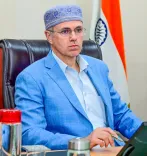
On 12 August 2026 , AIMIM president Asaduddin Owaisi publicly demanded the Modi government come clean on alleged Chinese activity in Arunachal Pradesh .
Owaisi specifically alleged Chinese forces have entered Indian territory, blocked Indian patrols, and pitched tents — three distinct escalatory actions.
He described the government's information so far as 'inadequate' and intended to 'obfuscate.' Arunachal Pradesh is claimed by China as 'South Tibet'; the LAC in the eastern sector has never been formally delimited.
The 1993 LAC peace agreement and post- Galwan 2020 corps-level talks form the existing diplomatic framework for managing such incidents.
A Ministry of External Affairs response or parliamentary statement is the immediate pressure point to watch.
A pointed demand for transparency on India's most sensitive frontier landed on Wednesday, 12 August 2026, as AIMIM president Asaduddin Owaisi accused the Narendra Modi government of providing 'inadequate' and 'obfuscating' information about alleged Chinese activity along the border in Arunachal Pradesh.
What Owaisi is alleging — and what the government has not said
Owaisi's post is specific and sequential: he says Chinese forces have entered Indian territory, blocked Indian patrols from areas they have historically accessed, and pitched tents. Each of those three actions, if accurate, would constitute a material escalation — and he argues the public has a right to know. 'The current situation is unacceptable,' he wrote, placing the accountability squarely on the Modi government's communication, not merely on Beijing's conduct.
The Ministry of External Affairs has not, as of this writing, issued a detailed public statement on the specific incidents referenced. That silence is itself the political story Owaisi is pressing.
Arunachal Pradesh: the eastern front China calls 'South Tibet'
Arunachal Pradesh sits at the heart of one of Asia's most consequential unresolved border disputes. China claims the entire state as part of what it calls 'South Tibet' — a position India flatly rejects. The Line of Actual Control (LAC) in the eastern sector has never been formally delimited, and both sides have long maintained competing patrol patterns that periodically bring troops face to face.
The legal and diplomatic scaffolding governing these encounters dates to the 1993 Agreement on Maintenance of Peace and Tranquility along the LAC, which established protocols meant to prevent incidents from escalating. After the deadly Galwan Valley clash of June 2020 — which killed 20 Indian soldiers and an unspecified number of Chinese troops — both sides conducted multiple rounds of corps commander-level talks, achieving partial disengagements at several western-sector friction points. The eastern sector, including Arunachal, has remained a quieter but persistent pressure point.
A pattern of opacity — and the parliamentary pressure it generates
Successive Indian governments, including the current one, have been cautious about publicly detailing border incidents, citing operational sensitivity and the risk of inflaming bilateral tensions mid-negotiation. Critics, including opposition MPs across parties, have argued that this caution tips into deliberate opacity — denying Parliament and the public the information needed to hold the executive accountable on national security.
Owaisi, who regularly raises foreign policy and minority-rights issues on the floor of the Lok Sabha, is now pushing that argument into the public domain ahead of what could be a contentious parliamentary session. The residents of Arunachal Pradesh and the Indian armed forces deployed there are the most immediate stakeholders — but the political reverberations will be felt in New Delhi.
Whether the government chooses to respond with a detailed briefing, a Ministry of External Affairs statement, or continued silence will itself be a political signal — one the opposition is already watching.
Point of View
Verifiable actions that demand a concrete government response. The broader arc here is the tension between India's diplomatic preference for managing LAC incidents quietly and a democratic public's right to know when sovereignty is at stake. If the government continues to stay silent, the political cost of that silence will compound with every passing day.
NationPress
12 Aug 2026
Frequently Asked Questions
What is Owaisi saying about the Arunachal Pradesh border situation?
Owaisi alleges that Chinese forces have entered Indian territory in Arunachal Pradesh, blocked Indian patrols from areas they have historically accessed, and pitched tents — and that the Modi government has not given the public adequate information about these incidents.
Why does China claim Arunachal Pradesh?
China claims Arunachal Pradesh as part of what it calls 'South Tibet,' a position India firmly rejects. The state borders the undelimited Line of Actual Control in the eastern sector and has been a recurring flashpoint in India-China relations.
What happened at Galwan Valley and how is it relevant?
In June 2020, Indian and Chinese troops clashed in the Galwan Valley in Ladakh, killing 20 Indian soldiers. The incident triggered multiple rounds of corps commander-level talks and partial disengagements, but underlying LAC tensions — including in the eastern sector — have persisted.
What is the 1993 India-China LAC agreement?
The 1993 Agreement on Maintenance of Peace and Tranquility along the LAC established protocols for border management between India and China, including mechanisms to prevent incidents from escalating into armed conflict.
What should we watch for next on the India-China Arunachal border issue?
Watch for a Ministry of External Affairs statement addressing the specific allegations, or statements during the next parliamentary session where opposition MPs are likely to press the government for details on border infrastructure and patrol rights.