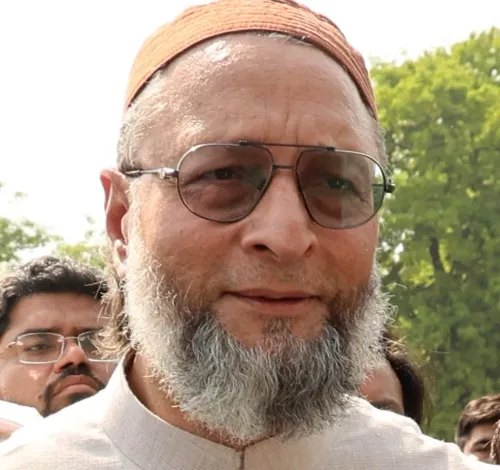
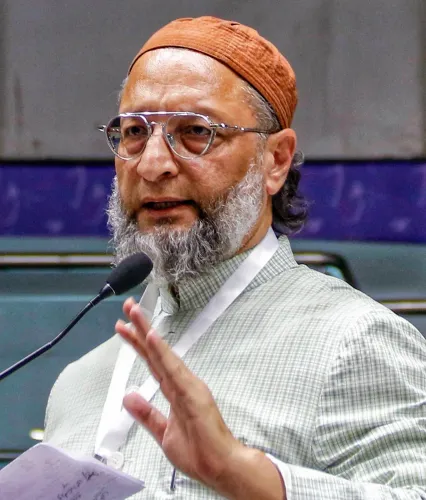
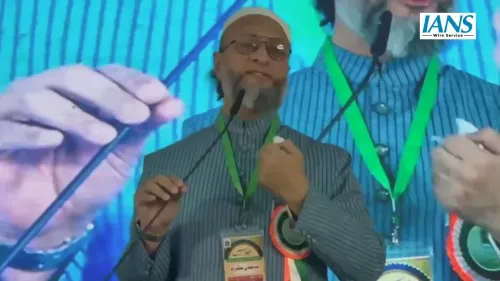
Owaisi urges Modi govt to push Pakistan back to FATF Grey List
Synopsis
AIMIM president Asaduddin Owaisi has called on the Modi government to push Pakistan back onto the FATF grey list and secure a UN 1267 designation for TRF, citing Vivek Agarwal's election as FATF Vice President as a diplomatic opening India must not waste.
Key Takeaways
Vivek Agarwal has been elected the first Indian Vice President of FATF , creating an institutional opening for India at the global terror-financing watchdog.
AIMIM president Asaduddin Owaisi has urged the Modi government to use this leverage to return Pakistan to the FATF grey list .
Owaisi argued that a US listing of TRF is insufficient and that only a UN Security Council 1267 designation would be effective against the group.
He further demanded that India attempt to list Pakistan's ISI as a terror-financing entity — a step beyond any formal Indian diplomatic action to date.
Owaisi cited the Red Fort suicide blast of November 2025 as justification for escalating multilateral pressure on Pakistan-backed networks.
Pakistan was last removed from the FATF grey list in October 2022 after completing 27 action points.
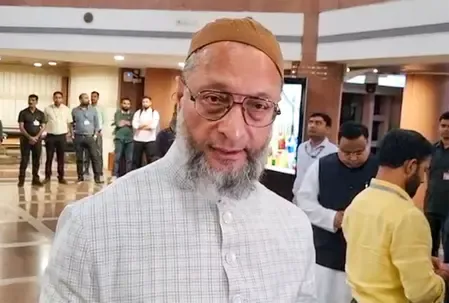
AIMIM president Asaduddin Owaisi on Saturday, 20 June 2026, called on the Narendra Modi government to pursue Pakistan's return to the FATF grey list and seek a UN Security Council designation of The Resistance Front (TRF), while also demanding that India attempt to list Pakistan's Inter-Services Intelligence (ISI) as a terror-financing entity. The Hyderabad MP made the remarks in the context of Vivek Agarwal becoming the first Indian elected as Vice President of the Financial Action Task Force (FATF).
Context
Owaisi's post highlights Vivek Agarwal's election as the first Indian to serve as Vice President of FATF, framing the milestone as a diplomatic opening India must exploit. He argued that a US listing of TRF 'is of no real use' and that only a UN-level designation would carry meaningful multilateral weight against the group. He also invoked the Red Fort suicide blast of November 2025 as a basis for escalating pressure on Pakistan-backed networks.
TRF, also known as The Resistance Front, is a militant outfit operating in Jammu and Kashmir that Indian security agencies regard as a proxy for Pakistan-based proscribed organisations. Owaisi's call for listing the ISI itself goes further than any action India has formally pursued at the UN to date.
Policy Backdrop
Pakistan was placed on the FATF grey list in June 2018 over deficiencies in its anti-money-laundering and counter-terror-financing frameworks. After completing 27 action points, it was removed from the list in October 2022 — a decision that India's strategic community viewed with concern, arguing that structural links between the Pakistani state and terror groups remained unaddressed.
India has previously used multilateral mechanisms to raise costs for Pakistan-based groups: the UN Security Council's 1267 sanctions regime was used to designate Jaish-e-Mohammed chief Masood Azhar in May 2019 after years of blocked attempts. Successive Indian governments have also lobbied within FATF to keep scrutiny on Islamabad's terror-financing record. Owaisi's demand for a TRF listing follows this established diplomatic playbook but adds the unprecedented ask of targeting the ISI as an institution.
Stakeholders and Impact
An Indian national heading a FATF vice-presidency gives New Delhi procedural influence at the body's plenary sessions, potentially easing the path to initiating a mutual evaluation or re-grey-listing process against Islamabad. Indian diplomats and the Ministry of External Affairs would be the primary actors in translating that influence into concrete agenda items.
For Pakistan's military establishment, a return to the grey list would mean renewed restrictions on international banking access, foreign investment flows, and reputational standing — consequences that carry significant economic weight for an already stressed economy. A UN designation of TRF under the 1267 regime would freeze assets and impose travel bans on listed individuals, cutting off the group's international fundraising.
What's Next
Attention will now focus on the next FATF plenary and whether India, with Vivek Agarwal in the vice-presidential role, formally moves to place Pakistan back under enhanced monitoring. Any Indian push at the UN Security Council for a TRF designation under the 1267 sanctions list will face the familiar challenge of navigating vetoes from permanent members sympathetic to Islamabad. Owaisi's intervention, while from the opposition, adds public pressure on the government to demonstrate diplomatic assertiveness on cross-border terrorism at a moment when India holds rare institutional leverage inside FATF.
Point of View
He is engaging with the technical architecture of international sanctions law in a way that is unusual for parliamentary commentary. The demand to list the ISI as an institution is politically charged and diplomatically ambitious, signalling that opposition parties are willing to outflank the government on national-security assertiveness. This fits a broader pattern in Indian politics where cross-border terrorism has become a bipartisan competitive issue rather than a government prerogative.
NationPress
19 Sept 2026
Frequently Asked Questions
What is the FATF grey list and why does it matter for Pakistan?
The FATF grey list, formally called 'increased monitoring,' flags countries with deficiencies in combating terror financing and money laundering. Pakistan was grey-listed from 2018 to 2022 , which restricted its access to international capital markets and raised borrowing costs significantly.
Who is Vivek Agarwal and what is his role at FATF?
Vivek Agarwal has been elected as the Vice President of the Financial Action Task Force (FATF) , making him the first Indian national to hold that position. The role gives India procedural influence over the body's agenda and plenary proceedings.
What is TRF and why does India want it designated by the UN?
The Resistance Front (TRF) is a militant group active in Jammu and Kashmir that Indian agencies regard as a proxy for Pakistan-based proscribed outfits. A UN Security Council 1267 designation would impose asset freezes and travel bans, cutting off international fundraising in a way that a unilateral US listing cannot.
Has India ever tried to list the ISI at the United Nations?
India has not formally moved to list the ISI as an institution under the UN 1267 sanctions regime. Owaisi's demand represents a political call to pursue that unprecedented step, though it would face significant hurdles at the Security Council.
What was the Red Fort suicide blast of November 2025?
Owaisi referenced the Red Fort suicide blast of November 2025 as a key justification for escalating pressure on Pakistan-backed networks. Details of the incident are as stated in his post; NationPress is following developments on this event.