Owaisi Slams Amit Shah's 'Demography Commission' as Anti-Muslim Tool
Synopsis
AIMIM president Asaduddin Owaisi alleged on 29 September 2026 that Amit Shah's 'Demography Commission' is demanding religion-wise vehicle and land data from states not for welfare but to target Muslims — contrasting it with the government's past refusal to collect data on Muslim disadvantage.
Key Takeaways
AIMIM president Asaduddin Owaisi posted on 29 September 2026 accusing the Modi government of hypocrisy on Muslim data collection.
He alleged that Amit Shah's 'Demography Commission' is asking states for religion-wise data on vehicle purchases and land ownership.
Owaisi argued the commission's real agenda is to 'twist' data to target Muslims and strip them of their remaining rights — not to improve welfare policy.
He contrasted this with the government's alleged refusal to collect data on Muslim educational, social and economic conditions when AIMIM demanded it.
The 2005-06 Sachar Committee had recommended exactly such welfare-focused data collection on Muslims; its recommendations were never fully implemented.
The specific existence and mandate of the 'Demography Commission' as described by Owaisi has not been confirmed through publicly available official records.
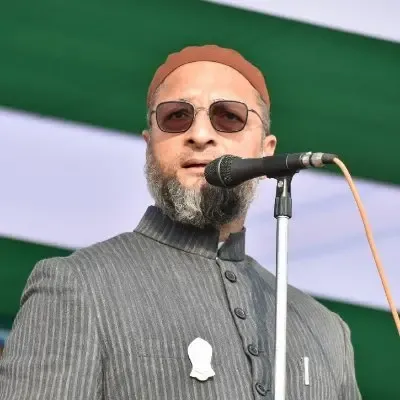
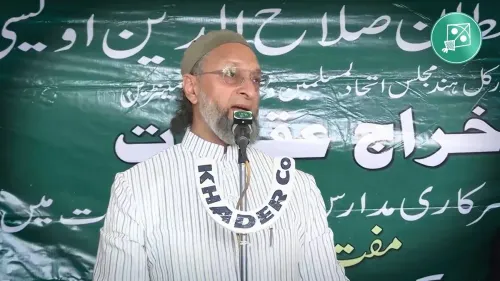
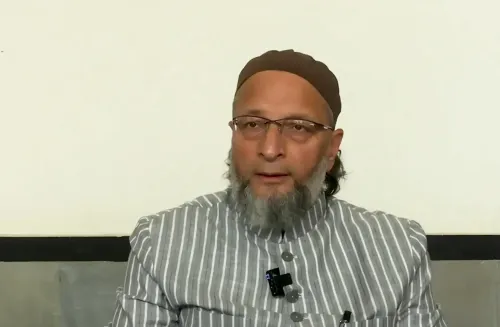
When a government that refused to count Muslim poverty suddenly starts counting Muslim car purchases and land holdings, AIMIM president Asaduddin Owaisi wants to know why — and his answer is pointed. On 29 September 2026, the Hyderabad MP fired a sharp broadside at what he called Amit Shah's 'Demography Commission', accusing it of demanding religion-wise economic data from states not to improve welfare but to build a case for stripping Muslims of their remaining rights.
The accusation in Owaisi's own words
Posting in Urdu, Owaisi wrote: 'Jab hum Modi sarkar se mutalba karte the ki woh Musalmanon ki taleemi, samaji aur maashi haalat par aankde jutaye, to sarkar jhat se apna munh pher leti thi' — 'When we demanded that the Modi government collect data on the educational, social and economic condition of Muslims, the government would instantly look away.' He then alleged that the same administration is now, through Shah's commission, asking states to report which religious community bought how many vehicles and who owns how much land. His conclusion: the data is not meant for better policymaking — it is meant to be 'twisted and presented' so that Muslims can be targeted and whatever rights they still hold can be taken from them.
Why the Sachar gap makes this charge sting
Owaisi's framing carries a specific historical weight. The 2005-06 Sachar Committee — a high-level panel commissioned by the then UPA government — documented in granular detail that Indian Muslims lagged behind most other communities on literacy rates, government employment, bank credit access and household income. Its central recommendation was precisely what Owaisi says the Modi government refused to do: build a robust official data architecture to track Muslim socio-economic indicators so targeted policy could follow. That recommendation was never fully implemented by successive governments. The irony Owaisi is pointing to is hard to miss: data on Muslim disadvantage was unwanted; data on Muslim assets is, allegedly, now being actively sought.
What the 'Demography Commission' actually is — and what remains unverified
India's 2011 Census recorded Muslims at 14.2 percent of the national population, and religion-disaggregated data has appeared in National Family Health Surveys since 1992-93. Official statements from the government have at various points linked demographic monitoring to resource planning and security concerns in border and urban regions. However, the specific details Owaisi cites — a formal 'Demography Commission' under Amit Shah requesting religion-wise vehicle ownership and land-holding data from state governments — have not been confirmed through public records or official notifications available at the time of publication. The existence and mandate of such a body remains unverified. What is not in dispute is that Owaisi has raised the allegation publicly and with force, and it is now in political circulation.
The political pattern behind the charge
This is not the first time Indian opposition politicians have argued that demographic data exercises can be framed to highlight — and then weaponise — community differences rather than address them. The tension is structural: the same statistical infrastructure that can expose disadvantage can, with different intent, be used to profile. Owaisi's post lands squarely in that fault line, and it is aimed at a government that has consistently rejected caste and community-based welfare enumeration in other contexts while, he alleges, pursuing religion-based economic profiling through a different door.
Whether or not the commission's mandate is as Owaisi describes, the political question he is raising — who gets counted, for what purpose, and by whom — is one that will not stay confined to a single post.
Point of View
And if substantiated, it would raise constitutional questions about equal treatment and the use of state machinery. Even unverified, the claim injects fresh tension into the ongoing debate about whether India's data infrastructure serves all communities equitably. The BJP has not yet formally responded to this specific allegation, and that silence will itself become part of the political narrative.
NationPress
29 Sept 2026
Frequently Asked Questions
What is the 'Demography Commission' Owaisi is talking about?
Owaisi alleged it is a body linked to Home Minister Amit Shah that is asking state governments to share religion-wise data on vehicle purchases and land ownership. Its formal existence and official mandate have not been confirmed through publicly available government records.
What did the Sachar Committee recommend about Muslim data?
The 2005-06 Sachar Committee recommended that the government build a robust system to track Muslim educational, economic and social indicators so targeted welfare policies could be designed. Those recommendations were never fully implemented.
What is Owaisi's main accusation against the Modi government on Muslim data?
Owaisi accused the government of refusing to collect data on Muslim disadvantage when AIMIM demanded it, while now allegedly seeking religion-wise economic data — on vehicles and land — through a demography commission, with the intent of targeting Muslims rather than helping them.
What share of India's population is Muslim according to official data?
The 2011 Census of India recorded Muslims at 14.2 percent of the national population. A new census has not been conducted since then.
Has the BJP government responded to Owaisi's allegations about the Demography Commission?
As of the time of publication, no formal government response to Owaisi's specific allegations about the commission's religion-wise data requests has been publicly issued.