Owaisi to UP Youth: Lead, Don't Just Serve
Synopsis
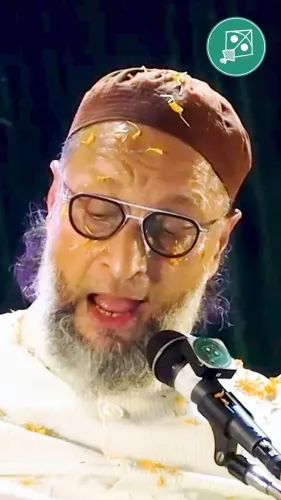
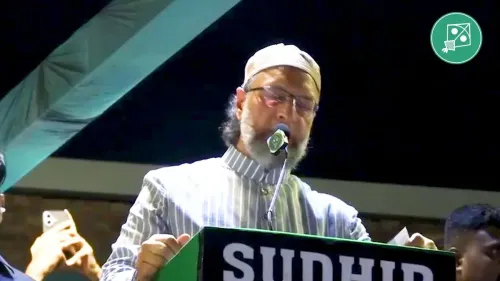
AIMIM president Asaduddin Owaisi challenged Uttar Pradesh's youth on October 13, 2026, urging them to stop performing subservient campaign roles and instead step up as political leaders and candidates themselves.
Key Takeaways
Owaisi posted on October 13, 2026 , urging UP youth to become leaders, not carpet-layers at rallies.
The phrase 'dari bichana' (laying the carpet) is a well-known idiom for invisible, menial campaign labour in north Indian politics.
AIMIM has been working to expand its presence in Uttar Pradesh beyond its Hyderabad base for several election cycles.
The message is an implicit critique of parties that mobilise Muslim voters as a support base without offering them leadership roles or candidacies.
The post signals AIMIM may be sharpening its messaging ahead of upcoming UP electoral contests.
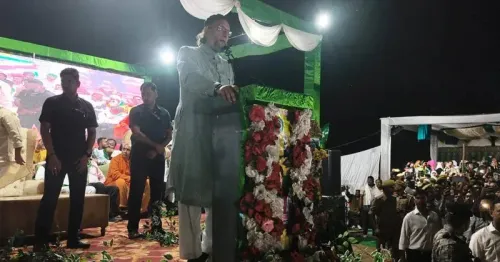
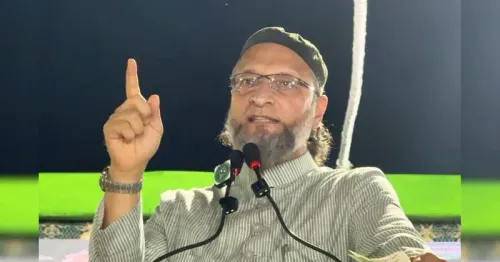
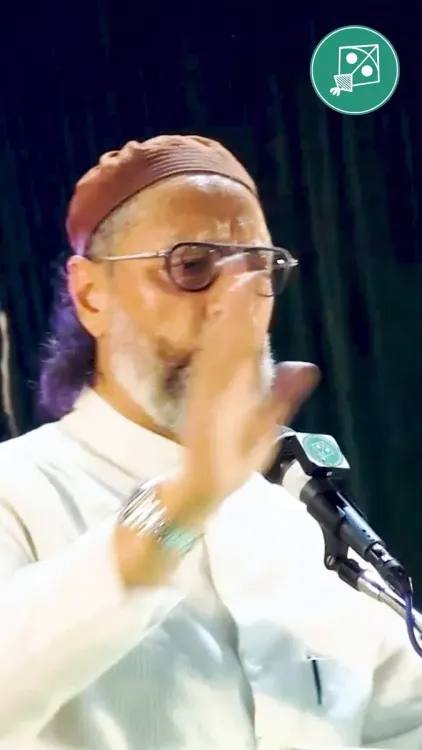
A single line — and a direct challenge to the political order. AIMIM president Asaduddin Owaisi posted on X on Tuesday, October 13, 2026, with a message aimed squarely at the youth of Uttar Pradesh: 'Uttar Pradesh ka nौजवान ab dari nahi bichayega, balki khud neta banega' — 'The young person of Uttar Pradesh will no longer lay out the carpet; instead, they will become the leader themselves.'
From the back of the room to the front of the ballot
The imagery in Owaisi's post is deliberate and pointed. Laying a carpet — dari bichana — is colloquial shorthand in north Indian political culture for performing menial, subservient campaign work: setting up chairs, running errands, doing the invisible labour that keeps rallies running. Owaisi is telling UP's youth that this role is no longer acceptable. He wants them on stage, not arranging it.
The statement carries particular weight for Muslim youth in Uttar Pradesh, a community that has historically contributed enormous ground-level energy to multiple political formations without a proportionate return in the form of tickets or leadership positions. It is a direct appeal to political agency — and an implicit critique of every party that has taken that labour for granted.
AIMIM's long push into India's largest state
AIMIM, founded in Hyderabad and long dominant in the old city's parliamentary constituency, has spent years attempting to plant roots in Uttar Pradesh — home to roughly 200 million people and one of India's most competitive electoral arenas. The party's pitch in UP has consistently centred on a single argument: that existing parties treat Muslim voters as a vote bank to be harvested, not a constituency to be represented.
Calls for youth to move from support roles into candidacy are a recurring feature of that pitch. Smaller parties attempting to break through in a state dominated by entrenched machinery know that mobilising first-time voters and converting activists into candidates is often the only viable path to relevance. Owaisi's one-liner distils that entire strategy into a rallying cry.
Why the timing matters
UP is perpetually on the electoral radar — assembly cycles and Lok Sabha contests keep the state in near-constant campaign mode. A message this pointed, dropped without any specific event anchor, signals that AIMIM is already warming up its messaging engine. Watch for candidate announcements, public meetings in western UP's dense urban constituencies, and whether this line becomes a slogan in the months ahead.
Owaisi has shown repeatedly that a well-timed social media post can shift the frame of a local conversation. Whether this one translates into ballot-box arithmetic is the only question that ultimately matters — and UP has a way of answering such questions loudly.
Point of View
Not carpet-layer'), he is trying to convert latent frustration among young Muslim voters into a specific electoral demand. The challenge for AIMIM is always the gap between motivational rhetoric and organisational capacity: the party has struggled to convert sympathetic sentiment in UP into durable seat wins. If the coming election cycle produces a credible slate of young AIMIM candidates in UP, this post will read as a campaign launch; if it does not, it remains a sharply worded aspiration.
NationPress
13 Oct 2026
Frequently Asked Questions
What did Owaisi say about UP youth on October 13 2026?
Owaisi posted that the youth of Uttar Pradesh will no longer lay out carpets — a phrase for doing menial campaign work — but will instead become leaders themselves.
What does 'dari bichana' mean in Indian political slang?
'Dari bichana' literally means laying a mat or carpet, and is commonly used in north Indian politics to describe the invisible, subservient work young supporters do at rallies and events without receiving recognition or political rewards.
Is AIMIM trying to expand in Uttar Pradesh?
Yes. AIMIM has been actively seeking to grow beyond its Hyderabad stronghold and has made repeated efforts to mobilise voters and field candidates in Uttar Pradesh over multiple election cycles.
Who is Asaduddin Owaisi?
Asaduddin Owaisi is the president of the All India Majlis-e-Ittehadul Muslimeen (AIMIM) and a Lok Sabha MP representing the Hyderabad constituency.
What is the significance of Owaisi's message for Muslim voters in UP?
The message is a call for political agency — urging Muslim youth in UP to move from support roles in other parties' campaigns to contesting elections themselves, reflecting AIMIM's broader argument that existing parties treat the community as a vote bank without offering real representation.