Jal Shakti Minister Paatil Holds Water Conservation Talks in Kolkata
Synopsis
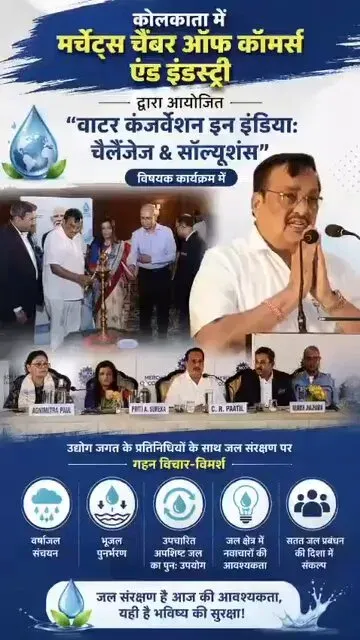
Union Jal Shakti Minister C. R. Paatil participated in a water conservation forum in Kolkata hosted by the Merchants Chamber of Commerce and Industry, deliberating with industry representatives on challenges and solutions around water use in India.
Key Takeaways
Paatil , Union Minister of Jal Shakti, participated in a water conservation dialogue in Kolkata hosted by the Merchants Chamber of Commerce and Industry .
The forum was themed 'Water Conservation in India: Challenges and Solutions' , bringing together industry representatives and the central ministry.
The Jal Shakti Ministry oversees flagship schemes including the Jal Jeevan Mission (2019) and Atal Bhujal Yojana (2019) that underpin India's water security agenda.
The Namami Gange programme (launched 2014 ) and the National Water Policy (revised 2012 ) form the broader policy framework relevant to eastern India's water challenges.
Central ministries have increasingly engaged industry chambers to link conservation goals with economic stakeholders rather than relying on regulation alone.
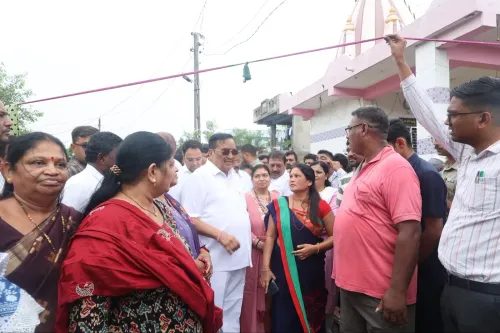
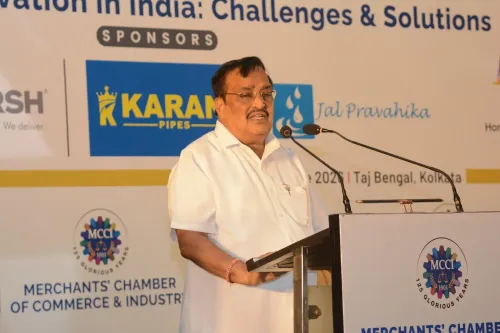
Union Jal Shakti Minister C. R. Paatil participated in a water conservation dialogue organised by the Merchants Chamber of Commerce and Industry in Kolkata, engaging industry representatives on the challenges and solutions around water conservation in India. The minister shared a glimpse from the event, held under the theme 'Water Conservation in India: Challenges and Solutions' (जल संरक्षण: चुनौतियाँ एवं समाधान).
Context
Paatil's post, shared on 19 June 2026, revisited his participation in the Merchants Chamber of Commerce and Industry-hosted forum in Kolkata, one of eastern India's most prominent industry bodies. The minister described the session as a platform for deliberation — 'vichar-vimarsh' (exchange of views) — with representatives from the industrial sector on pressing water issues facing the country.
The event reflects a growing trend of the Jal Shakti Ministry taking its conservation agenda directly to economic stakeholders, moving beyond regulatory channels to build voluntary industry engagement on water-use efficiency.
Policy Backdrop
The Jal Shakti Ministry oversees several flagship programmes central to India's water security. The Jal Jeevan Mission, launched in 2019, aims to provide rural tap water connections while also addressing source sustainability — making industrial water discipline a complementary priority. The Atal Bhujal Yojana, also approved in 2019, targets groundwater management in priority states through community participation.
On the river-rejuvenation front, the Namami Gange programme, launched in 2014, has focused on pollution control and conservation along the Ganga river basin — a waterway of direct relevance to Kolkata and West Bengal's industrial corridor. India's National Water Policy, last revised in 2012, provides the overarching framework for integrated water resources management across all sectors, including industry.
Central ministries have increasingly convened such public-private dialogues to feed industry perspectives into national frameworks like the National Water Mission, recognising that conservation targets cannot be met through government action alone.
Stakeholders and Impact
Industry chambers such as the Merchants Chamber of Commerce and Industry serve as a bridge between the manufacturing and trade sectors and policymakers. Their participation in water conservation dialogues signals that water scarcity and climate risk are now being treated as business-continuity issues, not just environmental concerns.
Industrial units across West Bengal and eastern India face particular pressure on water availability, given the dual demands of urban growth and agricultural use. Engagement at forums like this can shape voluntary water-recycling commitments and inform state-level conservation action plans.
What's Next
Observers will watch for any follow-up announcements on industrial water recycling norms or state-level conservation frameworks that may emerge from discussions at forums of this kind. The Jal Shakti Ministry's continued outreach to industry bodies suggests that private-sector water-use efficiency could feature more prominently in upcoming policy updates. As climate pressures intensify, the alignment between industrial growth and sustainable water use will remain a critical test for India's water governance architecture.
Point of View
The ministry signals that industrial water-use efficiency is now a shared responsibility between the state and the private sector. This approach fits a broader pattern of the BJP-led government building voluntary compliance frameworks alongside its flagship schemes like Jal Jeevan Mission. The forum also carries political significance: sustained ministerial engagement in West Bengal — a state the BJP has been keen to strengthen its presence in — serves dual purposes of policy outreach and political visibility.
NationPress
22 Sept 2026
Frequently Asked Questions
What did C. R. Paatil do at the Kolkata water conservation event?
C. R. Paatil, Union Jal Shakti Minister, participated in a dialogue on water conservation organised by the Merchants Chamber of Commerce and Industry in Kolkata, exchanging views with industry representatives on challenges and solutions around water use in India.
What is the Merchants Chamber of Commerce and Industry?
The Merchants Chamber of Commerce and Industry is a Kolkata-based industry body that hosted the water conservation forum attended by Union Jal Shakti Minister C. R. Paatil.
What schemes does the Jal Shakti Ministry run for water conservation?
The Jal Shakti Ministry oversees the Jal Jeevan Mission (launched 2019) for rural tap water connections, the Atal Bhujal Yojana (2019) for groundwater management, and the Namami Gange programme (2014) for Ganga river rejuvenation, among others.
Why is industry engagement important for water conservation in India?
Industry is a significant consumer of water, and voluntary commitments on water recycling and efficiency from the private sector complement government schemes. Central ministries have increasingly held public-private dialogues to align industrial water use with national conservation targets.
What is India's National Water Policy?
India's National Water Policy, last revised in 2012, provides the overarching framework for integrated water resources management across all sectors, including agriculture, urban use, and industry.