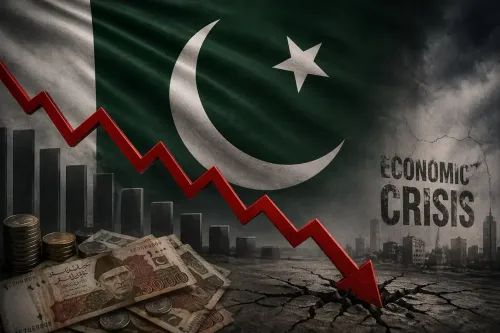
Are Pakistan’s Economic Challenges Set to Worsen Amid Rising Geopolitical Tensions?
Synopsis
As geopolitical risks rise, Pakistan's economic outlook appears increasingly dire. With strained international relations and dwindling foreign investment, the government faces significant challenges ahead. Discover the key factors contributing to this concerning trend and potential implications for the nation's economy.
Key Takeaways
Pakistan's economic situation is set to deteriorate due to geopolitical tensions.
Relations with the UAE are strained, affecting investment.
China's support for CPEC has waned, slowing economic growth.
External debts are rising quicker than reserves, creating financial pressure.
Security issues are delaying critical projects like Reko Diq .
New Delhi, Feb 18 (NationPress) The economic landscape of Pakistan may face significant challenges starting in 2026, as geopolitical tensions seem to be re-emerging, according to various media sources.
Notably, there is increasing tension in the relationship between Pakistan and the UAE, reflected in the monthly rollover of UAE deposits at an elevated rate of 6.5%, which is far higher than the government's earlier expectation of a two-year rollover at half that rate. Furthermore, potential investments from the UAE in Fauji Foundation companies are currently stalled, as reported by the Karachi-based Business Recorder.
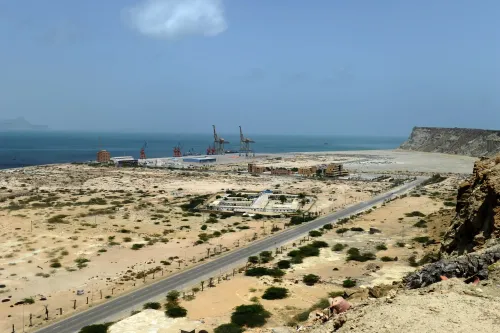
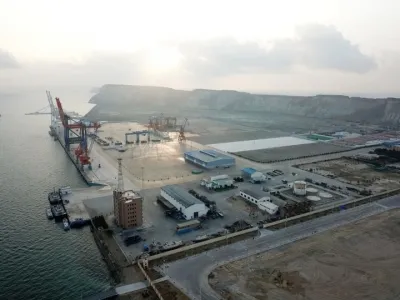
Additionally, there has been an unsettling silence regarding any additional economic assistance from China. The second phase of the CPEC project seems to be entirely sidelined. Prospects for renegotiating debts in the Chinese power sector appear bleak, as Chinese IPPs are unwilling to waive late payment charges, which is hindering the resolution of the power sector's circular debt, despite banks agreeing to provide loans at rates below Kibor, the article stated.
The piece also sheds light on escalating security issues in Balochistan, which have indefinitely postponed the financial closure of the Reko Diq project, despite its potential to be a transformative initiative.
Moreover, the report notes that the government’s previously strong rapport with the Trump administration seems to be fading. The US has established a trade agreement with India featuring more favorable tariffs than those offered to Pakistan. Similarly, Bangladesh has updated its tariff arrangements with the US to secure zero duties on textile imports while sourcing cotton from the US. Other nations continue to foster relations with the US and beyond, while Pakistan remains tethered to its past ties with Trump, the report elaborated.
Furthermore, the State Bank of Pakistan (SBP) has foreign exchange reserves amounting to $4.3 billion, which is overshadowed by external public debt and liabilities totaling $7.2 billion in 2025. The increase in external debt has thus outstripped the accumulation of reserves by nearly $3 billion, even as the current account deficit remained minimal at $0.2 billion for the calendar year.
Despite SBP purchasing $5.2 billion from the interbank market between January and October 2025, it was insufficient to bolster reserves against the rising debt and liabilities.
The SBP is tasked with securing dollars for servicing government debt (both principal and interest). This obligation forces the SBP to acquire nearly all surplus dollars entering bank treasuries, limiting banks’ capacity to trade in foreign exchange freely. This situation persisted even when commodity prices were favorable, as oil prices declined by 15% in 2025, as highlighted in the article.
Foreign Direct Investment (FDI) has remained woefully low, mirroring the lack of other external inflows (excluding debt). Although discussions of investment and loans from allied nations have been ongoing for three years, little has come to fruition, the article concluded.
Point of View
I believe it is crucial for our nation to remain informed about the evolving economic landscape. The re-emerging geopolitical challenges could significantly impact Pakistan’s economic stability. It is imperative for our leaders to address these issues proactively, ensuring we safeguard our nation's interests while navigating this complex global environment.
NationPress
10 Oct 2026
Frequently Asked Questions
What are the main factors affecting Pakistan's economy?
The major factors include strained relations with the UAE, uncertain investments from China, and rising external debts.
How has the geopolitical landscape changed for Pakistan recently?
Pakistan's ties with the UAE have soured, and support from China has diminished, impacting economic prospects.
What is the status of foreign direct investment in Pakistan?
Foreign direct investment remains critically low, with little progress despite ongoing discussions with allied nations.
What are the implications of rising external debts?
Rising external debts threaten to outpace foreign exchange reserves, complicating economic management for Pakistan.
How are security concerns affecting economic projects in Pakistan?
Security issues, particularly in Balochistan, are delaying significant projects like Reko Diq, which could have transformed the economy.