Pakistan's Struggles: From Afghan Aid to Iran's Financial Void
Synopsis
A recent article highlights the stark contrast between Pakistan's financial assistance during the Afghan war and its current inability to secure funds amid the Iran conflict. Once a geographical advantage, Pakistan now faces an outflow of capital during a period of strategic risk.
Key Takeaways
Pakistan once benefited greatly from US aid during the Afghan conflict.
Current dynamics show a troubling trend of financial outflow amid the Iran war.
Geographical advantages have not translated into financial support in recent times.
The shift from aid to capital flight raises concerns about Pakistan's economic resilience.
This change highlights the evolving strategic risks faced by Pakistan in a global context.
New Delhi, April 20 (NationPress) Pakistan successfully secured significant financial aid from the US by allowing its territory to be utilized against the Soviet invasion of Afghanistan that initiated in December 1979. However, during the Iran conflict, where Pakistan is acting as a peace broker, it has been unable to obtain any financial support, as highlighted in a recent article from the Pakistani media.
The Soviet-Afghan War commenced on December 24, 1979, with Washington initially proposing $400 million to Pakistan. However, then-President General Zia-ul-Haq dismissed this offer as mere "peanuts," leading Islamabad to turn it down. By 1981, an agreement was reached for a $3.2 billion military and economic aid package over six years. This was followed by a second phase that allocated another $4.0-4.2 billion for the period of 1988-1993, as reported by Dr. Farrukh Saleem in The News International, based in Karachi.
Additionally, Saudi Arabia contributed $6-8 billion in parallel funding, while the United Nations provided $3-5 billion for Afghan refugees. The World Bank and IMF also offered $5-7 billion in concessional financing, program support, and balance-of-payments assistance. When totaled, the financial inflows during the 1980s amounted to around $20-27 billion, which translates to approximately $60-85 billion in today’s dollars.
"This was not merely charity; it was geography transformed into cash," the article emphasized.
Following the events of September 11, the US disbursed $600 million in emergency funds to Pakistan. Subsequently, the Paris Club creditors restructured approximately $12.5 billion of Pakistan’s debt. Congress later approved a $3 billion aid package over five years, and Pakistan was permitted to utilize fiscal year 2003-2004 allocations to eliminate $1.5 billion of debt owed to the US. Throughout General Pervez Musharraf’s administration, the US provided over $13 billion in military and economic assistance, predominantly through Coalition Support Funds, culminating in a total of $45 billion in current dollar value.
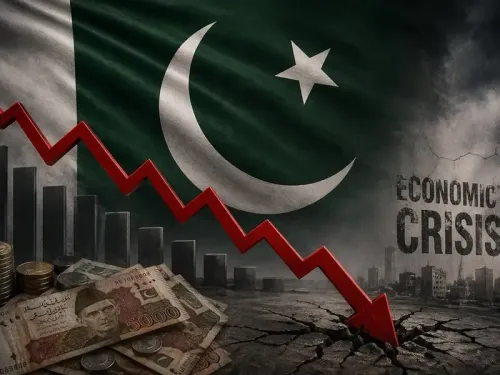
In 2026, Pakistan found itself in a critical position. Global leaders visited, media attention intensified, and Islamabad became a focal point. However, this time, geography failed to convert into cash, as noted in the article.
“In 1979, the war on Pakistan’s borders brought in $60–85 billion. In 2001, it generated another $45 billion. Yet in 2026, the conflict led to an outflow of $5.7 billion from the country. This was not just a loss; it posed a shocking imbalance against a $16 billion reserve base,” the article observed.
The stark reality is that the first two conflicts resulted in billions flowing into Pakistan, whereas the current situation sees money being drained away. Once, Pakistan's geographical positioning provided strategic benefits. Now, it faces strategic risks. Previously, wars yielded grants and debt relief; now they result in bond repayments, depletion of reserves, and capital flight.
Point of View
The situation underscores Pakistan's changing role on the global stage. While past conflicts brought in substantial financial aid, the current dynamics reveal a concerning trend of capital outflow, raising questions about the nation's strategic positioning and economic resilience.
NationPress
3 Oct 2026
Frequently Asked Questions
Why did Pakistan receive aid during the Afghan war?
Pakistan received aid during the Afghan war due to its strategic location, which allowed the US to use its territory to oppose the Soviet invasion.
What is the current financial situation for Pakistan amid the Iran conflict?
Currently, Pakistan is unable to secure any financial support during the Iran conflict, contrasting sharply with the aid received in previous wars.
How much aid did the US provide to Pakistan during General Musharraf's tenure?
During General Musharraf's administration, the US provided over $13 billion in military and economic assistance, amounting to a total of $45 billion in today's dollars.
What are the implications of the current financial outflow from Pakistan?
The ongoing financial outflow poses a significant balance-sheet shock to Pakistan, jeopardizing its economic stability and raising concerns about reserve depletion.
How has Pakistan's role changed in terms of global aid?
Pakistan's role has shifted from being a recipient of strategic aid to facing financial challenges, with current conflicts leading to capital flight instead of inflows.