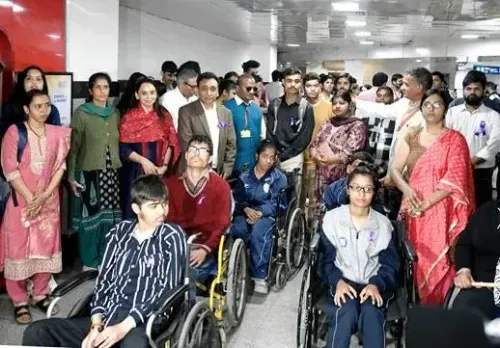
Divyang Learners' Parents Demand Urgent Reforms from NIOS for Inclusive Education
Synopsis
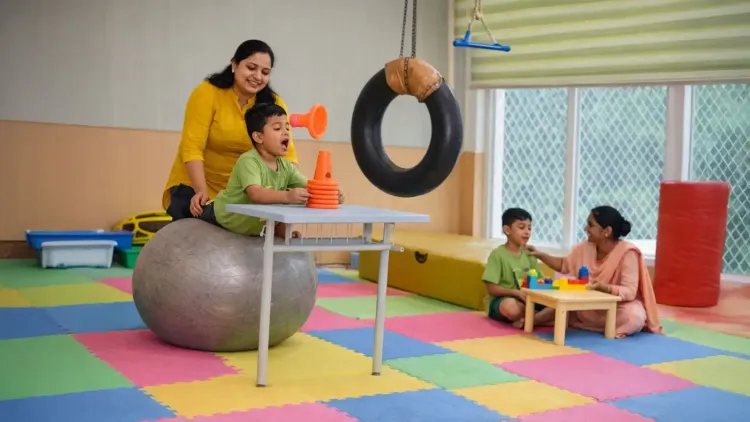
Parents of Divyang learners are pressing the National Institute of Open Schooling (NIOS) for immediate policy reforms to enhance educational accessibility. Key issues include flexible subject choices, fair evaluation methods, and improved examination infrastructure.
Key Takeaways
Urgent reforms needed: Parents demand immediate policy changes for inclusivity.
Flexible subject choices: Allowing DEO and vocational subjects is essential.
Fair evaluation: Trained special educators should assess answer sheets of Divyang learners.
Inclusive infrastructure: Specialized examination centers must be established.
Alignment with policies: Reforms should reflect the Rights of Persons with Disabilities Act 2016.
Mumbai, March 11 (NationPress) A coalition of parents advocating for Divyang (specially-abled) learners has urgently urged the National Institute of Open Schooling (NIOS) to adopt significant policy reforms aimed at fostering a more inclusive and accessible educational landscape for students with disabilities.
Practical assessments for secondary and senior secondary students are set to commence on March 17.
In a comprehensive letter directed to the Chairperson of NIOS, parents have expressed numerous concerns regarding subject selection, examination formats, assessment techniques, and practical guidelines at both Secondary and Senior Secondary levels.
Sent via email on March 6 and shared on social media, this correspondence highlights that despite previous outreach in November and December 2025, the issues have yet to be addressed. The parents emphasize that the absence of a response has necessitated their renewed appeal for action regarding the needs of Divyang learners.
Among their primary concerns are:
Demand for Flexible Subject Choices
One crucial request from parents is for students with disabilities to be permitted to select Data Entry Operations (DEO) alongside another vocational subject at the Secondary level. Currently, the NIOS guidelines do not allow students choosing DEO to enroll in an additional vocational course.
Parents argue that proficiency in digital tools such as MS Word, Excel, and PowerPoint is vital for fostering independence and enhancing employability, particularly for those students not pursuing traditional higher education.
Special needs educator and mother Bhakti Rathod emphasized the necessity of enhancing skill-based education for these learners, stating, "Data Entry Operations should be considered a core subject rather than merely a vocational choice. Mastering MS Office is essential for career opportunities for students with special needs. To ensure their future independence, one vocational subject should be mandated at both Secondary and Senior Secondary levels. We need to prioritize simplified exam formats and accessible structures that enable every child to thrive. Let’s make education genuinely valuable by emphasizing functional skills over rote learning," she asserted.
At the Senior Secondary level, parents have also requested the elimination of subject restrictions that prevent learners from choosing subjects like Data Entry, Early Childhood Care, Tourism, and Physical Education while also selecting additional vocational courses. They argue that these restrictions hinder skill development and contradict the objectives of the National Education Policy 2020, which advocates for vocational training and employability.
Radhika, a special educator, believes that policy changes can pave the way for neurodivergent students. “The vision of NIOS has always been to reach the unreached. By making a paradigm shift at the policy level, the Board can guarantee that education is both accessible and meaningful for neurodivergent learners. Such reforms will facilitate skill development, bolster confidence, and enable them to contribute positively to the workforce,” she stated.
Additionally, parents have raised concerns that many learners have yet to receive their textbooks, despite having paid the admission fee, as the academic year nears its conclusion.
Concerns Over Examination Patterns:
The letter also identifies inconsistencies in the examination patterns for Business Studies in recent sessions. Parents noted that some question papers included queries outside the specified syllabus and lacked internal choices across sections, leading to confusion and anxiety among students with disabilities.
Parent Gopika Yugal Dhoot, whose child has an intellectual disability, highlighted issues with discrepancies between the syllabus and question papers, stating, “We found inconsistencies in the syllabus while solving the sample paper. The sample paper contained questions beyond the prescribed syllabus, and the answer key was incorrect. The November 2025 Business Studies paper also included out-of-syllabus questions and lacked internal choices,” she explained.
Parents have requested the board to adhere strictly to the syllabus and provide a more straightforward and predictable question structure. They have also sought corrections in sample question papers and answer keys available on the NIOS website.
Emphasis on Practical Exams and Assessments:
The letter raised another significant concern regarding the disparity in the number of practical examinations required. While Secondary level students must complete only four practical exams, Senior Secondary students are required to undertake as many as twenty, a demand that parents say places excessive pressure on students with special needs.
Parents have also criticized the compulsory formative assessments, known as PCP practicals. Parent Lakshmi Menon questioned the necessity of the current requirements, stating, “Why must learners complete all PCP practicals in the first year before their first public examination, when the Board allows flexibility to submit TMAs only for subjects with paid exam fees? If a learner misses the practical, additional formative assessment fees are imposed,” she posed.
Parents have called for increased flexibility in formative assessments, noting that many Divyang learners may not be able to sit for multiple subjects within a single academic year due to medical conditions and other challenges.
Demand for Inclusive Examination Infrastructure:
The letter further underscores the lack of specialized examination centers in Mumbai. Currently, there is only one Special Accredited Institution for Education of the Disabled (SAIED) that serves secondary-level exams.
Senior Secondary students must attend regular examination centers, which parents argue may not be adequately equipped to meet the needs of students with disabilities.
Richard D’Souza, a parent of a Divyang learner, stressed the need for specialized centers and inclusive practical assessments, stating, “We call for the establishment of SAIED centers for Senior Secondary in metropolitan areas, particularly Mumbai, to support neurodivergent learners in appropriate learning environments with sensitized educators. Board practical examinations should prioritize practical skills over theoretical assessments,” he urged.
He also proposed extending the Diversity, Equity, and Inclusion (DEI) approach used in Secondary Home Science practicals to Senior Secondary practical examinations. Under DEI, students study all subjects but are assessed on selected topics to ensure fair and meaningful evaluation.
Call for Fair Evaluation and Simplified Papers:
Parents have also advocated for fair and sensitive evaluation methods for Divyang learners. They have requested that answer sheets belonging to students with disabilities be evaluated by trained special educators who can better interpret responses from learners with learning disabilities, autism, ADHD, and intellectual disabilities.
According to them, specialized evaluators would be more capable of assessing conceptual understanding, even when answers do not strictly adhere to conventional writing styles.
Furthermore, parents have suggested introducing a separate simplified question paper for students with disabilities, featuring more objective formats such as multiple-choice questions, fill-in-the-blanks, and short-answer responses. They believe this format would alleviate the writing burden and emphasize conceptual understanding over complicated interpretation, thus making examinations more accessible and inclusive.
Appeal for Policy Review:
Among other suggestions, parents have proposed aligning NIOS theory examinations with the 80-mark written exam and 20 percent internal assessment (TMA) model utilized by many educational boards. They argue that the current 100-mark written exam heightens the writing burden and stress for learners who may have limited attention spans or endurance.
In their appeal, parents stated that these measures align with the Rights of Persons with Disabilities Act 2016, the National Education Policy 2020, and the inclusive education guidelines upheld by NIOS.
They have urged educational authorities and the government to acknowledge these concerns and implement policy changes that guarantee equitable and stress-free education for students with disabilities.
Parents expressed optimism that the requested reforms would reinforce the commitment of the open schooling system to accessibility and inclusive education.
Point of View
Particularly those with disabilities. The parents' concerns are legitimate and deserve urgent attention from NIOS and relevant authorities to foster a truly inclusive education system.
NationPress
29 Sept 2026
Frequently Asked Questions
What are the main concerns raised by parents of Divyang learners?
Parents have highlighted issues related to subject choices, examination patterns, practical guidelines, and the need for specialized evaluation methods.
Why do parents demand changes in subject selection policies?
They argue that allowing more flexibility in subject choices, particularly in vocational subjects, is essential for the functional independence and employability of Divyang learners.
What specific reforms are being requested by the parents?
Parents are seeking policies that promote inclusive education, flexible subject combinations, fair evaluation methods, and specialized examination centers.
How are current examination practices affecting Divyang learners?
Parents report that inconsistencies in examination patterns and the pressure of practical exams create stress and confusion for students with disabilities.
What is the significance of these policy reforms?
Implementing these reforms is crucial for ensuring accessibility, equity, and meaningful education for all students, particularly those with special needs.