Over 2 crore out-of-school children: DoSEL reviews dropout reintegration plan
Synopsis
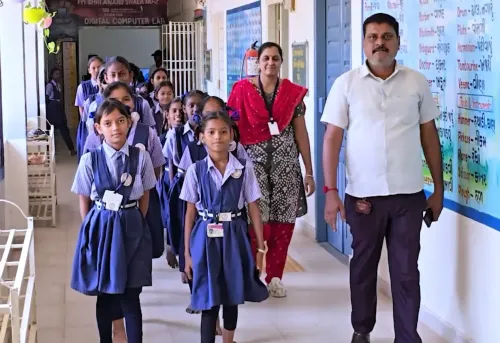
Only 62 of every 100 children who start Class I in India reach Class XII — and more than 2 crore adolescents aged 14-18 are currently out of school entirely. The Ministry of Education is now moving in mission mode, with a 10-district pilot across 9 states and a push to link dropouts to open schooling pathways before a national scale-up.
Key Takeaways
More than 2 crore children aged 14-18 are currently out of school in India, according to DoSEL .
Of every 100 children enrolling in Class I , only 62 reach Class XII , per available data cited by Secretary Sanjay Kumar .
The initiative will pilot across 10 districts in 9 states : Odisha, Maharashtra, Chhattisgarh, Bihar, Uttar Pradesh, Gujarat, Karnataka, Madhya Pradesh, and Delhi.
Children unable to return to formal schools will be linked to NIOS and State Open Schools via ODL mechanisms.
Memoranda of Commitment (MoCs) will be signed with participating states before the formal launch.
Economic compulsions, domestic responsibilities, and livelihood pressures were cited as the primary drivers of dropout.
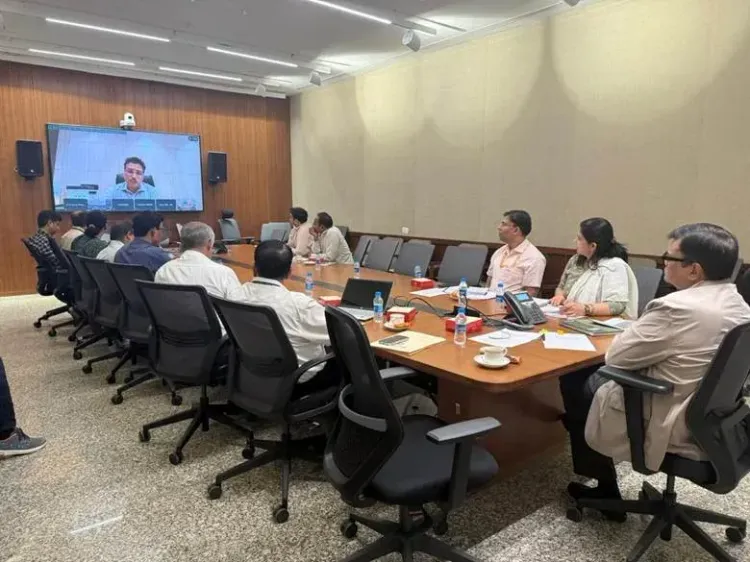
Sanjay Kumar, Secretary of the Department of School Education and Literacy (DoSEL) under the Ministry of Education, on Saturday, 16 May chaired a high-level review meeting in New Delhi to assess strategies for bringing school dropouts back into formal education. The meeting comes against a stark backdrop: more than 2 crore children between the ages of 14 and 18 are currently out of school across India.
The Scale of the Crisis
Kumar cited available data showing that out of every 100 children who enrol in Class I, only 62 make it to Class XII — a dropout rate that underscores a systemic failure in retaining students through secondary education. He identified economic compulsions, domestic responsibilities, and livelihood-related pressures as the primary drivers pushing children out of the school system.
Notably, this attrition is concentrated in the adolescent age band — precisely when children are most vulnerable to being absorbed into informal labour markets or early marriage, making the intervention window both narrow and critical.
Flexible Pathways as a Parallel Track
Kumar stressed that while formal school reintegration remains the primary goal, children who cannot return to regular classrooms must be linked to Open and Distance Learning (ODL) mechanisms. These include the National Institute of Open Schooling (NIOS) and various State Open Schools, which offer flexible learning pathways without requiring full-time attendance.
He also underlined the indispensable role of District Collectors and district administrations in translating the initiative from policy to ground-level action, calling for it to be run as a nationwide campaign rather than a departmental exercise.
Mission-Mode Approach and District-Level Convergence
Joint Secretary Prachi Pandey told the meeting that the issue of out-of-school children is being addressed in mission mode, with a proposed initiative built on a data-driven approach and a strong emphasis on last-mile outreach. She called for convergence across departments at the state, district, and local levels to ensure effective identification, enrolment, and retention of out-of-school children.
Pandey outlined preparatory activities ahead of the formal launch, including the enrolment of NIOS Facilitators, distribution of starter kits, preliminary surveys, and initial enrolment of children in pilot areas.
Pilot Districts and Phase-One Rollout
Pilot districts with high concentrations of out-of-school children have been identified for initial implementation. These span Odisha, Maharashtra, Chhattisgarh, Bihar, Uttar Pradesh, Gujarat, Karnataka, Madhya Pradesh, and Delhi.
In the first phase, the initiative will be rolled out across 10 districts. Memoranda of Commitment (MoCs) will be signed with participating states to formalise implementation responsibilities. Learnings from the pilot districts will inform a subsequent nationwide scale-up.
What Comes Next
The government's stated ambition is to ensure every child has access to education through at least the secondary and senior secondary levels, paired with employable skills aligned to local economic conditions. Whether the mission-mode framing translates into measurable enrolment gains will depend heavily on how effectively district administrations execute on the ground — a challenge that past education campaigns have frequently stumbled on.
Point of View
Yet the 38% attrition between Class I and Class XII has barely shifted. The mission-mode framing is politically useful, but the structural barriers — child labour, early marriage, poverty — sit outside the Education Ministry's direct remit, which is precisely why inter-departmental convergence has failed before. The 10-district pilot is a sensible starting point, but without binding accountability metrics tied to the MoCs, states have little incentive to prioritise enrolment over more visible deliverables. The open schooling pivot via NIOS is pragmatic, but historically NIOS completion rates have been low — a fact the government's framing conspicuously sidesteps.
NationPress
25 Sept 2026
Frequently Asked Questions
How many children are out of school in India?
According to data cited by DoSEL Secretary Sanjay Kumar, more than 2 crore children between the ages of 14 and 18 are currently out of school in India. The figure reflects a long-standing retention crisis across the secondary schooling stage.
What is India's school dropout rate from Class I to Class XII?
As per data presented at the DoSEL review meeting, only 62 out of every 100 children who enrol in Class I go on to reach Class XII — a dropout rate of approximately 38% across the schooling cycle.
Which districts have been selected for the pilot initiative?
Pilot districts with high concentrations of out-of-school children have been identified across Odisha, Maharashtra, Chhattisgarh, Bihar, Uttar Pradesh, Gujarat, Karnataka, Madhya Pradesh, and Delhi. The first phase will cover 10 districts in total.
What is the role of NIOS in the dropout reintegration plan?
The National Institute of Open Schooling (NIOS) and State Open Schools will serve as flexible learning pathways for children who cannot return to regular formal schools. They will be accessed through Open and Distance Learning (ODL) mechanisms as a parallel track to mainstream reintegration.
Why do children drop out of school in India?
DoSEL Secretary Sanjay Kumar cited economic compulsions, domestic responsibilities, and livelihood-related challenges as the primary reasons children remain outside the school system. These factors are especially acute in the 14-18 age group, which is most vulnerable to being absorbed into informal labour.