Owaisi's 'young PM' remark sparks cross-party pushback in India
Synopsis
Owaisi's call for a '40 or 45-year-old' Prime Minister by 2029 — framed around India's youth-heavy demographics — has drawn cross-party fire, with BJP branding it appeasement politics and Congress reminding everyone that voters, not parties, pick the PM. The remark doubles as an early signal of AIMIM's strategy ahead of Uttar Pradesh polls.
Key Takeaways
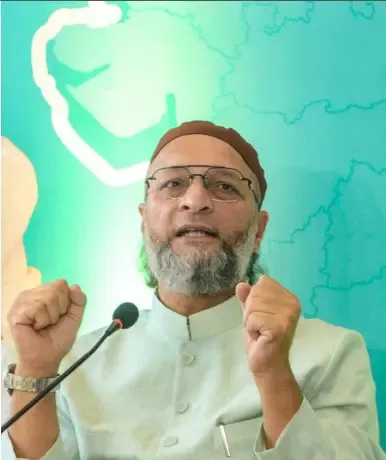
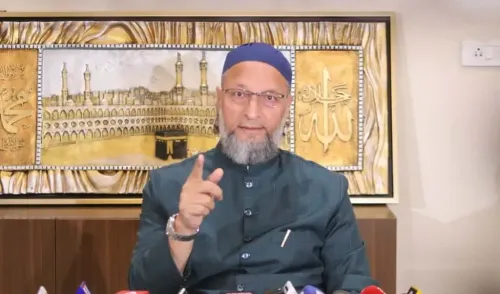
AIMIM chief Asaduddin Owaisi called for a 40 or 45-year-old Prime Minister by the 2029 general elections , citing India's young demographic profile.
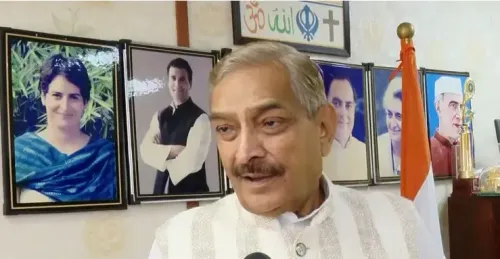
BJP spokesperson Pratul Shah Deo accused Owaisi of 'trying to build a narrative' and engaging in politics of 'appeasement.' BJP leader RP Singh defended Prime Minister Narendra Modi , calling him uniquely committed to India's youth.
Congress leader Rakesh Sinha stressed that in a democracy, citizens — not parties — decide who becomes Prime Minister.
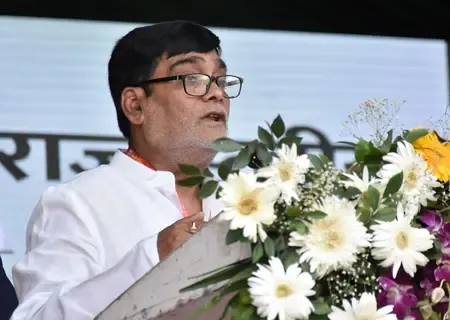
Congress MP Sukhdeo Bhagat described Rahul Gandhi as a 'visionary leader' while affirming everyone's right to voice opinions.
Owaisi also announced AIMIM would field young candidates in the upcoming Uttar Pradesh Assembly elections .
Political leaders across the spectrum on Sunday, 26 July pushed back against All India Majlis-e-Ittehadul Muslimeen (AIMIM) chief Asaduddin Owaisi's call for a younger Prime Minister, with rivals from both the Bharatiya Janata Party (BJP) and the Indian National Congress insisting that it is the citizens of India — not any party or leader — who determine who occupies the country's top office.
What Owaisi Said
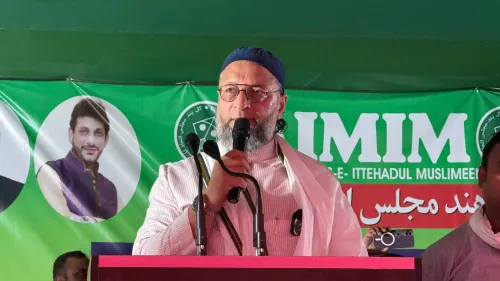
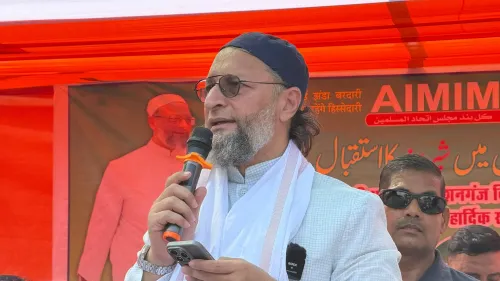
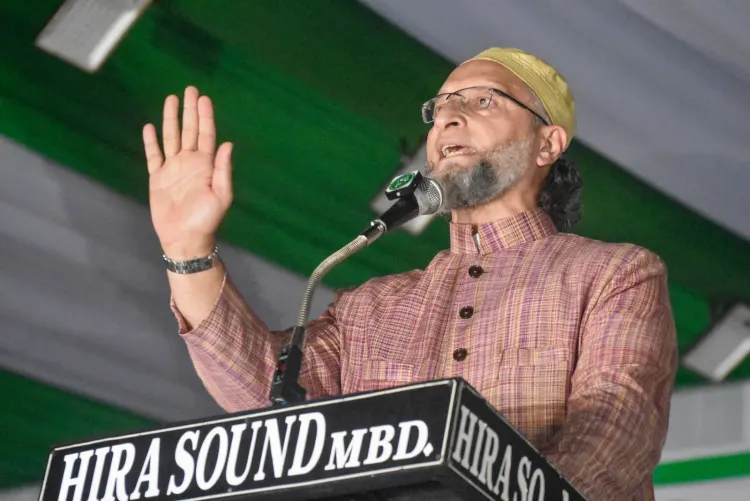
Addressing a public rally on Saturday, Owaisi pointed to India's demographic profile to make his case. 'In India, 65 per cent of our population is under the age of 35, and 50 per cent of India's population is under the age of 25,' he said. 'Our effort will be that, in the coming Uttar Pradesh Assembly elections, our party will nominate young people as its candidates so that they can speak for you fearlessly.'
He went further, stating: 'Our effort will be that when the 2029 elections are held, not an 80-year-old man becomes the Prime Minister of India, but a 40 or 45-year-old young person becomes the Prime Minister of this country. This will be our endeavour.'
BJP's Response
BJP spokesperson Pratul Shah Deo questioned the intent behind the remark. 'I don't know why he is so concerned about age. The President of the United States is aged over 80 years and continues to remain in the spotlight,' he said, adding that Owaisi was 'trying to build a narrative' and 'only does politics in the name of Muslims and appeasement.'
BJP leader RP Singh accused Owaisi and other opposition figures of 'trying to walk by keeping a gun on the shoulders of the youth,' asserting that no Prime Minister anywhere had shown as much concern for students and youth as Prime Minister Narendra Modi.
Congress Weighs In
Congress leader Rakesh Sinha framed the issue as a matter of democratic principle. 'In a democracy, the winning party chooses its leader. They are free to choose anyone. That is the beauty of democracy. Ultimately, it is the people of the country, not any political party, who decide who will become the Prime Minister,' he said.
Congress MP Sukhdeo Bhagat affirmed that every citizen has the right to express opinions in a democracy, while describing Lok Sabha Leader of Opposition Rahul Gandhi as a 'visionary leader' playing a significant role in nation building. 'People may have their own view points but we have our own path of struggle,' he added.
The Broader Context
Owaisi's remarks come ahead of Uttar Pradesh Assembly elections, where AIMIM has signalled it will field younger candidates. The party has historically sought to consolidate a minority voter base in the state, and the youth-focused pitch appears designed to broaden that appeal. Notably, the reference to a hypothetical 2029 general election timeline also positions the remark as an early salvo in national electoral politics, even as the next Lok Sabha contest is still years away.
With India's median age at roughly 28 years, the demographic argument is not without resonance — but critics argue that electoral outcomes are shaped by far more than the age of a candidate or leader.
Point of View
Invoking the US President's age, is a deflection rather than a rebuttal. What neither side addresses is the substance: India's political class, across ages, has largely failed to translate demographic youth into economic opportunity. The real question Owaisi's remark raises — whether India's leadership reflects its population's age profile — is worth asking, even if his motivation for asking it is nakedly electoral.
NationPress
26 Jul 2026
Frequently Asked Questions
What did Asaduddin Owaisi say about the Prime Minister's age?
Owaisi said his party's endeavour would be to ensure that by the 2029 general elections, a 40 or 45-year-old becomes Prime Minister rather than an 80-year-old. He made the remark at a public rally on Saturday, linking it to India's young demographic profile.
How did the BJP respond to Owaisi's remark?
BJP spokesperson Pratul Shah Deo said Owaisi was 'trying to build a narrative' and accused him of practising politics of appeasement. BJP leader RP Singh also defended Prime Minister Modi's record on youth welfare and accused Owaisi of exploiting the youth for political ends.
What was the Congress party's position?
Congress leader Rakesh Sinha said India's democracy allows anyone — young or old — to contest elections, and that it is ultimately the people, not any party, who choose the Prime Minister. Congress MP Sukhdeo Bhagat echoed this while calling Rahul Gandhi a 'visionary leader.'
Why did Owaisi make this remark now?
The remark came ahead of upcoming Uttar Pradesh Assembly elections, where AIMIM plans to field younger candidates. It also serves as an early signal of the party's national positioning ahead of the 2029 Lok Sabha elections.
Who decides who becomes Prime Minister in India?
Under India's parliamentary democracy, the leader of the party or coalition that wins a majority in the Lok Sabha is invited to form the government and becomes Prime Minister. Voters elect Members of Parliament, making citizens the ultimate decision-makers — a point stressed by both BJP and Congress in their responses to Owaisi.