1984 riots: BJP's Phoolka calls Sonia Gandhi's memoir account 'fake narrative'
Synopsis
Sonia Gandhi's memoir has handed BJP's H.S. Phoolka a detailed target. His point-by-point rebuttal — invoking General Vaidya's commission testimony, the 6,100 troops available in Delhi, and the 2,000 lives the Misra Commission said could have been saved — frames the 1984 riots not as communal spontaneity, but as a question of deliberate political inaction with names attached.
Key Takeaways
Phoolka on 11 November 2026 called Sonia Gandhi's account of the 1984 anti-Sikh riots in her memoir 'factually incorrect' and 'a fake narrative.' Phoolka challenged Sonia Gandhi's claim that rioting began in the afternoon of 31 October 1984 , saying the first Sikh targeted in Delhi was then-President Giani Zail Singh at around 4:30–5 p.m.
He cited testimony by then-Army Chief General A.S.
Vaidya before the Misra Commission , saying Vaidya ordered troops — including Sikh Light Infantry from Meerut — to mobilise at 10:30 a.m. on 31 October.
The Misra Commission reportedly noted that deploying even 5,000 of the 6,100 soldiers available on 1 November could have saved at least 2,000 Sikh lives.
Phoolka accused the Congress government of shielding those responsible, alleging that riot-linked leaders including HKL Bhagat , Jagdish Tytler , and Kamal Nath were subsequently promoted.
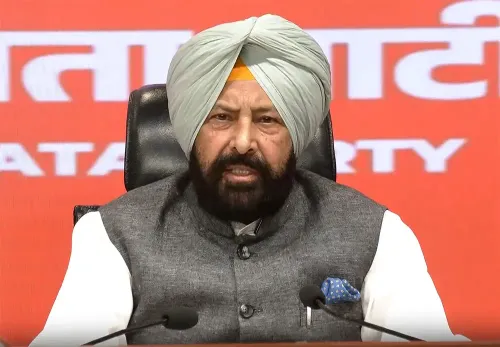
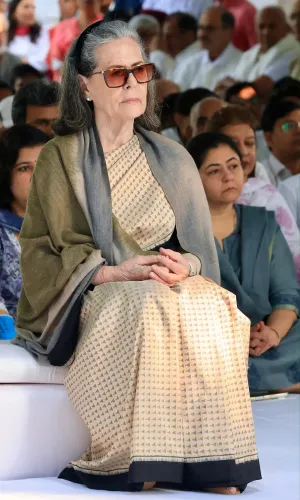
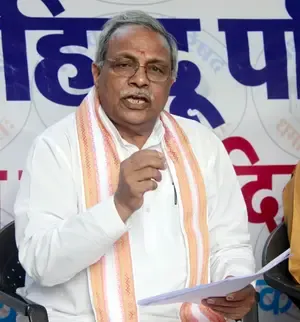
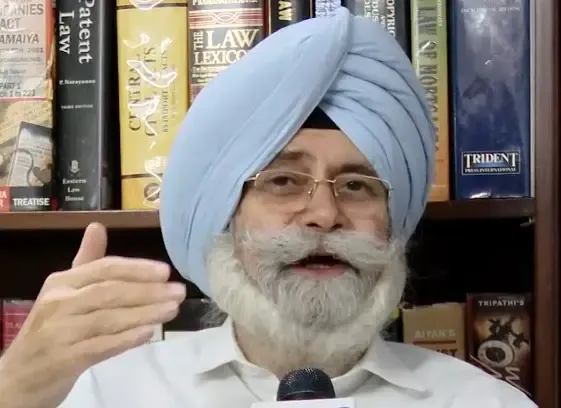
Bharatiya Janata Party (BJP) leader and senior advocate H.S. Phoolka on Wednesday, 11 November 2026, mounted a sharp challenge to Congress leader Sonia Gandhi's account of the 1984 anti-Sikh riots, describing it as 'another attempt to build a fake narrative.' Phoolka's remarks were directed at Sonia Gandhi's recently released memoir, 'Belonging: A Journey of Love', which he declared 'factually incorrect' in its depiction of the violence that followed the assassination of former Prime Minister Indira Gandhi.
The Core Dispute: Who Incited the Violence?
At the heart of Phoolka's rebuttal is Sonia Gandhi's claim that Hindus were provoked into retaliatory violence after learning of Indira Gandhi's assassination on 31 October 1984. The BJP leader flatly rejected this framing. 'She has tried to show that Hindus were provoked after coming to know of the assassination of Indira Gandhi. This same narrative was attempted by the Congress in 1984,' Phoolka said.
He went further, asserting that the BJP has established 'on record' that the violence was not a spontaneous Hindu backlash but was instead orchestrated by the then-ruling Congress party using government machinery. 'Hindus didn't kill Sikhs, rather it was the Congress, the then-ruling party, which used government machinery to massacre the Sikhs,' he said.
Challenging the Timeline of Riots
Phoolka also took direct aim at Sonia Gandhi's claim that 'by the afternoon, rioting had broken out in different parts of the city and beyond' on 31 October 1984. He challenged her to cite a single incident from that afternoon in New Delhi, arguing the first targeted attack came later in the day.
'The President was the first Sikh to be targeted in Delhi, that too around 4:30 or 5 p.m. in the evening,' he said, referring to the reported attack on the convoy of then-President Giani Zail Singh. Phoolka additionally claimed that individuals linked to the Congress were responsible for initiating violence near AIIMS in the wake of that convoy attack.
The Army Deployment Controversy
Phoolka also disputed Sonia Gandhi's explanation for the delayed deployment of the Army, in which she allegedly attributed the delay to reservations held by the then-Army Chief. Citing the testimony of then-Army Chief General A.S. Vaidya before the Misra Commission, Phoolka said the general had himself ordered troops to mobilise at 10:30 a.m. on 31 October after learning of the assassination.
He further noted that General Vaidya had called in the Sikh Light Infantry from the Meerut unit, directly contradicting Sonia Gandhi's claim that the Army Chief lacked confidence in Sikh soldiers. 'In reality, it was the Rajiv Gandhi's government which didn't trust the Sikh soldiers,' Phoolka remarked. He added that General Vaidya had also testified that 6,100 soldiers were available in Delhi on 31 October, and that the Misra Commission's own report noted that deploying even 5,000 of them on 1 November could have saved at least 2,000 Sikh lives.
Phoolka on Political Accountability and Justice
The BJP leader accused the then-Congress government of compounding the violence through its subsequent conduct. He recalled Rajiv Gandhi's post-riots remark — 'When a big tree falls, the earth shakes a little' — as an attempt to justify the massacre, and alleged that leaders linked to the riots, including HKL Bhagat, Jagdish Tytler, and Kamal Nath, were subsequently promoted within the government.
On Sonia Gandhi's statement that 'justice has been hard,' Phoolka was unsparing: 'Judges from lower courts to High Court were transferred…and even chargesheets were not filed in courts,' he said, implying a systemic obstruction of justice under Congress rule.
Background and Broader Significance
The 1984 anti-Sikh riots, which erupted in the immediate aftermath of Indira Gandhi's assassination on 31 October 1984, resulted in the deaths of thousands of Sikhs across India, with New Delhi witnessing the worst violence. Two official commissions — the Misra Commission and the Nanavati Commission — have examined the events, with the Nanavati Commission concluding in 2005 that Congress leaders were involved in organising the violence. The riots remain one of the most politically charged episodes in post-independence Indian history, and Sonia Gandhi's memoir has reignited a long-running debate over accountability and historical record. How the Congress responds to these specific challenges is likely to shape the next phase of this public controversy.
Point of View
But the specificity is notable: he ties her claims to commission testimony and troop numbers, making this harder to dismiss as rhetoric. What mainstream coverage tends to underweight is that both commissions' findings — especially Nanavati's — have never been fully acted upon. The memoir controversy is, in effect, a demand for accountability that successive governments have deferred. The BJP's current eagerness to prosecute this debate also carries its own political logic heading into electoral cycles where Sikh votes in Punjab and Delhi remain consequential.
NationPress
11 Nov 2026
Frequently Asked Questions
What did Sonia Gandhi write about the 1984 anti-Sikh riots in her memoir?
In her memoir 'Belonging: A Journey of Love,' Sonia Gandhi reportedly described the 1984 anti-Sikh riots as a reaction by Hindus provoked by news of Indira Gandhi's assassination, and attributed delays in Army deployment partly to concerns raised by the then-Army Chief. BJP leader H.S. Phoolka has disputed both claims as factually incorrect.
What is H.S. Phoolka's main argument against Sonia Gandhi's account?
Phoolka argues that the violence was not a spontaneous communal reaction but was organised by the then-ruling Congress party using government machinery. He cites the Misra and Nanavati Commission reports, as well as the testimony of then-Army Chief General A.S. Vaidya, to support his position.
What did the Misra Commission find about the Army's role during the 1984 riots?
According to Phoolka, the Misra Commission's report stated that 6,100 soldiers were available in Delhi on 31 October 1984, and that deploying even 5,000 of them on 1 November could have saved at least 2,000 Sikh lives. General Vaidya reportedly testified he had ordered troop mobilisation at 10:30 a.m. on that day.
Who are the Congress leaders Phoolka says were promoted after the 1984 riots?
Phoolka named HKL Bhagat, Jagdish Tytler, and Kamal Nath as individuals with alleged links to the 1984 riots who were subsequently given positions in the government. These allegations have been a long-standing point of contention between the BJP and the Congress.
Why do the 1984 anti-Sikh riots remain politically significant in India?
The 1984 riots, which killed thousands of Sikhs following Indira Gandhi's assassination, have never been fully adjudicated despite two official commissions. Accountability for the violence remains unresolved, and the events continue to influence Sikh community politics, particularly in Punjab and Delhi, making any new narrative — including a memoir by a senior Congress leader — immediately politically charged.