Is There a Defamatory Stereotype Against the Community? PIL in SC Seeks Stay on Film 'Ghooskhor Pandat'

Synopsis
A PIL has been filed in the Supreme Court to halt the screening of 'Ghooskhor Pandat', claiming the film perpetuates caste-based stereotypes that offend the Brahmin community. This controversial case raises significant questions about freedom of expression and community dignity.
Key Takeaways
The film 'Ghooskhor Pandat' has sparked controversy over its title and implications.
The PIL highlights the need for responsible filmmaking in a diverse society.
It raises questions about the balance between freedom of expression and community rights.
The case illustrates the impact of media on social perceptions.
The CBFC's role in regulating film content is under scrutiny.
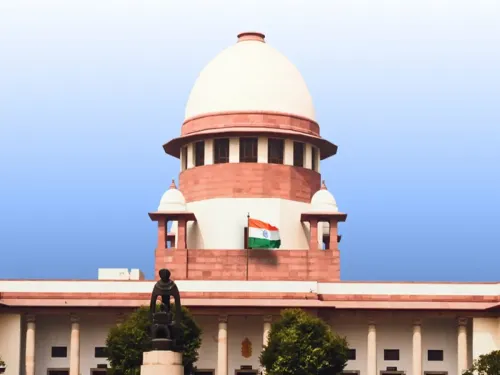
New Delhi, Feb 9 (NationPress) A public interest litigation (PIL) has been lodged with the Supreme Court, seeking to halt the release and screening of the forthcoming film “Ghooskhor Pandat”. The petition alleges that this film fosters caste- and religion-based stereotypes, thereby undermining the dignity and religious sentiments of the Brahmin community.
The petition describes the film’s title and narrative as “prima facie offensive and derogatory”. Filed by advocate Dr. Vinod Kumar Tewari, it asserts that the movie equates the religious and caste identifier “Pandit” with “ghooskhor” (bribery), which creates a direct and defamatory stereotype against a specific community.
The plea states, “The title itself equates a religious and caste-identifying title with bribery and moral turpitude, thereby creating a direct and offensive stereotype against an identifiable religious community”. The petitioner, Atul Mishra, who is the National Organisation Secretary of the Brahman Samaj of India, has included the Union of India, the Central Board of Film Certification (CBFC), and filmmaker Neeraj Pandey as respondents.
According to the petition, while criticism of corruption is constitutionally allowed, the selective use of a caste-linked religious identifier is “neither necessary nor justified” and leads to community stigmatization, violating dignity under Article 21, infringing upon religious freedoms under Articles 25 and 26, and constituting discriminatory treatment as per Article 14.
The plea emphasizes that “Freedom of speech and expression under Article 19(1)(a) is not absolute and is subject to reasonable restrictions” in the interests of public order, decency, morality, and the sovereignty and integrity of India. It further claims that the film violates Articles 14, 19(2), 21, 25, and 51A(e) of the Constitution.
The petition also accuses the CBFC of either failing to adequately scrutinize the film’s content or acting arbitrarily in granting certification, despite the film’s potential to incite hatred and communal tension.
The CBFC, as a statutory authority, is obliged to guarantee that certified content does not promote contempt or ridicule of any community, does not unnecessarily hurt religious sentiments, and does not reinforce caste-based prejudice under the guise of satire, the plea stated.
The PIL argues that the ongoing public screening of the film in its current form has already caused “widespread anguish and resentment” within the Brahmin community and poses a risk to public order and religious harmony.
The petition requests a writ of mandamus to restrain the release or screening of the film in its current form and calls for appropriate directions to uphold constitutional values, communal harmony, and the dignity of the Brahmin community.
Point of View
Our stance remains neutral yet vigilant in matters of community rights and freedom of expression. The ongoing debate surrounding the film 'Ghooskhor Pandat' underscores the delicate balance between artistic freedom and societal sensitivities, a discourse that is essential in our diverse nation.
NationPress
6 Oct 2026
Frequently Asked Questions
What is the main issue raised in the PIL?
The PIL raises concerns that the film 'Ghooskhor Pandat' promotes caste- and religion-based stereotypes, particularly against the Brahmin community.
What actions are being sought through the PIL?
The PIL seeks a writ of mandamus to restrain the release or screening of the film in its present form and ensure protection of constitutional values.
How does the film allegedly violate constitutional rights?
The film is claimed to violate Articles 14, 19(2), 21, 25, and 51A(e) by promoting community stigma and undermining religious freedoms.
What is the role of the CBFC in this case?
The Central Board of Film Certification is accused of failing to adequately scrutinize the film's content or acting arbitrarily in granting certification.