Did the Supreme Court Dismiss the Controversial Title 'Ghooskhor Pandat' After Filmmakers Acted?
Synopsis
The Supreme Court has dismissed a plea against the film titled 'Ghooskhor Pandat' after a commitment from the filmmaker to withdraw the title and related materials. This decision aims to prevent further controversy surrounding caste and community representation in cinema.
Key Takeaways
The Supreme Court dismissed the plea against 'Ghooskhor Pandat'.
Filmmaker Neeraj Pandey withdrew the controversial title.
The court emphasized the importance of social responsibility in filmmaking.
Freedom of expression must be balanced with respect for communities.
The matter is now considered resolved without further directions.
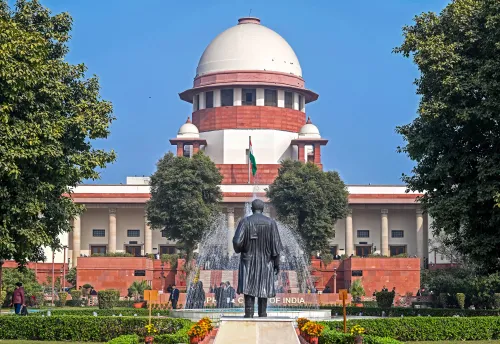
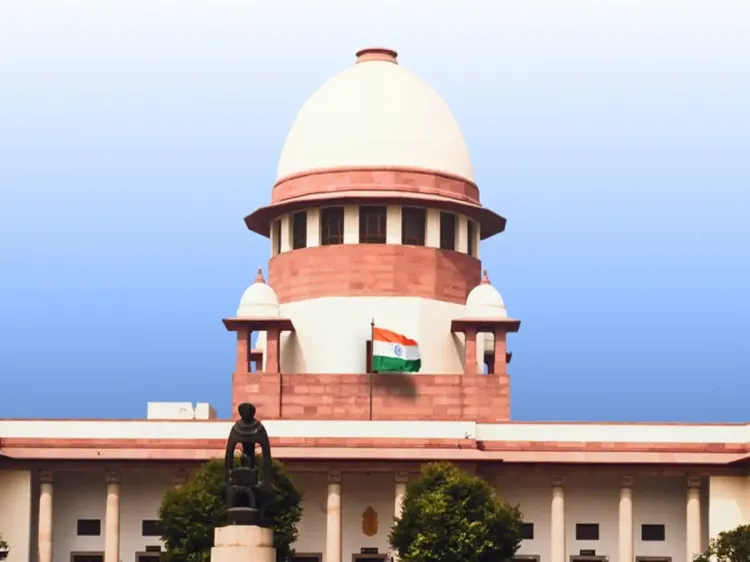
New Delhi, Feb 19 (NationPress) The Supreme Court on Thursday dismissed a petition opposing the upcoming film previously named 'Ghooskhor Pandat' after filmmaker Neeraj Pandey informed the court that the contentious title and all associated promotional materials had been retracted.
A panel of Justices B.V. Nagarathna and Ujjal Bhuyan acknowledged an affidavit submitted by Pandey, assuring that the disputed title would not be utilized “in any form” and that all promotional content featuring the former name had been eliminated.
In light of these developments, Justice Nagarathna's panel concluded the proceedings, stating that no additional instructions were necessary on the issue.
During the session, the filmmakers' counsel asserted that the title had already been revoked, suggesting that the controversy surrounding the film should now conclude.
The highest court remarked that since the commitment had been made and accepted, no new criminal actions should be initiated concerning the contested title.
Concluding the petition, the Supreme Court indicated that the controversy related to the film's title should now be regarded as settled.
The public interest litigation (PIL) presented to the court claimed that the film’s title and narrative fostered caste- and religion-based stereotypes, undermining the dignity of the Brahmin community.
The petition argued that linking the caste identifier “Pandit” with the term “ghooskhor” (bribe-taker) propagated a defamatory stereotype against a specific community and infringed upon constitutional protections outlined in Articles 14, 19(2), 21, 25, and 51A(e).
Following the Supreme Court’s strong remarks, filmmaker Neeraj Pandey submitted an affidavit to the court, confirming that the controversial title had been “unequivocally withdrawn” and asserting that the film does not insult or target any religion or community.
Last week, the Supreme Court criticized the filmmakers regarding the title “Ghooskhor Pandat,” emphasizing that freedom of speech and expression should not be used as an excuse to belittle a segment of society.
The Justice Nagarathna-led panel had issued notices to the Centre, the Central Board of Film Certification (CBFC), and the filmmaker, indicating that the film would not be allowed to release unless the title was altered.
“Freedom of speech and expression does not allow for portraying a community negatively,” the apex court remarked, warning that such terminology could disrupt social harmony in a time of existing societal tensions.
In a related case, the Delhi High Court recently dismissed a similar plea requesting a stay on the film's release after Netflix announced it would change the title and had removed all promotional content featuring the earlier name from social media.
Accepting this statement, a single-judge bench of Justice Purushaindra Kumar Kaurav of the Delhi High Court noted that no further directions were necessary, given the stance taken by the streaming platform.
Point of View
The resolution of the 'Ghooskhor Pandat' controversy highlights the judiciary's role in balancing freedom of expression with social responsibility. It is crucial for filmmakers to consider the cultural implications of their work while ensuring that they do not perpetuate harmful stereotypes. NationPress remains committed to supporting narratives that foster understanding and respect among diverse communities.
NationPress
24 Sept 2026
Frequently Asked Questions
What was the controversy surrounding 'Ghooskhor Pandat'?
The controversy involved allegations that the film's title and storyline promoted caste-based stereotyping, particularly against the Brahmin community.
What action did the Supreme Court take?
The Supreme Court dismissed the plea against the film after the filmmaker withdrew the controversial title and all related promotional material.
Why was the title 'Ghooskhor Pandat' problematic?
The title associated the caste identifier 'Pandit' with the term 'ghooskhor', which is derogatory, leading to claims of defamation against the Brahmin community.
What did the filmmaker assure the court?
Filmmaker Neeraj Pandey assured the court that the controversial title had been unequivocally withdrawn and that the film would not target any religion or community.
What does the Supreme Court's decision mean for freedom of expression?
The decision underscores that freedom of speech and expression should be exercised responsibly and should not harm societal harmony.