Is the Netflix film 'Ghooskhor Pandat' crossing the line?
Synopsis
The Supreme Court has taken a firm stand against the upcoming Netflix film 'Ghooskhor Pandat,' questioning its derogatory title. Is freedom of expression being misused to insult a community? The court insists that social harmony must take precedence over creative liberties.
Key Takeaways
The Supreme Court emphasizes the importance of social harmony over creative expression.
The title of 'Ghooskhor Pandat' raised concerns about derogatory implications.
Filmmakers may need to consider the societal impact of their work.
Public interest litigations can influence film releases in India.
Netflix is responsive to legal challenges regarding content sensitivity.
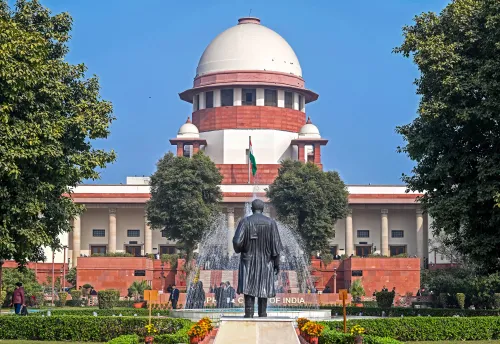
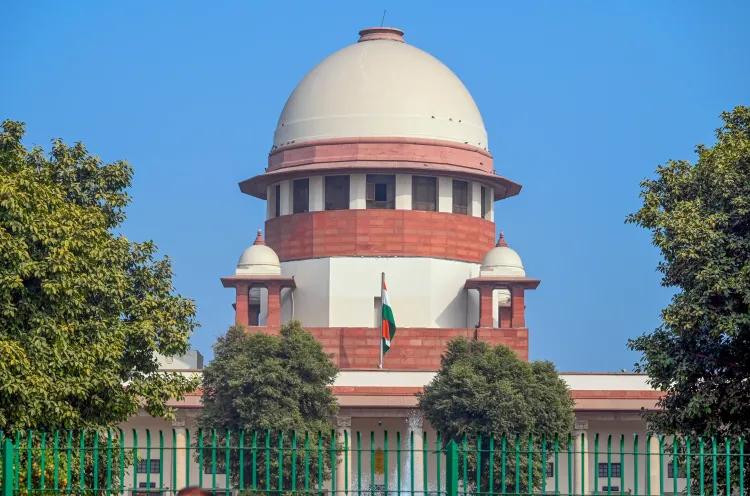
New Delhi, Feb 12 (NationPress) The Supreme Court has expressed strong disapproval of the upcoming Netflix movie 'Ghooskhor Pandat' due to its potentially offensive title, asserting that the freedom of speech should not be a justification for belittling any segment of society.
A bench of Justices B.V. Nagarathna and Ujjal Bhuyan issued a notice to the Centre, the Central Board of Film Certification (CBFC), and filmmaker Neeraj Pandey in response to a public interest litigation (PIL) aiming to halt the film's release, scheduling the next hearing for February 19.
During proceedings, Justice Nagarathna's Bench voiced serious concerns regarding the movie's title, noting that such terminology could disrupt social harmony.
“Why should you demean a particular community with such a title? Freedom of speech does not permit you to depict a group negatively,” they stated.
The Supreme Court indicated that the film's release would not be sanctioned unless the title is altered.
“We will not allow the film to be released unless you confirm that the title has been modified,” the bench warned the filmmaker.
The Court highlighted that names of this nature could incite unrest, stating: “Such titles can cause disturbances in a country already facing significant unrest. How can we remain passive bystanders when society is so fractured?”
The PIL claimed that the film’s title and narrative perpetuate caste- and religion-based stereotypes, undermining the dignity and religious feelings of the Brahmin community. It argued that linking the caste term 'Pandit' with 'ghooskhor' (bribe-taker) fosters a harmful stereotype against a specific community, violating Articles 14, 19(2), 21, 25, and 51A(e) of the Constitution.
The plea, filed by Atul Mishra, the National Organisation Secretary of the Brahman Samaj of India, through advocate Dr. Vinod Kumar Tewari, seeks an order to restrain the film's release in its current format.
Representing filmmaker Pandey, his counsel noted that the trailer had been withdrawn from social media platforms and that efforts were underway to change the film's title.
The Supreme Court instructed the producer to submit an affidavit detailing the steps taken, including the proposed title change.
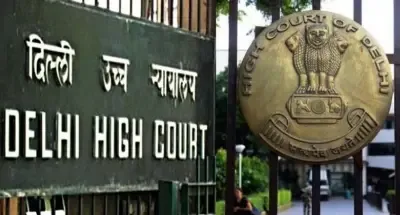
In a related matter, the Delhi High Court earlier dismissed a plea for a stay on the film's release after Netflix confirmed that it would change the title and had removed all promotional content featuring the previous name from social media.
Taking this statement into account, a single-judge Bench of Justice Purushaindra Kumar Kaurav of the Delhi High Court noted that no additional directions were necessary given the streaming platform's position.
Point of View
I stand by the principle that artistic expression should never come at the cost of social respect. The Supreme Court’s intervention in the context of 'Ghooskhor Pandat' serves as a necessary reminder that our words hold power and that societal harmony must always be prioritized.
NationPress
3 Oct 2026
Frequently Asked Questions
What is the issue with the film 'Ghooskhor Pandat'?
The Supreme Court criticized the film's title, viewing it as derogatory and potentially harmful to social harmony.
What actions did the Supreme Court take?
The Court issued a notice to the filmmakers and demanded a title change before permitting the film's release.
What is the public interest litigation about?
The PIL argues that the film promotes caste and religion-based stereotypes that could hurt the dignity of the Brahmin community.
What did Netflix state regarding the film?
Netflix confirmed it would change the title and had already removed promotional content related to the previous name.
What are the legal implications of the case?
The case touches on issues of freedom of speech, caste sensitivity, and the responsibilities of filmmakers in representing communities.