Sachin Pilot Slams Govt Over Recurring Paper Leaks
Synopsis
Congress general secretary Sachin Pilot on 24 May 2026 attacked the central government over repeated examination paper leaks, saying the pattern endangers lakhs of young Indians and reflects habitual governmental negligence, irresponsibility, and insensitivity.
Key Takeaways
Sachin Pilot posted on 24 May 2026 condemning repeated paper leaks in India's competitive examinations.
He called the leaks a threat not just to individual aspirants but to 'the future of the entire country.' Pilot cited 'habitual negligence, evasion of responsibility, and insensitivity' as hallmarks of the government's approach.
The National Testing Agency (NTA) , set up in 2017 , was created to secure centralised exams including NEET and JEE .
Parliament passed the Public Examinations (Prevention of Unfair Means) Act, 2024 to deter leaks, but implementation gaps persist.
Opposition pressure is likely to intensify ahead of the next examination cycle and parliamentary sessions.
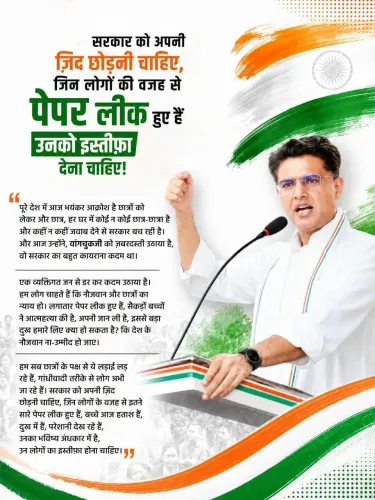
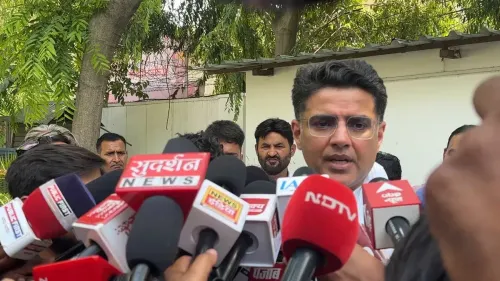
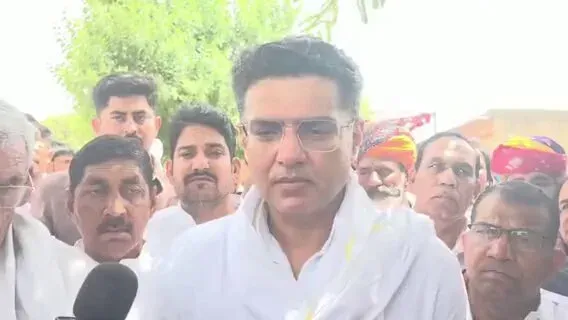
Congress leader and party general secretary Sachin Pilot on Sunday, 24 May 2026, sharply condemned the central government over what he described as repeated paper leaks in competitive examinations, warning that the pattern endangers the futures of millions of young Indians and the nation at large.
Posting in Hindi on X, Pilot wrote: 'बार-बार पेपर लीक होना, लाखों नौजवानों के जीवन ही नहीं बल्कि पूरे देश के भविष्य के साथ खिलवाड़ है।' ('Repeated paper leaks are not just playing with the lives of lakhs of young people, but with the future of the entire country.')
He added that 'widespread anger exists across every section of society over the government's habitual negligence, evasion of responsibility, and insensitivity.'
Context
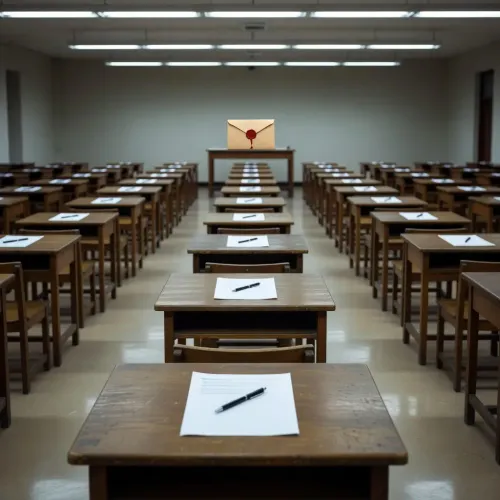
India's centralised examination ecosystem has been rattled by a succession of alleged question-paper leaks over the past decade. High-stakes tests — including those for undergraduate medical admissions and public-sector recruitment — have repeatedly faced allegations of compromised question papers, triggering student protests and court petitions across the country.
The National Testing Agency (NTA), established in 2017 under the Ministry of Education, was created precisely to standardise and secure these examinations. Critics argue that despite institutional investment, the agency has struggled to plug systemic vulnerabilities that allow paper leaks to recur.
Policy Backdrop
Parliament passed the Public Examinations (Prevention of Unfair Means) Act, 2024, introducing stricter penalties for those found guilty of leaking or obtaining examination papers through fraudulent means. The legislation was widely seen as an acknowledgment that existing deterrents were insufficient.
However, opposition leaders including Pilot have consistently argued that legislation alone cannot substitute for administrative accountability and institutional reform within bodies like the NTA. The gap between legislative intent and on-ground implementation remains a central point of political contestation.
Stakeholders and Impact
The most directly affected are the crores of examination aspirants — students preparing for NEET (the national medical entrance test), engineering entrance examinations, and government recruitment tests — who invest years of effort and significant financial resources in preparation. A single leak can invalidate an entire examination cycle, forcing candidates to restart a gruelling process.
Beyond individual aspirants, the credibility of merit-based selection underpins public trust in higher education and government employment. Each leak episode erodes confidence in the fairness of systems that are meant to be the primary vehicle of social mobility for India's youth, particularly those from lower-income and rural backgrounds.
Pilot, who holds the Congress party's Chhattisgarh in-charge portfolio and has consistently positioned himself as a voice on youth and employment issues, framed the problem not as an isolated administrative failure but as a reflection of governmental 'insensitivity' — a framing designed to broaden the political resonance of the issue beyond exam-going families.
What's Next
Attention will now turn to whether the Ministry of Education issues a formal response or announces fresh Standard Operating Procedures ahead of the next cycle of national entrance examinations. Parliamentary debate on potential amendments to the Public Examinations (Prevention of Unfair Means) Act is also likely to intensify.
With competitive examinations remaining the primary gateway to medical colleges, engineering institutions, and government jobs, the political pressure on the ruling dispensation to demonstrate concrete corrective action — rather than legislative assurance — is set to grow. The Congress party's sustained focus on the issue signals that examination integrity will remain a live electoral theme heading into state and national political cycles.
Point of View
' Pilot attempts to universalise what could otherwise be seen as a sectoral grievance, amplifying its electoral salience. The Congress party has consistently used examination integrity as a wedge issue to highlight institutional decay under the current dispensation, and this post fits squarely within that strategy. The timing, ahead of likely examination cycles and parliamentary sessions, suggests a deliberate effort to keep the issue in the public domain and force a ministerial response.
NationPress
9 Oct 2026
Frequently Asked Questions
What did Sachin Pilot say about paper leaks?
On 24 May 2026 , Sachin Pilot said that recurring paper leaks in competitive examinations are not just harming lakhs of young people's lives but are endangering the future of the entire country, and blamed the government's habitual negligence and insensitivity.
Which examinations in India have faced paper leak allegations?
India's national medical entrance test NEET and various government recruitment examinations have repeatedly faced allegations of question-paper leaks over the past decade, prompting protests, court petitions, and legislative responses.
What is the National Testing Agency and why is it criticised?
The National Testing Agency (NTA) is an autonomous body under the Ministry of Education , established in 2017 to conduct centralised entrance examinations. It has faced criticism for failing to prevent recurring paper leaks despite its mandate to standardise and secure high-stakes tests.
What law exists in India to prevent exam paper leaks?
Parliament passed the Public Examinations (Prevention of Unfair Means) Act, 2024 , which prescribes stricter penalties for leaking or fraudulently obtaining examination papers. Critics argue implementation gaps continue to undermine its effectiveness.
Why are paper leaks considered a serious issue in India?
Paper leaks invalidate examination cycles, forcing crores of aspirants — many from low-income and rural backgrounds — to restart years of preparation. They also erode public trust in merit-based selection, which is the primary route to higher education and government employment for most Indians.