Sam Pitroda says he has lost trust in India's election system
Synopsis
Sam Pitroda's blunt declaration — 'I have lost trust in the election system in India' — lands amid the INDIA bloc's sustained campaign against the ECI's voter-roll revision. The IOC chief's remarks on Modi, Maoism, the 1984 riots, and Sonia Gandhi's memoir make this one of the most politically loaded interviews of the season.
Key Takeaways
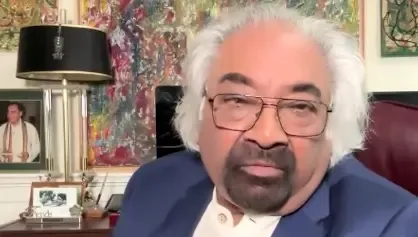
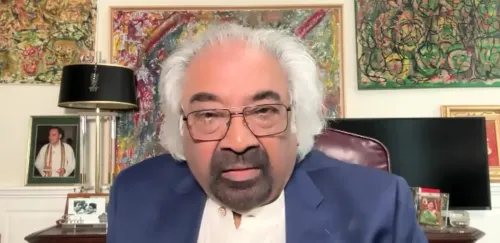
Sam Pitroda , chief of the Indian Overseas Congress , said on 12 November that he has 'lost trust in the election system in India.' He called the erosion of electoral trust 'a very serious issue in democracy' and said many civil society members share his concern.
Pitroda praised PM Modi at a personal level but said he has 'issues with his ideology' , insisting the two are separate matters.
He declined to comment on the Gandhi family's responsibility for the 1984 anti-Sikh riots , saying events from over 40 years ago should not be relitigated.
On Maoism , he rejected violence as a tool regardless of ideological grievance, drawing parallels with wars in Gaza and Ukraine .
On Sonia Gandhi's memoir 'Belonging: A Journey of Love' , he praised her courage and commitment but said he had not yet read the book.
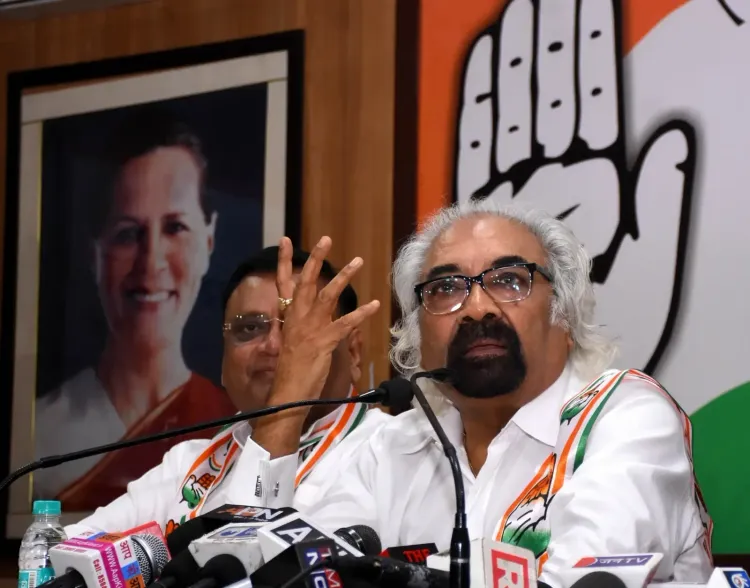
Indian Overseas Congress (IOC) chief Sam Pitroda on 12 November declared that he has 'lost trust in the election system in India', adding that many people in civil society share his concern about how votes are cast and counted. The remarks came in an interview in which Pitroda was asked about the Congress-led INDIA bloc's campaign against the voter-roll revision process of the Election Commission of India (ECI).
On the Election Commission and trust deficit
Responding to a question about Congress leader Rahul Gandhi's repeated allegations of vote theft, Pitroda said the issue requires urgent public debate. 'Somebody has to bridge that trust deficit. Why, what, when, how needs to be discussed, debated,' he said, adding that several of his friends in civil society have raised similar concerns. He called it 'a very serious issue in democracy.'
The ECI has not yet responded to Pitroda's remarks. The INDIA bloc has in recent months intensified its criticism of the electoral rolls revision exercise, alleging irregularities — claims the Commission has consistently denied.
On Prime Minister Modi: 'No personal issues'
Asked about Sonia Gandhi's memoir describing Prime Minister Narendra Modi as a 'big orator', Pitroda offered a notably warm personal assessment while drawing a sharp distinction between the man and his ideology. 'He is a Gujarati friend. I respect him as a person,' Pitroda said, recalling visits to Modi's home in Gujarat. He added, 'I can disagree with Mr Modi, and I can also have dinner with him and have a laugh.' He acknowledged, however, that he holds objections to Modi's worldview and ideology, calling these 'issues with the idea, not the individual.'
On Sonia Gandhi's memoir and the Babri Masjid
Pitroda praised Sonia Gandhi's memoir, 'Belonging: A Journey of Love', describing it as 'a story of love, character, commitment to a nation' and commending her courage in leaving behind her language, culture, and family to build a life in India. He said he had not yet read the book but intended to, noting that writing a volume of its length is 'laborious' and deserves more than selective scrutiny.
On Sonia Gandhi's reported emotional reaction to the Babri Masjid demolition, Pitroda declined to offer a view, saying it was her personal experience and her book to write. When asked whether a Congress-led government would consider rebuilding the mosque, he was categorical: 'That's for the Congress party and the government and people of India to decide; who am I to decide that?'
On US midterm results, Maoism, and the anti-Sikh riots
Weighing in on the US midterm elections, Pitroda attributed the outcome to public discontent over the economy, ongoing wars, and what he described as an 'authoritarian attitude in decision-making.' He said young voters gravitated toward the Democrats seeking 'peace, employment, education, and security.' Asked whether the results carry a warning for the Bharatiya Janata Party (BJP), he deflected: 'It is up to them. They know what happened.'
On the BJP's claim of having ended Maoism, Pitroda offered a nuanced take, acknowledging that the movement's roots lie in grievances over economic exclusion, while firmly rejecting violence as a means of redress. 'Ideology is fine. We can sit across the table... But whenever you resort to violence, it makes no sense to me,' he said, drawing comparisons with conflicts in Gaza, Ukraine, and Afghanistan.
Asked about the Gandhi family's responsibility for the 1984 anti-Sikh riots, Pitroda dismissed the question, saying it makes little sense to relitigate events from over 40 years ago and urged a forward-looking national agenda instead. The remarks are likely to draw sharp criticism from opposition parties and Sikh community organisations.
As assembly elections approach in several states, Pitroda's wide-ranging remarks are set to amplify the Congress party's narrative on electoral integrity — while also handing the BJP fresh ammunition on older controversies.
Point of View
Leaving the charge at the level of sentiment rather than allegation. His warm words for Modi as a person, in the same breath as ideological disagreement, are either a show of rare political maturity or a calculated attempt to soften the Congress's image — possibly both. The dismissal of the 1984 anti-Sikh riots as ancient history is the most combustible element here; it reflects a recurring pattern where Congress leaders deflect accountability questions about that period rather than directly addressing them. That deflection rarely plays well, and the BJP is unlikely to let it pass.
NationPress
12 Nov 2026
Frequently Asked Questions
What did Sam Pitroda say about the Election Commission of India?
Sam Pitroda said he has 'lost trust in the election system in India' and that many people in civil society share this concern. He called it 'a very serious issue in democracy' and urged a public debate on how votes are cast and counted.
Why did Pitroda comment on the election system?
He was asked about the Congress-led INDIA bloc's campaign against the ECI's voter-roll revision process, in the context of Rahul Gandhi's repeated allegations of vote theft. Pitroda was speaking in his capacity as chief of the Indian Overseas Congress.
What did Pitroda say about PM Modi?
Pitroda described Modi as a personal friend and 'Gujarati friend', calling him warm, kind, and a good orator. He drew a clear distinction between his personal regard for Modi and his disagreements with Modi's ideology and worldview.
How did Pitroda respond to questions about the 1984 anti-Sikh riots?
Pitroda dismissed the question, saying it makes little sense to discuss events that happened more than 40 years ago. He said the matter had been debated and decided and urged the country to focus on the future instead.
What did Pitroda say about Sonia Gandhi's memoir 'Belonging: A Journey of Love'?
Pitroda praised the memoir as 'a story of love, character, commitment to a nation' and commended Sonia Gandhi for her courage in adapting to life in India while withstanding public criticism. He said he had not yet read the book but looked forward to doing so.