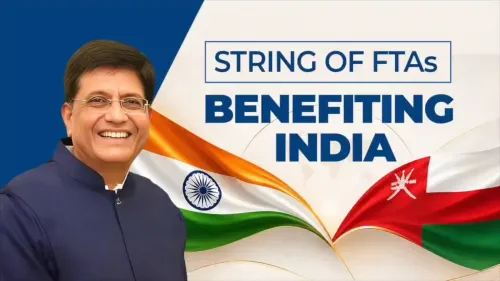
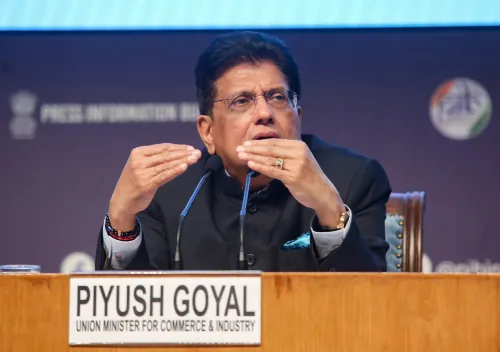
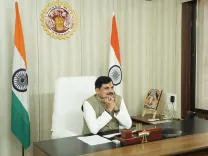
Piyush Goyal explains India's push for multiple FTAs
Synopsis
Commerce Minister Piyush Goyal has outlined India's rationale for pursuing multiple bilateral Free Trade Agreements, building on the 2022 UAE and Australia deals while targeting transformational pacts with the EU and UK.
Key Takeaways
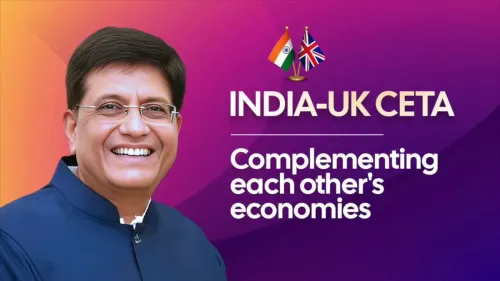
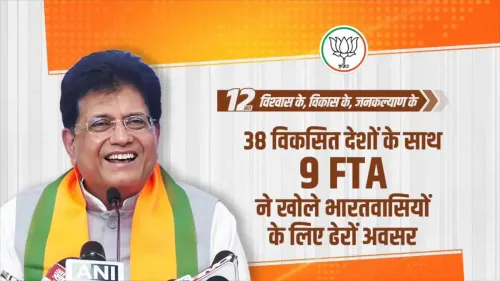
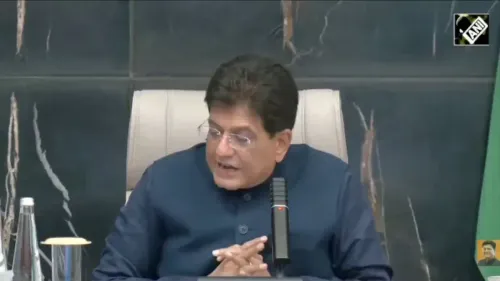
Union Commerce Minister Piyush Goyal posted a video on 29 July 2026 explaining India's FTA strategy.
India exited RCEP talks in 2019 and pivoted to tailored bilateral agreements to protect domestic manufacturers.
India signed a CEPA with the UAE and an ECTA with Australia , both in 2022 , covering goods, services, and investment.
The bilateral approach targets specific rules of origin aligned with Indian production, not just headline tariff cuts.
Ongoing negotiations with the European Union and United Kingdom are the next high-stakes milestones in the strategy.
The overarching goal is to integrate India into global supply chains as companies diversify away from single-country dependence.
India's trade architecture is being redrawn — one bilateral deal at a time. On Wednesday, 29 July 2026, Union Commerce and Industry Minister Piyush Goyal took to X to explain the strategic logic behind India's accelerating push to sign Free Trade Agreements with major global economies, sharing a video that lays out the government's reasoning.
From multilateral retreat to bilateral momentum
The pivot has roots in a deliberate 2019 decision: India walked away from the Regional Comprehensive Economic Partnership (RCEP) — the world's largest trade bloc — citing concerns that the deal's terms did not adequately protect domestic manufacturers and could have flooded Indian markets with cheap imports, particularly from China. Rather than abandon trade ambition altogether, New Delhi doubled down on a bilateral-first strategy, targeting tailored agreements that could be negotiated on India's own terms.
The results have begun to materialise. India signed a Comprehensive Economic Partnership Agreement (CEPA) with the UAE in 2022, slashing tariffs on key Indian exports including gems, jewellery, and textiles. That same year, the Economic Cooperation and Trade Agreement (ECTA) with Australia came into force, covering goods, services, and investment — giving Indian exporters preferential access to the Australian market for the first time.
The logic: tailored concessions, targeted supply chains
The bilateral approach is not simply about cutting tariffs. Each deal is structured to secure specific rules of origin that align with where India actually produces goods — preventing third countries from routing exports through India to claim benefits they are not entitled to. For Indian exporters and the manufacturing sector, this means real, enforceable market access rather than paper concessions buried in a sprawling multilateral text.
The broader ambition is supply-chain integration. As global companies diversify away from single-country dependence, India is positioning itself as a credible alternative hub — and FTAs are the entry ticket into those conversations.
What hangs on the EU and UK talks
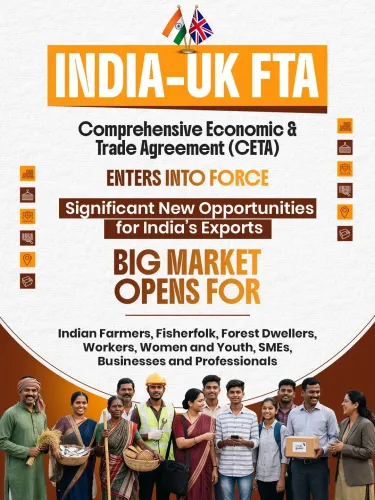
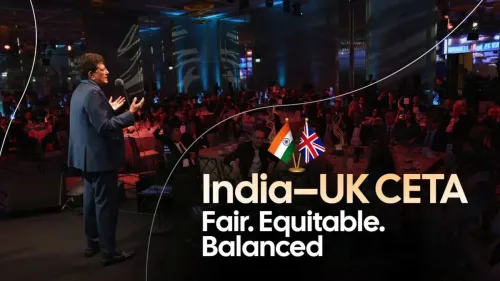
The deals already signed are only part of the story. Negotiations with the European Union and the United Kingdom remain the two most consequential ongoing talks, each covering not just tariffs on goods but services chapters and investment protection frameworks. The EU is India's largest trading bloc partner; a deal there would be transformational in scale. The UK agreement, post-Brexit, carries its own strategic weight for Indian professionals and services exporters. The pace and shape of those outcomes will define whether the bilateral strategy delivers at the scale the government is betting on.
India's FTA playbook is no longer a work in progress — it is an active, accelerating agenda. The question now is whether the deals in the pipeline can match the ambition of the ones already signed.
Point of View
Enforceable deals deliver more durable gains than large multilateral agreements where India's leverage is diluted. The RCEP exit in 2019 was politically contentious but gave New Delhi the room to negotiate from a position of specificity rather than compromise. The real test of this doctrine will be the EU and UK negotiations — both of which involve complex services and investment chapters that go well beyond tariff schedules, and where the geopolitical stakes are considerably higher than the UAE or Australia deals. If those agreements land, the bilateral strategy will be vindicated at scale; if they stall, the question of whether India sacrificed multilateral influence for incremental bilateral wins will sharpen considerably.
NationPress
29 Jul 2026
Frequently Asked Questions
Why is India signing so many Free Trade Agreements?
India is pursuing multiple bilateral FTAs to secure tailored tariff concessions and rules of origin that protect domestic manufacturers, expand export market access, and integrate Indian industry into global supply chains — a strategy accelerated after India exited RCEP talks in 2019.
Which FTAs has India signed recently?
India signed a Comprehensive Economic Partnership Agreement (CEPA) with the UAE and an Economic Cooperation and Trade Agreement (ECTA) with Australia, both in 2022, covering goods, services, and investment.
Why did India leave RCEP?
India withdrew from Regional Comprehensive Economic Partnership negotiations in 2019, citing concerns that the deal's terms could expose domestic manufacturers to a surge of cheap imports, particularly from China, without adequate safeguards.
What is India's FTA status with the EU and UK?
Negotiations with both the European Union and the United Kingdom are ongoing. These are among the most consequential talks in India's trade pipeline, covering not just goods tariffs but services chapters and investment protection frameworks.
What did Piyush Goyal say about India's trade agreements?
On 29 July 2026, Commerce Minister Piyush Goyal posted a video on X explaining the strategic rationale behind India signing multiple Free Trade Agreements with major economies, highlighting the government's bilateral-first approach to trade expansion.