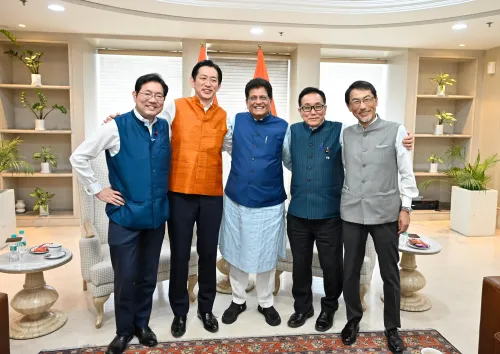
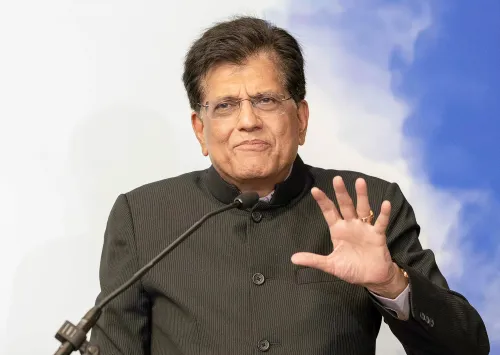
Piyush Goyal: India, Japan Jointly Boost Northeast Industry
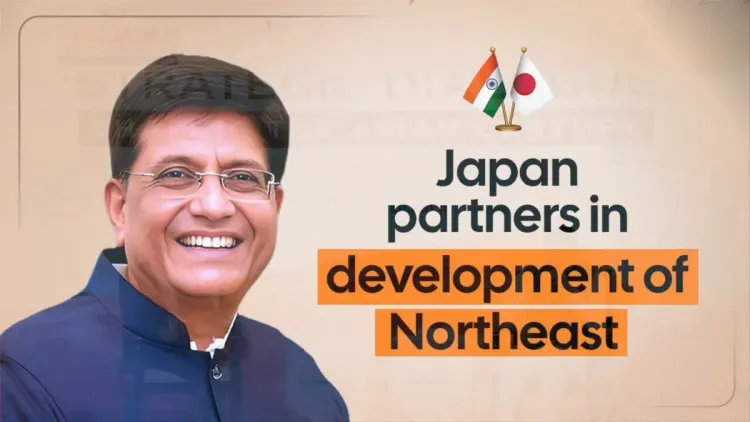
Synopsis
Union Commerce Minister Piyush Goyal has affirmed that India and Japan are jointly promoting industry and infrastructure in Northeast India, building on the Act East Forum and JICA-backed projects that have anchored bilateral cooperation in the region since 2017.
Key Takeaways
Union Commerce and Industry Minister Piyush Goyal confirmed on 2 July 2026 that India and Japan are collaborating on industry and infrastructure in the Northeast .
The Act East Forum , established in 2017 , is the primary bilateral platform coordinating India-Japan development projects in the Northeastern states.
JICA has financed road, power, and urban infrastructure projects across Northeast India, including the North East Road Network Connectivity Improvement Project .
The partnership positions the North Eastern Region as a strategic gateway to ASEAN markets under India's Act East Policy .
Key stakeholders include Northeast state governments , Japanese investors , and local MSMEs along proposed industrial corridors.
The next India-Japan Summit or Act East Forum review meeting is expected to be the next major milestone for fresh project announcements.
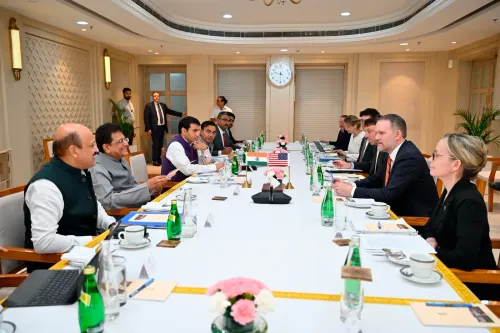
Union Commerce and Industry Minister Piyush Goyal on Thursday, 2 July 2026, stated that India and Japan are actively collaborating to promote industry and infrastructure development across Northeast India, signalling continued momentum in one of the most strategically significant bilateral partnerships in the region.
Context
Minister Goyal's post comes against the backdrop of a deepening India-Japan economic partnership that has steadily expanded its footprint in the North Eastern Region. The two countries have been coordinating through the Act East Forum, a bilateral platform established in 2017, specifically to channel development projects and industrial promotion into the eight Northeastern states. The region borders Myanmar, China, and Bangladesh, making it a critical gateway under India's Act East Policy for connectivity with ASEAN markets.
The minister's statement underscores that this cooperation is active and ongoing, covering both industrial promotion and physical infrastructure — the two pillars that have historically defined the India-Japan Northeast engagement.
Policy Backdrop
The Act East Forum, launched jointly by India and Japan in 2017, was designed to give institutional shape to bilateral development work in the Northeast. It has served as the primary coordination mechanism for aligning Japanese official development assistance with India's own connectivity and industrialisation goals for the region.
JICA (Japan International Cooperation Agency) has been a key implementing arm, financing road, power, and urban infrastructure schemes across multiple Northeastern states. A flagship example is the North East Road Network Connectivity Improvement Project, for which JICA extended official development assistance in phases from 2017 onward. Japanese assistance has concentrated on transport corridors, power infrastructure, and industrial estates that address long-standing connectivity deficits in the region.
India has strategically integrated Japan into its Act East Policy to position the Northeast not merely as a peripheral zone but as an economic bridge to ASEAN markets — a reorientation that carries both commercial and geopolitical significance given the region's proximity to China's southern frontier.
Stakeholders and Impact
The primary beneficiaries of this bilateral effort are the eight Northeastern states — Assam, Arunachal Pradesh, Manipur, Meghalaya, Mizoram, Nagaland, Sikkim, and Tripura — whose governments have been active partners in receiving and implementing Japanese-assisted projects. Local MSMEs and communities along proposed industrial corridors stand to gain from improved logistics and investment flows.
Japanese investors and firms, for their part, gain preferential access to a region that sits at the cusp of India's emerging eastern trade routes. The partnership also carries supply-chain resilience dimensions, as both nations seek to diversify industrial bases beyond traditional hubs in peninsular India and coastal Japan.
For India as a whole, sustained Japanese engagement in the Northeast reinforces the credibility of the Act East Policy and provides a model for attracting other strategic partners into a region that has historically received limited foreign direct investment.
What's Next
Observers will watch for the next review meeting of the Act East Forum or fresh project announcements at the annual India-Japan Summit, which typically serves as the high-level platform where bilateral commitments in the Northeast are formalised or expanded. Minister Goyal's public statement may also signal that a specific announcement or project update is imminent, though no details were provided in the post.
As India deepens its ASEAN connectivity ambitions and Japan seeks to consolidate its Indo-Pacific partnerships, the Northeast corridor is likely to attract intensified attention — with industry, logistics, and clean energy emerging as the next frontier of India-Japan collaboration in the region.
Point of View
Not merely a diplomatic talking point. It fits into a broader pattern of the BJP government using bilateral economic frameworks — particularly with Japan — to demonstrate tangible delivery in a region that has long been promised but underserved by industrial investment. The timing, mid-2026, suggests the government may be building narrative momentum ahead of a summit-level announcement or a fresh tranche of Japanese ODA. For Japan, the Northeast engagement also serves its own Indo-Pacific calculus, making this a partnership of mutual strategic convenience as much as development cooperation.
NationPress
2 Jul 2026
Frequently Asked Questions
What is India and Japan doing together in Northeast India?
India and Japan are jointly promoting industry and infrastructure development in Northeast India through the Act East Forum, with Japan's aid agency JICA financing road, power, and urban projects across the eight Northeastern states.
What is the Act East Forum?
The Act East Forum is a bilateral platform established by India and Japan in 2017 to coordinate development projects, industrial promotion, and connectivity initiatives specifically in India's Northeastern states.
What role does JICA play in Northeast India?
JICA, the Japan International Cooperation Agency, is Japan's official aid body that has financed multiple infrastructure schemes in Northeast India, including road network connectivity improvement projects approved in phases from 2017 onward.
Why is Northeast India important for India-Japan ties?
Northeast India borders Myanmar, China, and Bangladesh, making it a strategic gateway to ASEAN markets under India's Act East Policy. Japan's investment in the region also aligns with its broader Indo-Pacific partnership goals.
What did Piyush Goyal say about Japan and Northeast India?
On 2 July 2026, Union Commerce and Industry Minister Piyush Goyal stated on X that India and Japan are working together to promote industry and infrastructure in the Northeast, reaffirming the active status of this bilateral partnership.