Piyush Goyal Meets Knauf Group in Berlin on India Manufacturing
Synopsis
Union Commerce Minister Piyush Goyal met Knauf Group's Global General Partner Murat Akyildiz in Berlin on 23 October 2026, discussing expansion of Knauf's India manufacturing and deeper collaboration in sustainable construction materials aligned with India's urban infrastructure drive.
Key Takeaways
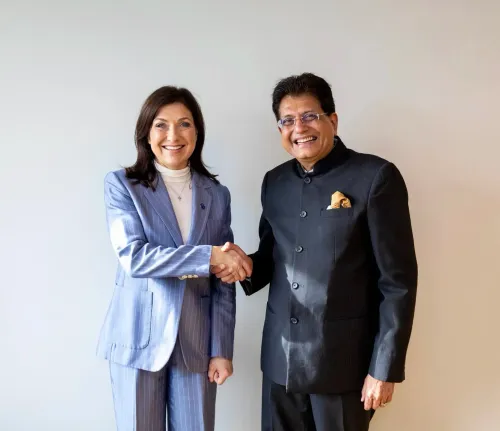
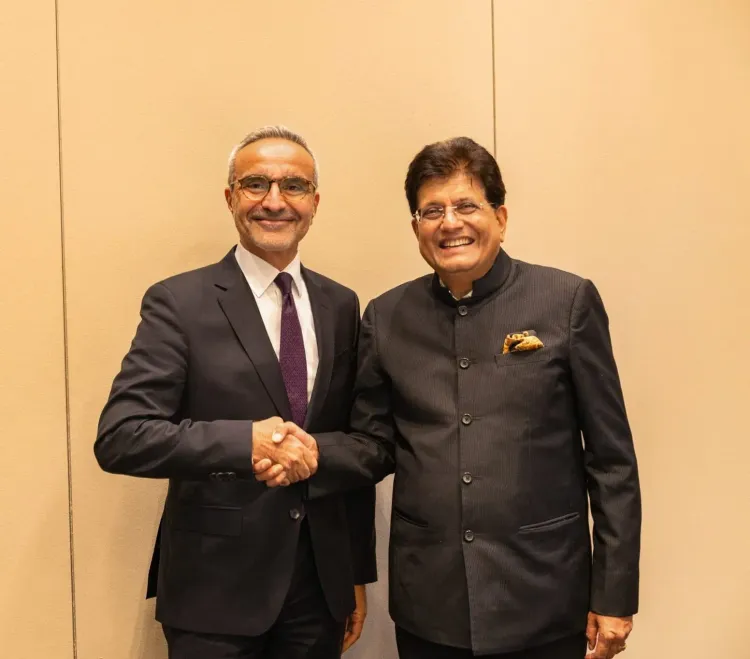
Piyush Goyal held a bilateral meeting with Murat Akyildiz , Global General Partner at Knauf Group , in Berlin on 23 October 2026 .
Talks centred on Knauf's expanding manufacturing in India and collaboration in sustainable construction materials and infrastructure development.
Knauf Group , a German multinational specialising in gypsum, insulation and dry-wall systems, already has an existing manufacturing presence in India.
India's National Infrastructure Pipeline targets ₹111 lakh crore in investment, creating large-scale demand for green building materials.
The meeting aligns with the Make in India initiative, which has since 2014 sought to attract foreign manufacturers to set up local production capacity.
Progress on the EU-India trade and investment agreement remains a key variable for deeper European manufacturing partnerships.
In Berlin on Friday, 23 October 2026, Union Commerce and Industry Minister Piyush Goyal sat down with Murat Akyildiz, Global General Partner at the Knauf Group, to explore how one of Germany's most prominent building-materials giants can deepen its manufacturing footprint in India — a conversation that sits squarely at the intersection of sustainable construction and the country's breakneck urbanisation story.
What Goyal and Akyildiz Put on the Table
The minister described the meeting as covering Knauf's expanding manufacturing presence in India and 'avenues to deepen collaboration across sustainable construction materials and infrastructure development, aligning with India's unprecedented urban and economic transformation.' The language is deliberate: sustainable construction materials — think gypsum boards, insulation, and dry-wall systems — are precisely the product lines where Knauf Group has built its global reputation over decades.
Knauf, headquartered in Iphofen, Germany, already operates plants in India and has long positioned the country as a high-priority growth market. The Berlin talks signal that both sides see room to move faster.
Why Germany, Why Now
Germany is one of India's most consequential European economic partners, and Goyal's Berlin stop is part of a wider diplomatic push to pull European manufacturing investment eastward. The backdrop is hard to ignore: India's National Infrastructure Pipeline, announced in 2019, targets a staggering ₹111 lakh crore in urban and transport infrastructure spending — a pipeline that creates enormous demand for exactly the kind of prefabricated, low-carbon building solutions that firms like Knauf specialise in.
At the same time, global supply-chain diversification is pushing multinational manufacturers to look beyond single-country dependencies. India's combination of scale, a growing middle-class housing market, and policy incentives under the Make in India initiative — active since 2014 — makes it a natural landing pad.
The Bigger FDI Picture
Goyal's meeting is one data point in a broader pattern: European firms in specialised materials, clean technology, and precision manufacturing are steadily building local capacity in India rather than exporting finished products. For New Delhi, that shift matters — it means jobs, technology transfer, and reduced import dependence in sectors that feed directly into housing and infrastructure targets.
One number frames the stakes: India needs to house hundreds of millions of new urban residents over the next two decades. Closing that gap with conventional brick-and-mortar at scale is neither fast enough nor green enough. That is precisely the market opportunity Knauf — and Indian policymakers — are eyeing.
With the EU-India trade and investment agreement still under negotiation, any concrete Knauf expansion announcement — a new plant, a technology-transfer deal — would add visible momentum to the bilateral economic relationship at a moment both sides are eager to show progress.
Point of View
Rather than waiting for trade-agreement timelines to resolve. Sustainable building materials occupy a strategic sweet spot — they satisfy both India's green-construction ambitions and the diversification imperatives of global firms post-pandemic. The meeting also signals that New Delhi is proactively courting German industry even as the EU-India Free Trade Agreement remains unresolved, keeping bilateral economic momentum alive through deal-by-deal corporate diplomacy. If Knauf converts the conversation into a plant announcement or technology-transfer commitment, it will strengthen the government's 'Make in India' narrative with a high-visibility European name.
NationPress
23 Oct 2026
Frequently Asked Questions
Why did Piyush Goyal meet Knauf Group in Berlin?
Goyal met Knauf Group's Global General Partner Murat Akyildiz to discuss expanding Knauf's manufacturing operations in India and deepening collaboration in sustainable construction materials and infrastructure, aligned with India's urbanisation goals.
What is Knauf Group and does it operate in India?
Knauf Group is a German multinational headquartered in Iphofen that specialises in gypsum products, insulation, and sustainable building materials. The company already has manufacturing plants in India and has identified it as a key growth market.
How does this meeting relate to Make in India?
The meeting is directly aligned with the Make in India initiative launched in 2014, which aims to attract foreign manufacturers to set up local production capacity in India rather than simply export finished goods.
What is India's National Infrastructure Pipeline?
The National Infrastructure Pipeline, announced in 2019, targets ₹111 lakh crore in investment across urban and transport infrastructure projects, creating massive demand for construction and building materials.
What is the significance of the EU-India trade deal for such meetings?
An EU-India trade and investment agreement, still under negotiation, could lower tariffs and ease regulatory barriers, making it easier for European firms like Knauf to expand in India — giving these bilateral corporate meetings added strategic weight.