PM eBus Sewa Gandhinagar: 1.53 lakh riders in first 14 days
Synopsis
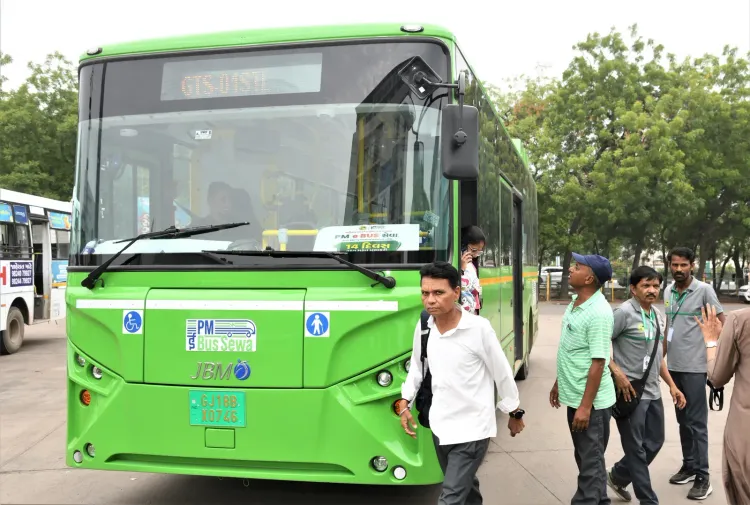
Gandhinagar's PM eBus Sewa drew 1.53 lakh riders in just 14 days — peaking at 13,615 in a single day — suggesting that affordable, air-conditioned, CCTV-equipped electric buses can shift commuter behaviour even in a mid-sized state capital, if the price and safety signals are right.
Key Takeaways
PM eBus Sewa in Gandhinagar carried 1,53,509 passengers between 29 June and 12 July 2025 .
Daily ridership averaged 10,965 commuters , rising from a low of 6,120 on day one to a peak of 13,615 on 11 July .
Routes connect Sargasan Circle , Pathikashram Terminal , the Secretariat , and towns including Kalol , Kadi , Dahegam , Chiloda , and Chandkheda .
Buses serve IIT Gandhinagar and Pandit Deendayal Energy University (PDEU) , cutting transfer time for students.
A 15-day free travel period was offered at launch to encourage adoption among residents.
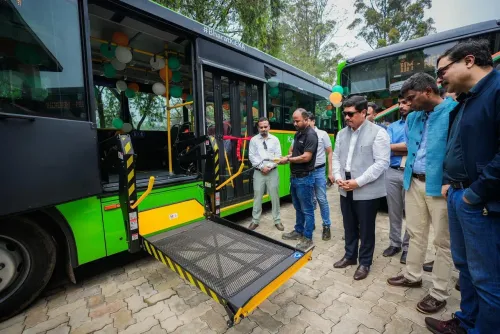
Buses are equipped with air conditioning and CCTV cameras for comfort and passenger safety.
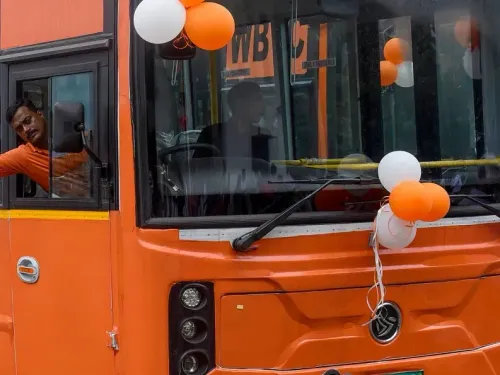
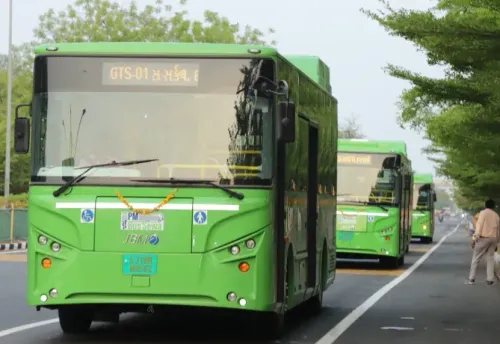
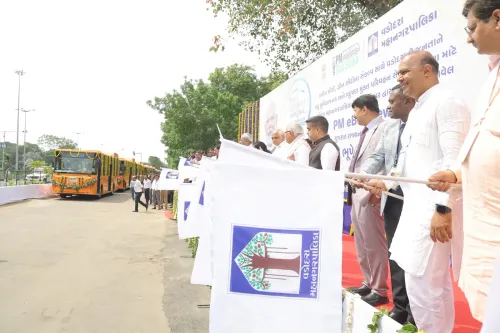
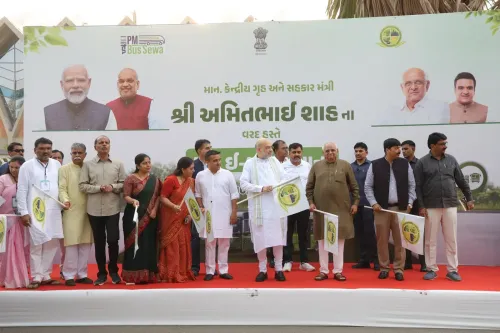
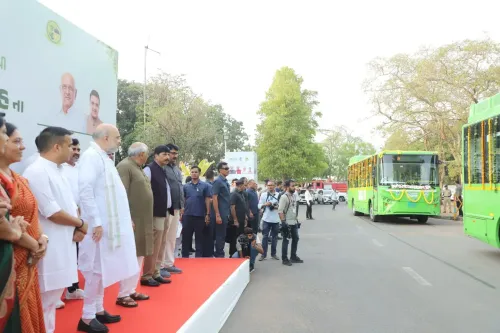
Gandhinagar's PM eBus Sewa electric bus service ferried 1,53,509 passengers in its first 14 days of operation, with daily ridership climbing to an average of nearly 11,000 commuters, according to figures released by the Gandhinagar Municipal Corporation (GMC). The service, which launched on 29 June 2025, is part of a broader push to shift the Gujarat state capital toward cleaner, affordable public transport.
Ridership Numbers at a Glance
The data covers the period from 29 June to 12 July 2025, during which 1,53,509 commuters boarded the air-conditioned electric buses. Daily footfall started at 6,120 passengers on the inaugural day before climbing steadily, hitting a single-day peak of 13,615 passengers on 11 July. The upward trajectory suggests growing public confidence in the service, a pattern commonly seen in new urban transit launches once word-of-mouth builds.
Routes and Connectivity
The buses serve key nodes across Gandhinagar and its satellite towns, linking Sargasan Circle, Pathikashram Terminal, and the Secretariat, while also connecting Kalol, Kadi, Dahegam, Chiloda, and Chandkheda. Notably, the routes cover IIT Gandhinagar and Pandit Deendayal Energy University (PDEU), reducing travel time for students by eliminating the need for multiple transfers — a practical benefit that is likely driving repeat ridership among the student demographic.
What Commuters Are Saying
Regular commuter Niyati Trivedi, who travels between Dhamasana and Sargasan, said the service has meaningfully improved her daily routine. 'This bus service launched by GMC is very convenient for passengers. The bus fare has been kept very affordable, so it does not impose a financial burden on common citizens and students. Since the bus is fully air-conditioned, travelling remains extremely comfortable even during the summer heat. The bus is equipped with CCTV cameras, due to which girls and women travelling on the bus feel completely safe,' she said.
Key Features and the Free Travel Push
Each bus is fitted with air conditioning and CCTV cameras, addressing two persistent concerns for urban commuters — summer heat and passenger safety, particularly for women. To seed adoption, the GMC introduced a 15-day free travel period at launch, during which thousands of residents reportedly chose to leave private vehicles at home. Officials said the comparatively lower fares have eased commuting costs for middle-class families and students, and that the growing uptake is expected to reduce dependence on private vehicles in the state capital.
Broader Significance
The PM eBus Sewa rollout in Gandhinagar is part of a national programme to electrify urban bus fleets across Indian cities. For a city like Gandhinagar — home to government offices, universities, and a rapidly expanding residential footprint — reliable last-mile connectivity has long been a gap. If ridership sustains its current growth curve, the GMC may be positioned to expand the fleet and routes in the coming months. The coming weeks, once the free-travel incentive fades, will be the real test of whether the service has built a loyal commuter base.
Point of View
But it must be read against the 15-day free travel incentive that ran concurrently — a subsidy that inflates early numbers and makes it harder to gauge genuine demand. The real inflection point will come in weeks three and four, when paid fares kick in fully and novelty fades. Gandhinagar is also a relatively small, planned city with a captive government-employee commuter base, which makes replication in denser, more chaotic urban centres a separate question entirely. Still, the safety-and-comfort pitch — CCTV, AC, affordable fares — is the right framing for converting two-wheeler and auto users, and the GMC deserves credit for targeting students and women explicitly.
NationPress
13 Oct 2026
Frequently Asked Questions
What is PM eBus Sewa in Gandhinagar?
PM eBus Sewa is an air-conditioned electric bus service launched in Gandhinagar on 29 June 2025 under the Gandhinagar Municipal Corporation (GMC). The service connects key locations across the city and surrounding towns, including IIT Gandhinagar and Pandit Deendayal Energy University.
How many passengers used the Gandhinagar electric buses in the first two weeks?
A total of 1,53,509 passengers used the PM eBus Sewa between 29 June and 12 July 2025, averaging 10,965 commuters per day, according to GMC data. The single-day peak of 13,615 riders was recorded on 11 July.
Which areas does the Gandhinagar PM eBus Sewa cover?
The service links Sargasan Circle, Pathikashram Terminal, and the Secretariat within Gandhinagar, and extends to Kalol, Kadi, Dahegam, Chiloda, and Chandkheda. It also covers IIT Gandhinagar and Pandit Deendayal Energy University (PDEU).
Why did the GMC offer free travel when the service launched?
The Gandhinagar Municipal Corporation introduced a 15-day free travel period to encourage residents to try the electric buses and reduce dependence on private vehicles. Officials said thousands of commuters chose to leave their private vehicles at home during this introductory phase.
What safety and comfort features do the Gandhinagar e-buses offer?
Each bus is equipped with air conditioning and CCTV cameras, providing relief from summer heat and enhancing passenger safety, particularly for women and students. The GMC has also kept fares affordable to reduce the financial burden on middle-class families.