PM Modi Approves 6-Lane Tunnel Linking Dwarka Expressway to Vasant Kunj
Synopsis
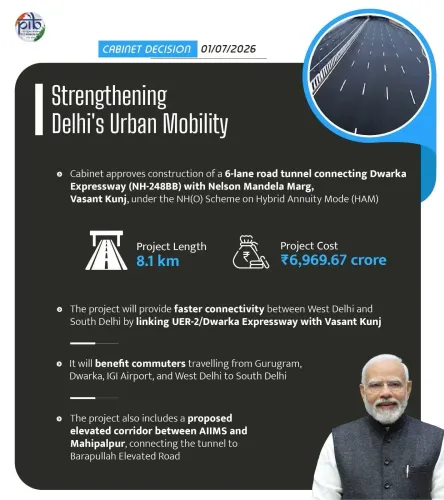
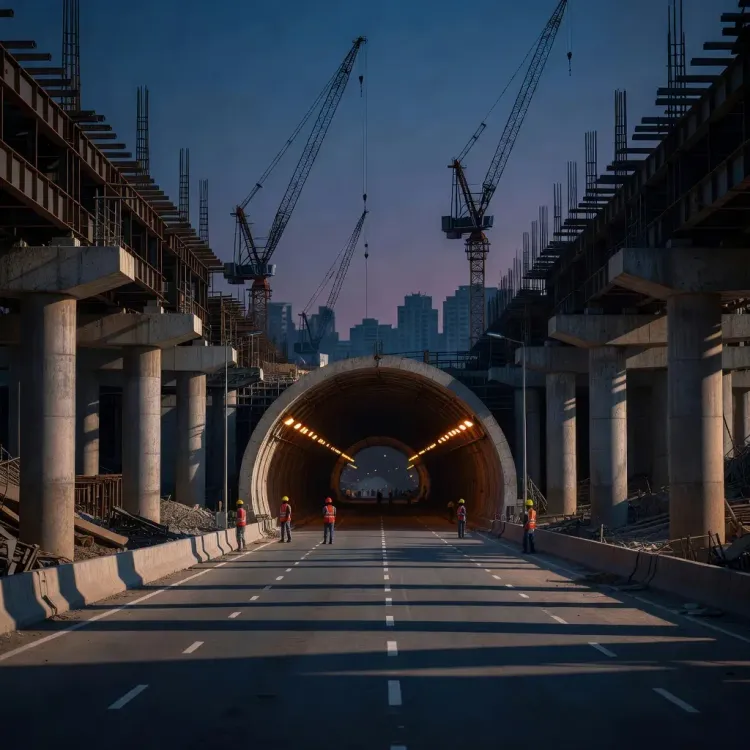
Prime Minister Narendra Modi on 1 July 2026 announced government approval for a 6-lane tunnel connecting Dwarka Expressway to Vasant Kunj, promising faster and more convenient travel between West and South Delhi and significant time savings for daily commuters.
Key Takeaways
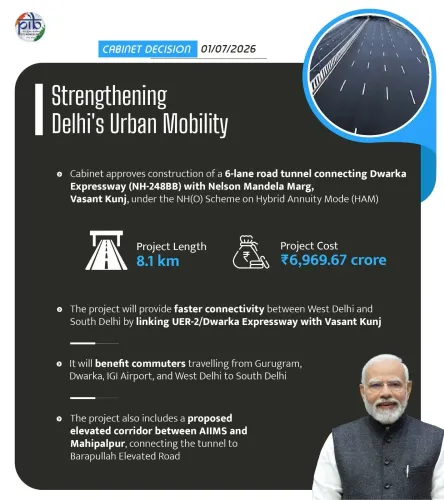
The central government has approved a 6-lane tunnel connecting Dwarka Expressway to Vasant Kunj in Delhi.
Prime Minister Narendra Modi announced the approval on 1 July 2026 via X, backed by an official Press Information Bureau release.
The tunnel aims to improve travel between West Delhi and South Delhi , saving commuters considerable time.
The project aligns with the Bharatmala Pariyojana framework and Delhi Master Plan 2041 priorities for grade-separated urban corridors.
Project cost, exact alignment, and completion deadline have not yet been officially disclosed.
Key next steps include construction tendering, land acquisition, and potential integration with NCR metro and airport linkage projects.
Prime Minister Narendra Modi on Wednesday, 1 July 2026 announced that the central government has approved the construction of a 6-lane tunnel connecting Dwarka Expressway to Vasant Kunj, a move aimed at easing commutes between West Delhi and South Delhi. The announcement was made via an official post on X and backed by a Press Information Bureau release.
In his post, Modi wrote: 'दिल्ली में कनेक्टिविटी को और अधिक सुगम एवं विश्वस्तरीय बनाने के लिए हमारी सरकार प्रतिबद्ध है' ('Our government is committed to making connectivity in Delhi more seamless and world-class'). He added that the tunnel would make travel between West and South Delhi faster, more convenient, and would save commuters considerable time.
Context
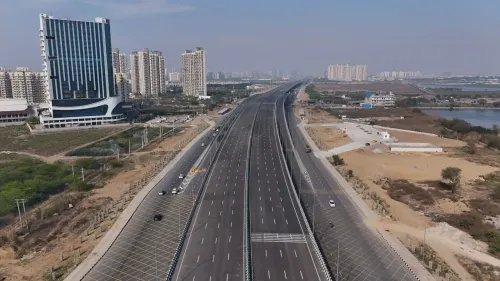
Dwarka Expressway, officially designated NH-148AE, is a major arterial corridor linking Dwarka in Delhi to Gurugram and Indira Gandhi International Airport. While earlier phases of the expressway significantly reduced congestion in western Delhi-NCR, a direct, grade-separated connection to Vasant Kunj — a densely populated residential and commercial hub in South Delhi — has long been identified as a missing link in the capital's road network.
Vasant Kunj houses diplomatic missions, major retail destinations, and key institutions, making it a high-traffic destination for residents across western and southern parts of the city. The absence of a direct, high-capacity corridor has historically forced commuters onto slower surface roads prone to congestion.
Policy Backdrop
The approval fits within the broader framework of Bharatmala Pariyojana, launched in 2015, which sanctioned multiple expressways and tunnels to upgrade national highways and urban connectivity links across India. Delhi's Master Plan 2041 similarly prioritises grade-separated corridors and tunnels to decongest the capital's arterial roads.
Successive central governments have invested in capital-region expressways to cut travel times between satellite townships and core Delhi. The present approval continues that pattern by adding a missing link in the western and southern corridors, following earlier phases of Dwarka Expressway development.
Stakeholders and Impact
The primary beneficiaries are daily commuters, residents of West Delhi localities such as Dwarka, and those travelling to and from South Delhi neighbourhoods including Vasant Kunj. A dedicated 6-lane tunnel would allow high-volume, uninterrupted traffic flow, reducing dependence on congested surface roads and cutting travel time significantly.
The project also has implications for freight movement and airport-bound traffic, given Dwarka Expressway's proximity to IGI Airport. Improved last-mile connectivity in this corridor could ease pressure on parallel routes that currently bear a disproportionate share of cross-city traffic.
What's Next
The formal approval marks the beginning of the project's administrative lifecycle. Key milestones to watch include construction tendering timelines, land acquisition processes, and potential integration with upcoming metro or airport linkage projects in the National Capital Region. The government has not yet disclosed the project's cost, exact tunnel alignment, or a completion deadline in the currently available public communication.
As Delhi continues to expand its grade-separated infrastructure, this tunnel — if executed on schedule — could set a precedent for similar missing-link projects across other high-density urban corridors in the NCR.
Point of View
High-capacity urban corridors as a signature infrastructure deliverable in the National Capital Region. Announcing the project via a direct social media post linked to an official PIB release reflects a deliberate communication strategy that bypasses intermediaries and positions the Prime Minister as personally invested in Delhi's urban mobility. With Delhi's assembly politics remaining competitive, visible infrastructure approvals in high-density residential zones carry both administrative and political salience. The broader arc points to an accelerating push to complete 'missing links' in Delhi-NCR's expressway network ahead of upcoming electoral cycles.
NationPress
1 Jul 2026
Frequently Asked Questions
What is the Dwarka Expressway to Vasant Kunj tunnel project?
It is a newly approved 6-lane tunnel that will connect Dwarka Expressway (NH-148AE) in West Delhi to Vasant Kunj in South Delhi, designed to provide faster and congestion-free travel between the two areas.
Who approved the Dwarka Expressway Vasant Kunj tunnel?
The central government led by Prime Minister Narendra Modi approved the project, as announced on 1 July 2026 through an official post and a Press Information Bureau release.
How will the tunnel benefit Delhi commuters?
The 6-lane tunnel will offer a direct, grade-separated link between West and South Delhi, cutting travel time significantly and reducing dependence on congested surface roads.
What is Dwarka Expressway and why is it important?
Dwarka Expressway, officially NH-148AE, connects Dwarka in Delhi to Gurugram and Indira Gandhi International Airport. It is a key arterial corridor that reduces congestion in western Delhi-NCR.
When will the Dwarka–Vasant Kunj tunnel be completed?
A completion deadline has not been officially announced yet. The next steps include tendering, land acquisition, and detailed project planning, which will determine the construction timeline.