PM Modi contrasts Congress and NDA governance records
Synopsis
Prime Minister Narendra Modi on 10 June 2026 sharply contrasted Congress-era governance — which he said perpetually stalled work — with the NDA's record of delivering projects on time and at scale, continuing a long-running political narrative ahead of future electoral cycles.
Key Takeaways
PM Modi posted on 10 June 2026 contrasting Congress (UPA) and NDA governance and growth records.
He stated the difference between the 'Congress growth rate and NDA growth rate is clear,' asserting the earlier system 'always stalled and misdirected work.' The NDA government has since 2014 pursued a 'Minimum Government, Maximum Governance' approach to reduce bureaucratic delays.
The UPA era (2004–2014) faced repeated criticism over policy paralysis and stalled infrastructure projects.
Businesses and investors are key stakeholders, as project clearance speed and policy predictability affect capital allocation.
The next quarterly GDP release and Economic Survey will be closely watched for official growth and project-completion data.
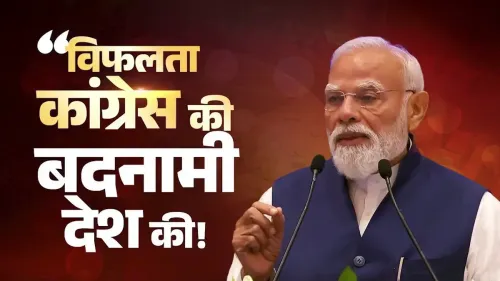
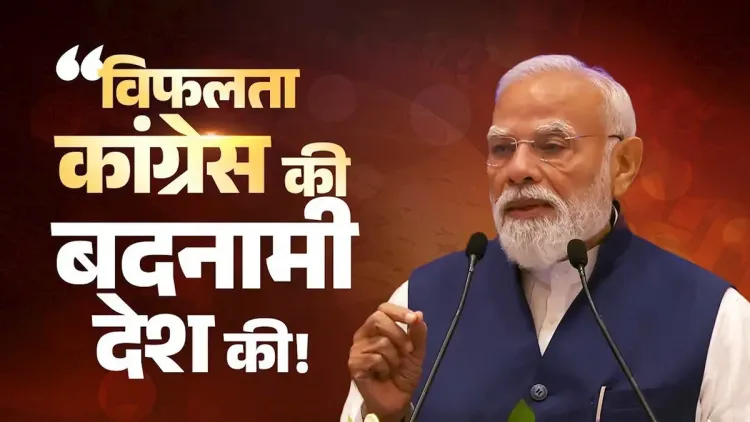
Prime Minister Narendra Modi on Wednesday, 10 June 2026 took to X to draw a sharp contrast between governance under the Indian National Congress-led UPA and the current NDA government, asserting that where the previous system perpetually stalled and misdirected work, today's dispensation delivers on time and at scale.
In his post, written in Hindi, Modi stated: 'कांग्रेस ग्रोथ रेट और NDA ग्रोथ रेट में फर्क साफ है!' ('The difference between the Congress growth rate and the NDA growth rate is clear!'). He added that the earlier system 'always stalled and misdirected work,' while today's system asserts that 'work will happen on time and at a large scale.'
Context
The post is the latest in a long-running NDA political narrative that benchmarks its governance record against the UPA era (2004–2014). The Congress-led UPA governments faced sustained criticism during their tenure for what critics labelled 'policy paralysis' — a period marked by stalled infrastructure projects and sluggish decision-making. The BJP and its allies have consistently used this contrast as a central electoral and communication plank since 2014.
The post is accompanied by a video, the content of which could not be independently verified at the time of publication. The visual material appears intended to reinforce the growth-rate comparison referenced in the text.
Policy Backdrop
Upon assuming office in May 2014, the NDA government adopted the 'Minimum Government, Maximum Governance' framework, aimed at reducing bureaucratic delays in project clearances and improving the ease of doing business. Successive Union Budgets and Economic Surveys under the Modi administration have highlighted faster project approvals, larger capital expenditure outlays, and improved global rankings on business-environment indices as markers of systemic improvement.
The contrast between the two eras has been a recurring theme in official communications, particularly around quarterly GDP data releases and infrastructure milestone announcements. The NDA has pointed to higher average growth figures and accelerated public-investment cycles as evidence that structural governance reforms have taken hold.
Stakeholders and Impact
Indian businesses and investors are the primary audience for the governance-efficiency argument, as project clearance timelines and policy predictability directly affect capital allocation decisions. A perception of faster, more reliable execution can influence both domestic investment sentiment and foreign direct investment inflows.
For the Congress and the broader opposition, the post represents a continued political challenge to reframe the UPA record. The opposition has in the past disputed the characterisation of the 2004–2014 period, citing global financial headwinds and coalition-governance constraints as explanatory factors for slower decision cycles during that era.
What's Next
Attention will now turn to the next quarterly GDP release and the forthcoming Economic Survey, which will provide official metrics on growth momentum and project-completion rates. These figures are likely to be cited by both the ruling coalition and the opposition to bolster their respective narratives on governance performance.
As the NDA continues to anchor its political messaging in delivery and execution, the Congress-versus-NDA governance contrast is expected to remain a defining fault line in national political discourse ahead of future electoral cycles.
Point of View
The messaging broadens the comparison beyond economics into administrative culture. The timing, likely pegged to an upcoming data release or policy announcement, suggests a deliberate effort to set the interpretive frame before official numbers enter public discourse. For the Congress, the persistent repetition of this narrative remains a structural communication challenge that the party has struggled to neutralise effectively.
NationPress
26 Oct 2026
Frequently Asked Questions
What did PM Modi say about Congress and NDA governance?
PM Modi stated on 10 June 2026 that the difference between the Congress growth rate and the NDA growth rate is clear, saying the earlier system always stalled and misdirected work while the current system ensures work happens on time and at scale.
What is the UPA policy paralysis criticism Modi refers to?
Between 2004 and 2014 , the Congress -led UPA governments faced widespread criticism for slow decision-making and stalled infrastructure projects, a period critics labelled 'policy paralysis.' The NDA has used this contrast as a central political argument since coming to power in 2014 .
What is the NDA's 'Minimum Government, Maximum Governance' policy?
'Minimum Government, Maximum Governance' is the governance framework adopted by the NDA after May 2014 , aimed at reducing bureaucratic layers, speeding up project clearances, and improving India's ease-of-doing-business environment.
How does the Congress respond to Modi's governance comparisons?
The Congress and opposition parties have disputed the characterisation of the UPA era, citing global financial crises and the complexities of coalition governance as factors that constrained decision-making between 2004 and 2014 .
What economic data will clarify India's growth performance?
The next quarterly GDP release and the forthcoming Economic Survey will provide official figures on India's growth trajectory and project-completion rates, and are expected to be cited by both the ruling coalition and the opposition.