PM Modi flags Cabinet nod for Kamarajar Port terminal
Synopsis
PM Modi said a Cabinet decision on a second container terminal at Kamarajar Port in Tamil Nadu will add 2 million TEUs, allow mega-ship calls, cut foreign transhipment, and lift southern auto, electronics and engineering exports.
Key Takeaways
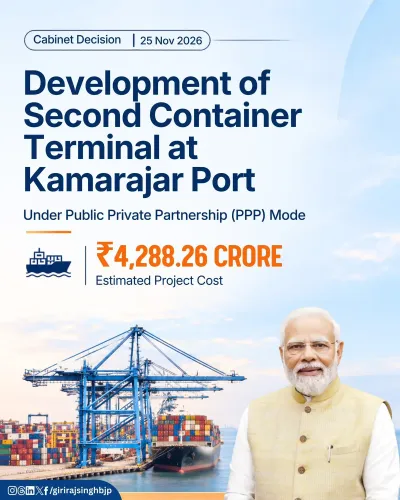
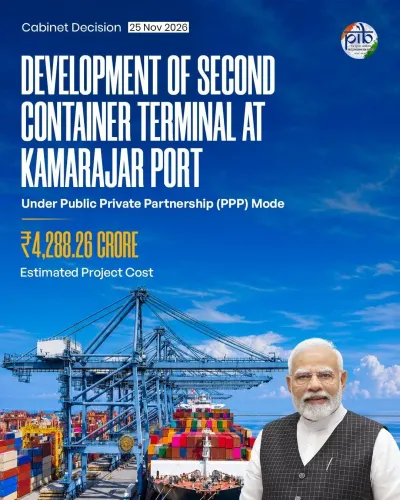
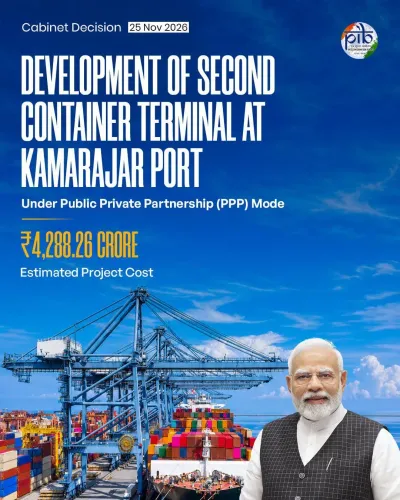
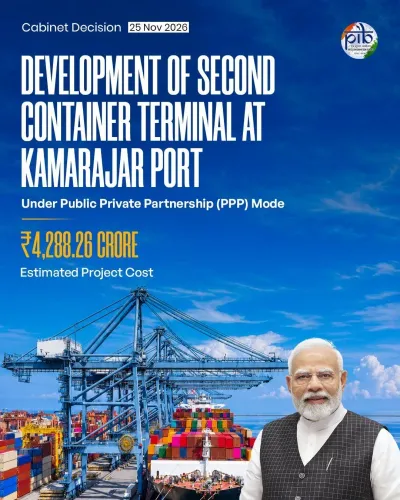
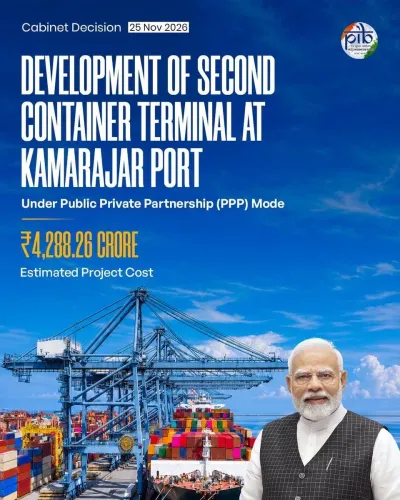
Prime Minister Narendra Modi on 25 November 2026 highlighted a Union Cabinet decision to develop a second container terminal at Kamarajar Port in Tamil Nadu.
He said the project would add 2 million TEUs of annual container-handling capacity and enable direct calls by some of the world’s largest container vessels.
Stated aims include lower logistics costs, less reliance on overseas transhipment hubs, and a boost to southern manufacturing and exports.
Automobile, electronics and engineering sectors were singled out, along with employment and greater economic activity.
The move sits in the longer Sagarmala (2015) and National Logistics Policy (2022) effort to modernise ports and cut export costs.
Tendering, construction and commissioning timelines were not set out in the post.
Prime Minister Narendra Modi on 25 November 2026 cast a Union Cabinet decision as one move that could let India handle the world’s largest container ships, cut dependence on foreign ports, and lift export competitiveness. The project in focus is a second container terminal at Kamarajar Port in Tamil Nadu.
Writing on X, he asked: ‘What if a decision could add strength to India’s aim of handling the world’s largest container ships, reducing dependence on foreign ports and boosting our export competitiveness?’ He called the Cabinet decision a significant step towards achieving all three goals in one go.
According to the Prime Minister, the terminal will add an annual container-handling capacity of 2 million TEUs, enable direct calls by some of the world’s largest container vessels, reduce logistics costs and dependence on overseas transhipment hubs, boost manufacturing and exports across Southern India — particularly in the automobile, electronics and engineering sectors — and generate employment while attracting greater economic activity.
Kamarajar Port’s second container terminal
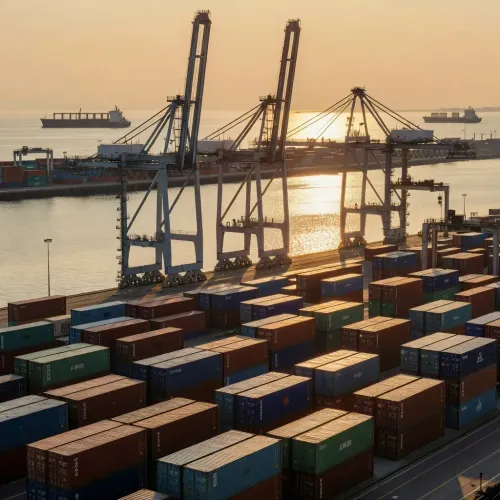
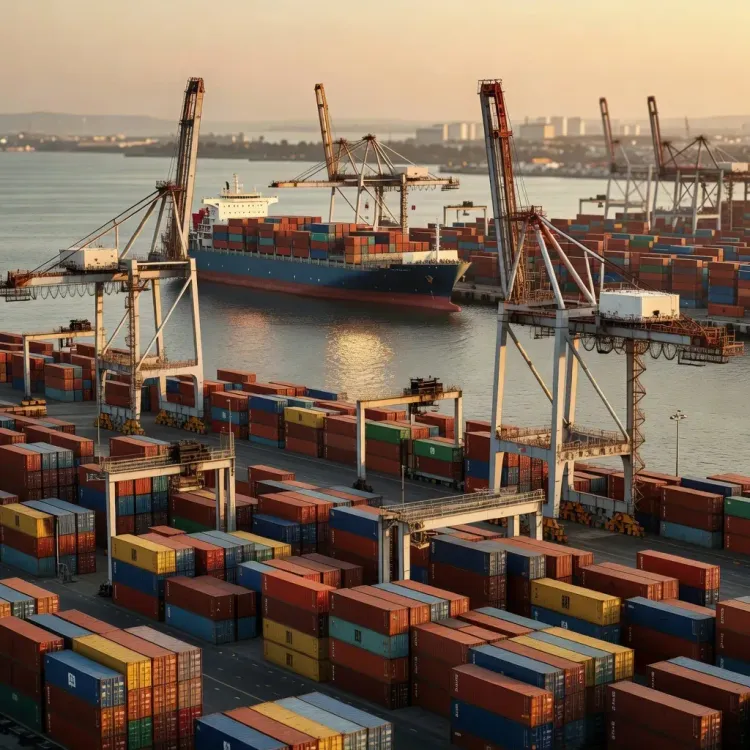
Kamarajar Port, at Ennore on the Tamil Nadu coast, is one of India’s 12 major ports and has long handled bulk cargo alongside containers. A second dedicated container terminal would expand its role from a mixed bulk-and-box harbour toward a deeper play in liner shipping.
The Prime Minister put the extra throughput at 2 million TEUs a year. A TEU, or twenty-foot equivalent unit, is the global yardstick for container volume. Direct calls by mega-vessels matter because ships that cannot berth in India today often drop cargo at overseas hubs, adding time and cost before boxes reach Indian factories or leave them.
Why mega-ship calls at Ennore matter
India has pursued successive port expansions so that larger vessels can call directly and fewer Indian boxes need to change ships at foreign transhipment centres such as Colombo and Singapore. That pattern sits inside a wider drive under Atmanirbhar Bharat to strengthen domestic supply chains and manufacturing competitiveness.
The Sagarmala programme, launched in 2015, was built around port modernisation and coastal economic zones. The National Logistics Policy of 2022 pushed the same logic inland: stitch ports, roads, rail and warehouses so exporters pay less to move goods. Southern manufacturers sit at the centre of that map. Tamil Nadu’s automobile, electronics and engineering clusters already feed global supply chains. If larger ships can call at Ennore, exporters in those sectors stand to shave transhipment fees and voyage time — the bet the Prime Minister placed on competitiveness.
Jobs, hinterland links and the clock
The post also flagged employment and wider economic activity around the terminal. Port projects of this type typically draw construction labour first, then stevedoring, warehousing, trucking and allied services once boxes start moving. Logistics operators and southern exporters are the immediate stakeholders.
Tendering, construction and commissioning timelines were not set out in the message. Watchers will also look for any explicit link to PM Gati Shakti multimodal corridors meant to connect hinterland factories to the berth. One Cabinet nod will not rewrite India’s maritime map overnight. But if the second terminal at Kamarajar Port actually draws mega-ships away from foreign hubs, southern export lines will feel it first.
Point of View
The 2022 logistics policy, and the Atmanirbhar Bharat push to keep more of India’s cargo on Indian berths. Direct calls by mega-ships are the operational test of that strategy, because every box that still tranships at Colombo or Singapore is a leakage of time, cost and hub status. Tamil Nadu’s auto, electronics and engineering clusters make Ennore a logical place to try. The claim is that one terminal can serve capacity, logistics autonomy and export competitiveness together; the economic test will be whether liners actually divert and whether hinterland corridors keep pace.
NationPress
26 Nov 2026
Frequently Asked Questions
What did PM Modi announce about Kamarajar Port?
Prime Minister Narendra Modi said the Union Cabinet had decided to develop a second container terminal at Kamarajar Port in Tamil Nadu. He listed extra capacity, mega-ship calls, lower logistics costs, southern export gains and jobs as the expected outcomes.
Where is Kamarajar Port and why does it matter?
Kamarajar Port is at Ennore in Tamil Nadu and is one of India’s 12 major ports. It already handles bulk cargo and containers, and a second terminal is being presented as a way to bring larger liner vessels to the southern coast.
How much extra container capacity did Modi cite?
The Prime Minister said the second terminal would add an annual container-handling capacity of 2 million TEUs. TEU stands for twenty-foot equivalent unit, the standard measure used in global container shipping.
Why does India want fewer boxes going via Colombo or Singapore?
Direct calls by large vessels are meant to cut time, cost and dependence on overseas transhipment hubs. That goal has run through Sagarmala since 2015 and the National Logistics Policy of 2022, as India tries to keep more of its own cargo on domestic berths.
Which sectors in southern India could benefit?
The Prime Minister specifically named manufacturing and exports across Southern India, particularly the automobile, electronics and engineering sectors, along with employment and wider economic activity around the port.