PM Modi hails India Pavilion’s Visitors’ Lion at Venice
Synopsis
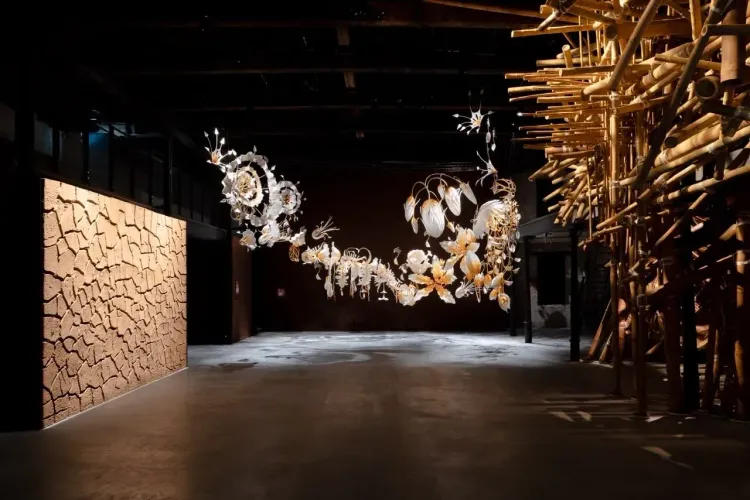
PM Modi on 25 November 2026 hailed the India Pavilion’s Visitors’ Lion for Best National Pavilion at the Venice Art Biennale, calling it a proud moment for Indian art and urging young Indians to pursue creative careers rooted in the country’s heritage.
Key Takeaways
Prime Minister Narendra Modi on 25 November 2026 hailed the India Pavilion’s win of the Visitors’ Lion for Best National Pavilion at the Venice Art Biennale.
He called it a proud moment for India’s art and cultural world and said Indian artists were offering fresh global perspectives drawn from the country’s heritage.
The Visitors’ Lion recognises the best national pavilion as voted by visitors at the Venice Biennale.
India has participated in the Biennale since the mid-20th century as a platform for contemporary Indian art.
The Prime Minister said the feat should inspire more young Indians to pursue art and explore new creative horizons.
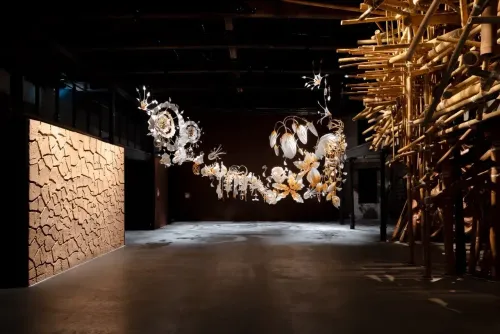
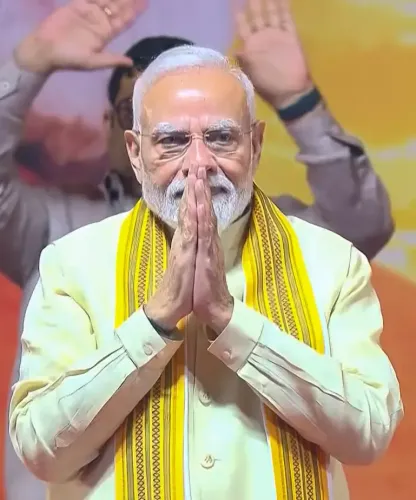
Prime Minister Narendra Modi on Wednesday called it a proud moment for India’s art and cultural world after the India Pavilion at the Venice Art Biennale won the Visitors’ Lion for Best National Pavilion. Posting on X on 25 November 2026, he said Indian artists were bringing fresh perspectives to global art, drawing on the country’s rich and diverse heritage — and he turned the honour into a direct pitch to the young.
He wrote that he was delighted the pavilion had taken the prestigious Visitors’ Lion. Indian artists, he said, were offering the world new ways of seeing, rooted in a cultural inheritance that is both old and restless. The closing line was a challenge, not a bouquet: may this feat inspire many more young Indians to pursue art and explore new creative horizons.
Visitors’ Lion: a public vote on the lagoon
The Venice Biennale is among the world’s most watched contemporary art exhibitions, staged every two years across the Italian city’s historic venues, with countries presenting official national pavilions. The Visitors’ Lion is the prize for the best national pavilion as chosen by visitors — a popular mandate, not a closed-door jury citation.
India’s pavilion is the country’s official stand at that gathering, used to show work that speaks from Indian life and memory to a global crowd. The Prime Minister’s message tied the win to that heritage. It did not name individual works or curators. The story he told was national, and it was aimed at the next generation of makers.
India’s long presence at the Biennale
India has maintained participation in the Venice Biennale since the mid-20th century, treating the lagoon city as a stage for contemporary Indian art. Successive governments have used such platforms as instruments of cultural diplomacy — a way of projecting living creative practice, not only monuments and archives.
Wednesday’s note fits that pattern. A visitors’ prize in Venice is being folded into a domestic argument: that art is a serious vocation, and that India’s diversity is an asset on the world circuit. The people in the frame are Indian artists already working internationally, and the young creatives the Prime Minister named in so many words.
From a Venetian vote to Indian studios
The political signal is as much about careers as it is about a trophy beside a canal. By linking a pavilion prize to new creative horizons, the Prime Minister placed studio practice in the same frame as other fields New Delhi has tried to make newly attractive to youth. Soft power abroad, skills talk at home — the two moves arrived in a single post.
What will be watched next is India’s showing in future Biennale editions and at comparable gatherings such as Documenta, and whether any follow-up lands in arts education or cultural exchange. The lagoon has given Indian art a popular mandate. The test is how many young Indians walk into a studio because of it.
Point of View
Not a curatorial jury prize, and that distinction will shape how New Delhi narrates it: as proof that Indian visual culture travels with ordinary viewers, not only with insiders. The message sits in a longer soft-power arc in which biennales and heritage circuits are treated as instruments of national projection. By pivoting immediately from the pavilion to young Indians, the Prime Minister also recast a Venice trophy as a domestic careers signal. The policy test is whether the next cultural-exchange or arts-education cycle actually widens studio-to-world pipelines, or whether the applause stays at the water’s edge.
NationPress
26 Nov 2026
Frequently Asked Questions
What did PM Modi say about the India Pavilion at Venice?
Prime Minister Narendra Modi said it was a proud moment for India’s art and cultural world after the India Pavilion won the Visitors’ Lion for Best National Pavilion at the Venice Art Biennale. He added that Indian artists were bringing fresh perspectives drawn from the country’s heritage and hoped the feat would inspire more young Indians to pursue art.
What is the Visitors’ Lion at the Venice Biennale?
The Visitors’ Lion is an award at the Venice Biennale that recognises the best national pavilion as voted by visitors. It is a public-choice honour, distinct from prizes decided by a professional jury.
What is the India Pavilion at the Venice Art Biennale?
The India Pavilion is India’s official national representation at the Venice Biennale, used to present contemporary work by Indian artists. Successive editions have drawn on the country’s cultural heritage while addressing a global audience.
When did PM Modi congratulate the India Pavilion win?
He posted the congratulations on X on 25 November 2026. The message described the Visitors’ Lion as a prestigious honour for the India Pavilion at the Venice Art Biennale.
Why does the Venice Biennale matter for Indian art?
The Venice Biennale is a major international contemporary art exhibition held every two years in Venice, Italy, with national pavilions from countries worldwide. India has taken part since the mid-20th century to place contemporary Indian art on that global stage and to project cultural soft power.