PM Modi flags big push for construction equipment hub
Synopsis
Prime Minister Narendra Modi on 25 November 2026 called a government step a big push towards India becoming a global hub for construction and infrastructure equipment manufacturing, tying job-site machines to the Make in India capital-goods agenda.
Key Takeaways
Prime Minister Narendra Modi on 25 November 2026 said India was getting a big push to become a global hub for construction and infrastructure equipment manufacturing.
He linked an official government release; the post itself did not list incentives or investment figures.
The pitch sits inside Make in India , launched in September 2014 to draw firms into Indian factories, including heavy equipment.
Core stakeholders are construction equipment manufacturers and infrastructure developers.
The wider pattern is expanding domestic capital-goods production and cutting import dependence in machinery.
India's roads, metros and dams do not build themselves. They need excavators, cranes and compactors. On Wednesday, 25 November 2026, Prime Minister Narendra Modi put the factories that make those machines on the national agenda, calling the step a big push towards India becoming a global hub for construction and infrastructure equipment manufacturing.
In the post he wrote: ‘A big push towards India becoming a global hub for construction and infrastructure equipment manufacturing,’ and linked an official government release. The message is blunt. Public works have been the visible story. Capital goods are the quieter one.
Excavators, cranes and the factory floor
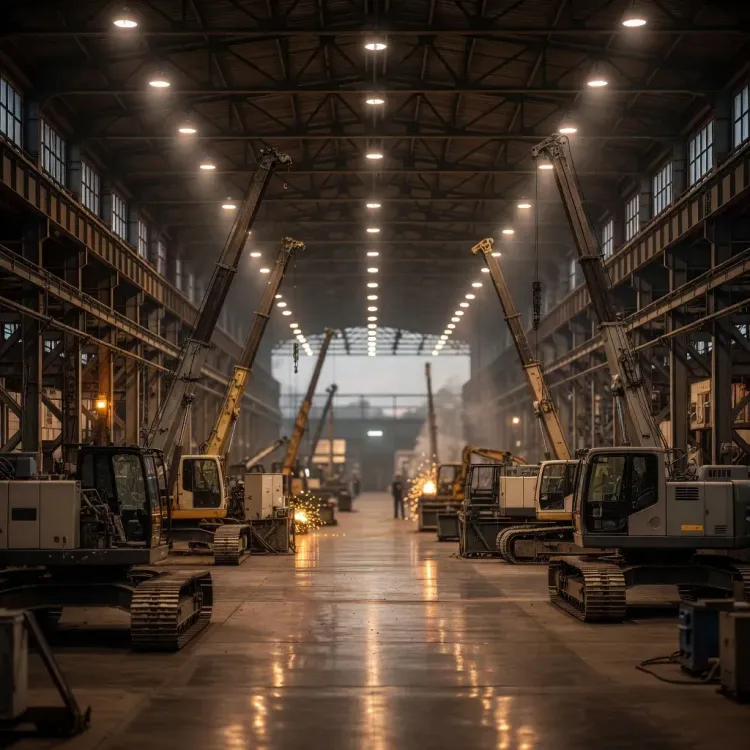
Construction equipment is the kit that turns budgets into concrete. When those machines are imported, every kilometre of highway leaks value overseas. When they are made at home, the same project supports foundries, hydraulics plants and service networks. That is the logic the Prime Minister put on the table.
The audience is not abstract. Equipment manufacturers need scale and a stable order book. Infrastructure developers need machines that can be serviced in India, not weeks away by ship. A global-hub claim tries to lock both into one industrial bet.
Make in India's heavy-equipment chapter
Make in India, launched in September 2014, set out to pull domestic and foreign firms into Indian factories, including heavy equipment. Construction and infrastructure machinery sits in that unfinished capital-goods file: high-value machines, long product cycles, and a home market already expanding on roads, railways and urban works.
India has run successive policies to expand domestic production of capital goods and cut import dependence in machinery. The sequence is familiar. First assemble. Then manufacture. Then export. Naming construction equipment as a hub is that sequence said out loud.
The fine print manufacturers will parse
The Prime Minister's post did not list incentives, investment sums or localisation targets. Those details, if any, sit in the linked government note. Industry will look for tax treatment, component rules and whether export ambition is backed by plant-level commitments.
Demand is not the puzzle. India's infrastructure pipeline already consumes this machinery. The puzzle is whether Indian plants can compete on quality, cost and after-sales with established global suppliers. That is the test this push will be judged on.
Roads get the cameras. The factories that weld the excavator arms will decide how much of that boom stays in the country.
Point of View
Attach a global-hub ambition, and signal that infrastructure demand should feed Indian factories, not only foreign suppliers. Construction equipment is a logical target because the home market is already large and import dependence in machinery remains a live policy concern. The political payoff is jobs and a visible self-reliance story; the economic payoff depends on plants, components and service networks that can actually compete. Manufacturers' capacity decisions, not the slogan, will settle whether the hub claim sticks.
NationPress
26 Nov 2026
Frequently Asked Questions
What did PM Modi say about construction equipment manufacturing?
Prime Minister Narendra Modi said there was a big push towards India becoming a global hub for construction and infrastructure equipment manufacturing. He posted the remark on 25 November 2026 and linked an official government release.
When did PM Modi post about the equipment manufacturing hub?
He posted it on 25 November 2026 at about 8:01 pm IST. The message highlighted a manufacturing drive in construction and infrastructure equipment.
How is this linked to Make in India?
Make in India, launched in September 2014, seeks to position India as a global manufacturing destination, including in heavy equipment. Construction and infrastructure machinery fits that capital-goods agenda of more local production and less import dependence.
Who are the stakeholders in this manufacturing push?
Construction equipment manufacturers and infrastructure developers are the core stakeholders. Manufacturers want scale and a predictable policy climate; developers want machines that are available and serviceable in India.
Why does India want a construction equipment manufacturing hub?
A domestic hub would aim to capture more value from public works, reduce import dependence in machinery, and open an export path in capital goods. The Prime Minister framed that as a strategic industrial goal tied to India's infrastructure build-out.