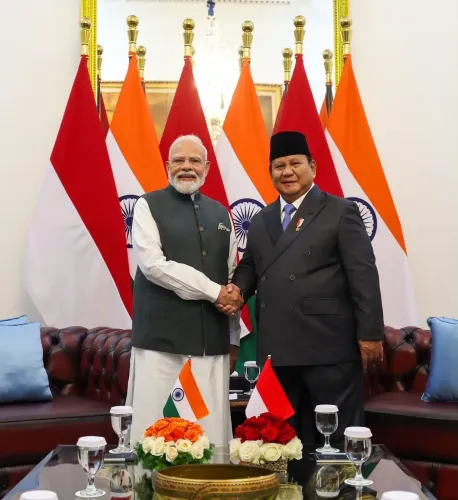
PM Modi Flags Space, Maritime Tech as Future Pillars of India-Indonesia Ties
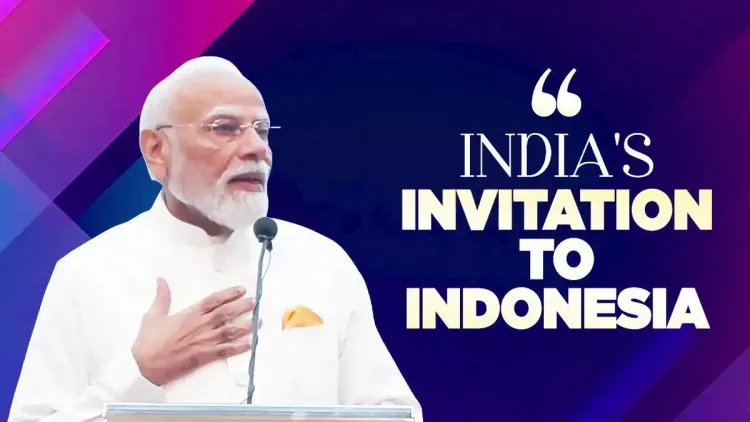
Synopsis
Prime Minister Narendra Modi on 7 July 2026 called space and maritime technology 'futuristic' sectors offering 'immense scope' for India-Indonesia cooperation, building on the two nations' 2018 Comprehensive Strategic Partnership and India's SAGAR and Act East policy frameworks.
Key Takeaways
PM Modi on 7 July 2026 publicly identified space and maritime technology as priority sectors for India-Indonesia cooperation.
India and Indonesia have held a Comprehensive Strategic Partnership since 2018 , covering maritime security and defence technology.
ISRO and Indonesia's LAPAN have engaged on remote-sensing and disaster-management applications since the mid-2010s.
India's SAGAR doctrine (2015) frames maritime capacity-building with Indian Ocean littoral states, including Indonesia , as a strategic priority.
The statement fits India's Act East Policy and Indo-Pacific strategy of building high-technology partnerships with ASEAN nations.
Formal outcomes — such as MoUs on satellite data or maritime tech — are expected to be tracked at the next ASEAN-India Summit and bilateral defence dialogues.
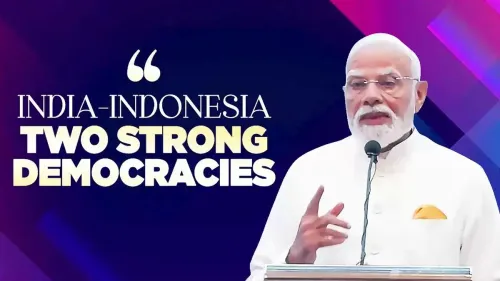
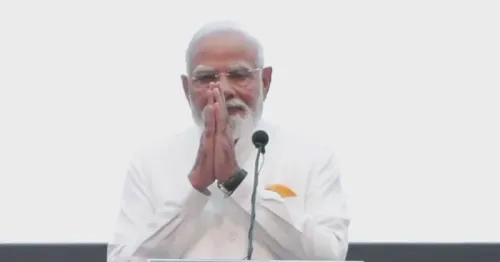
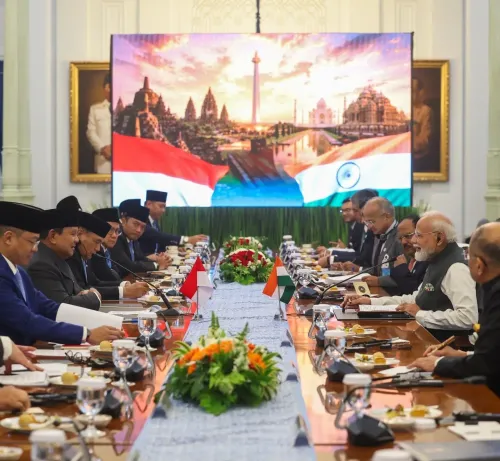
Prime Minister Narendra Modi on Tuesday, 7 July 2026 highlighted space and maritime technology as high-potential domains for deepening cooperation between India and Indonesia, signalling a push to move the bilateral relationship into futuristic, high-technology territory.
Context
In the post, PM Modi stated: 'There are sectors such as space, maritime technology and more that are futuristic and offer immense scope for India and Indonesia to work closely.' The remark underscores a deliberate effort to expand the partnership beyond conventional trade and defence into emerging technology domains that carry long-term strategic weight.
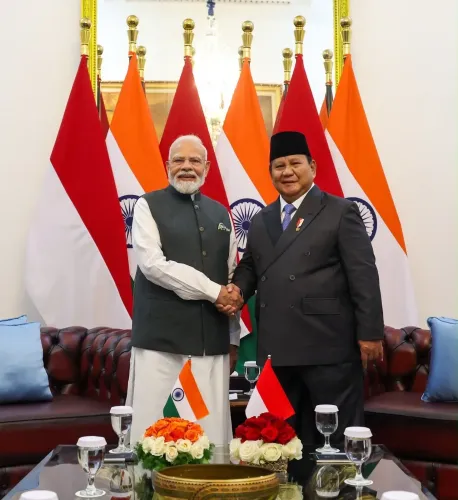
India and Indonesia share overlapping interests across the Indian Ocean Region, where maritime connectivity, disaster response, and resource management increasingly intersect with advanced technology. The two nations elevated their relationship to a Comprehensive Strategic Partnership in 2018, providing an institutional foundation for exactly the kind of sectoral expansion PM Modi is now articulating.
Policy Backdrop
India's engagement with Indonesia on space has a multi-year lineage. Discussions between ISRO — India's national space agency — and Indonesia's space research body LAPAN have taken place since the mid-2010s, focusing on remote-sensing data sharing and disaster-management applications. Both nations are disaster-prone archipelagic or peninsular states, making satellite-based early-warning systems a natural area of mutual interest.
On the maritime side, India's SAGAR (Security and Growth for All in the Region) doctrine, unveiled in 2015, explicitly frames maritime capacity-building with Indian Ocean littoral states — including Indonesia — as a strategic priority. Maritime technology cooperation, from vessel-tracking systems to port modernisation, fits squarely within that framework.
The statement also aligns with India's broader Act East Policy and its Indo-Pacific engagement strategy, which seek to diversify high-technology partnerships with ASEAN nations and reduce dependence on any single partner bloc.
Stakeholders and Impact
The sectors named by PM Modi carry significant institutional and commercial stakes. ISRO has been expanding its international launch and satellite-services portfolio, and a deeper partnership with Indonesia — one of Southeast Asia's largest economies — would open new markets and data-sharing arrangements. Indonesian archipelagic geography, spanning over 17,000 islands, creates persistent demand for satellite connectivity and maritime surveillance.
For Indonesia, collaboration with India on maritime technology supports its own ambitions to become a 'Global Maritime Fulcrum,' a vision articulated under successive administrations in Jakarta. Joint development or procurement of maritime-domain-awareness tools would benefit both navies and coast guards operating in shared waters.
Domestic industries on both sides — Indian defence-tech startups, space-sector private players, and Indonesian shipbuilding and logistics firms — stand to gain from any formal working-group or memorandum-of-understanding outcomes that follow high-level signalling of this kind.
What's Next
Concrete deliverables will depend on whether the statement translates into formal instruments such as memoranda of understanding on satellite data sharing or joint maritime technology development. Upcoming forums including the ASEAN-India Summit and bilateral defence dialogues will be watched for follow-up joint statements or new working-group mandates.
If space and maritime technology are formally incorporated into the Comprehensive Strategic Partnership roadmap, it would mark a qualitative upgrade in one of India's most strategically significant ASEAN relationships — one that carries implications for the broader balance of influence across the Indo-Pacific.
Point of View
Moving it beyond the trade-and-defence comfort zone into domains that will define strategic influence in the Indo-Pacific over the next decade. It reinforces a consistent pattern in Indian foreign policy: using high-technology cooperation as both a diplomatic signal and a market-opening instrument with ASEAN partners. The timing also reflects competitive pressure, as other major powers actively court Southeast Asian nations with space and maritime technology offers. Whether the rhetoric converts into binding agreements will be the real test of the partnership's depth.
NationPress
7 Jul 2026
Frequently Asked Questions
What did PM Modi say about India and Indonesia cooperation in July 2026?
PM Modi stated on 7 July 2026 that sectors such as space and maritime technology are 'futuristic' and offer 'immense scope' for India and Indonesia to work closely together.
What is the India-Indonesia Comprehensive Strategic Partnership?
The Comprehensive Strategic Partnership was established in 2018 between India and Indonesia, covering areas including maritime security, defence technology, and economic cooperation.
How are ISRO and Indonesia cooperating on space?
ISRO and Indonesia's space research body LAPAN have engaged since the mid-2010s on remote-sensing data sharing and disaster-management satellite applications, given both nations' vulnerability to natural disasters.
What is India's SAGAR doctrine and how does it relate to Indonesia?
SAGAR — Security and Growth for All in the Region — is India's 2015 maritime engagement framework for Indian Ocean littoral states. Indonesia, as a key Indian Ocean nation, is a central partner under this doctrine.
What is India's Act East Policy and why does Indonesia matter?
India's Act East Policy seeks to deepen strategic and economic ties with ASEAN and Indo-Pacific nations. Indonesia, as Southeast Asia's largest economy and a major maritime state, is one of its most significant partners.