PM Modi Affirms Non-Discriminatory Delimitation for Women's Quota Bill
Synopsis
In a pivotal address, Prime Minister Modi reassured Lok Sabha that the delimitation process for implementing the women's quota will be fair and unbiased, urging unity across political lines for women's representation in decision-making.
Key Takeaways
PM Modi emphasizes a non-partisan approach to the women's quota bill.
He guarantees that the delimitation process will not be discriminatory.
The bill aims to enhance women's representation in decision-making.
Urges political unity for the benefit of women in governance.
Over 300 women are already participating in local governance.
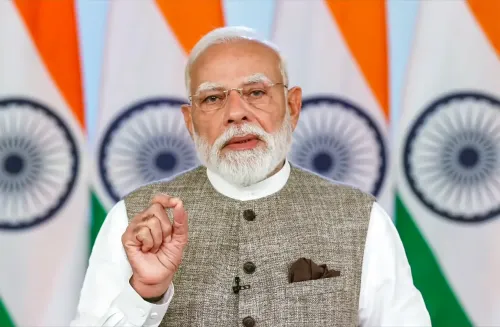
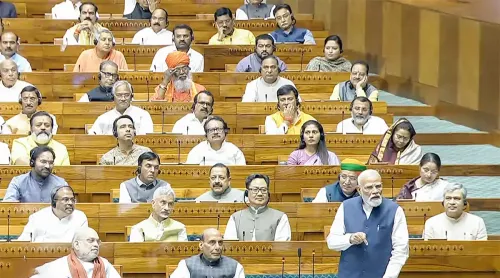
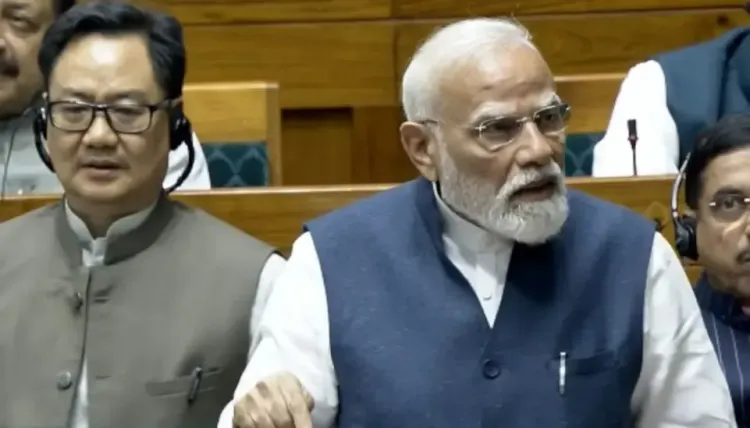
New Delhi, April 16 (NationPress) Advocating for a non-partisan stance, Prime Minister Narendra Modi addressed Lok Sabha members on Thursday, expressing readiness to utilize the terms “guarantee” and “promise” to alleviate the anxieties of MPs regarding the impending delimitation prior to the women’s quota implementation, assuring that it will not be biased against any state.
He emphasized that a vision of “nation-first” should take precedence over all other factors, stating, “I want to assure you that regardless of whether it’s a smaller or larger state, the delimitation will not wrong anyone. I can indeed use the words ‘guarantee’ or ‘promise’ to alleviate the fears of members.”
Modi remarked, “When we have clear intentions, there’s no need for verbal gymnastics on this matter,” advising MPs against the misconception that they are bestowing favors upon women.
He cautioned that if the opposition resists the women’s quota bill, it could inadvertently benefit him politically and urged them not to politicize this crucial issue.
“You can claim the credit. I’m open to promoting whoever you wish in advertisements. I’m providing you with a ‘blank cheque’ to take credit for the women’s quota,” he stated.
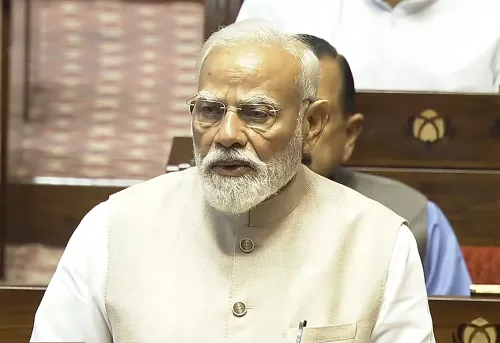
While participating in the discussion on the Constitution (One Hundred and Thirty-First Amendment) Bill, 2026, which aims to facilitate women’s reservation and the accompanying delimitation, the Prime Minister remarked that the Women Reservation Bill is set to transform the “disha and dasha” (direction and condition) of the nation’s political landscape by incorporating half of the population in decision-making processes.
Highlighting the advantages of women’s reservation in achieving Viksit Bharat @2047, PM Modi noted that those who have opposed this initiative have learned a lesson from women voters.
“We are fortunate to have the chance to redefine the political landscape and fortify democracy,” he asserted, urging political parties to view this from a national perspective rather than a political one, as it is a matter of collective benefit.
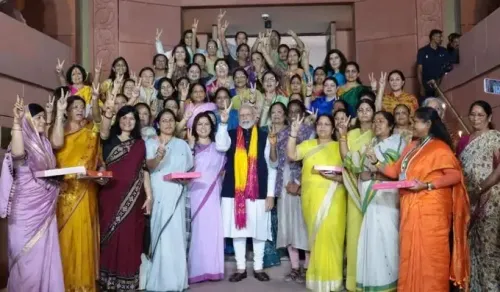
He encouraged all parties to recognize women’s leadership emerging from grassroots for a significant role in policymaking.
“At the very least, let them have representation in legislatures,” he urged, calling for unity to grant women their rightful place.
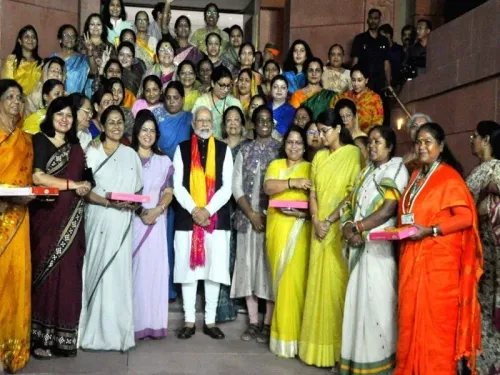
“Today, Nari Shakti is enhancing the nation’s prestige across all domains. Their involvement in politics will yield extraordinary results,” he expressed.
“The entire nation and Nari Shakti will witness our decisions and intentions today. Consequently, any ill intentions will never be forgiven by women,” he declared.
He reminded the assembly that in 2023, the Nari Shakti Vandan Adhiniyam was passed with consensus. “Now, the question is, how long are we willing to postpone its execution?” he queried.
PM Modi reiterated that consensus in 2023 was to expedite the women’s quota implementation. “If we do not implement the women’s quota by 2029, we will struggle to convince them of our commitment to sharing decision-making power,” he warned.
“These are women’s rights that have been denied for decades. Today, we have the chance to finalize this noble initiative,” he remarked, recalling previous “technical excuses” that were utilized to stall the women’s quota.
He pointed out that over 300 women are currently making decisions in panchayats, while more than 900 women are engaged in decision-making in urban local bodies, indicating that the time has come to afford them a role in national policymaking.
Earlier on Thursday, the Lok Sabha approved the introduction of three bills following a division of votes in the House, a process prompted by the opposition's insistence on a recorded vote.
Point of View
Urging political unity for the greater national benefit. His emphasis on a non-partisan approach highlights a crucial opportunity for advancing women's representation in governance.
NationPress
16 Sept 2026
Frequently Asked Questions
What is the Women Reservation Bill?
The Women Reservation Bill seeks to reserve a certain percentage of seats for women in legislative bodies to enhance their political representation.
What did PM Modi promise regarding the delimitation process?
PM Modi assured that the delimitation process will be fair and will not discriminate against any state.
Why is the women's quota important?
The women's quota is vital for ensuring women's participation in decision-making, thereby strengthening democracy and representation.
What was the context of PM Modi's remarks?
His remarks were made during discussions on the Constitution (One Hundred and Thirty-First Amendment) Bill aimed at facilitating women's reservation.
How does women's involvement in politics affect the nation?
Increased women's involvement in politics is expected to change the political landscape positively and enhance governance.