PM Modi Highlights Forest Staff and Community Role in Tiger Conservation
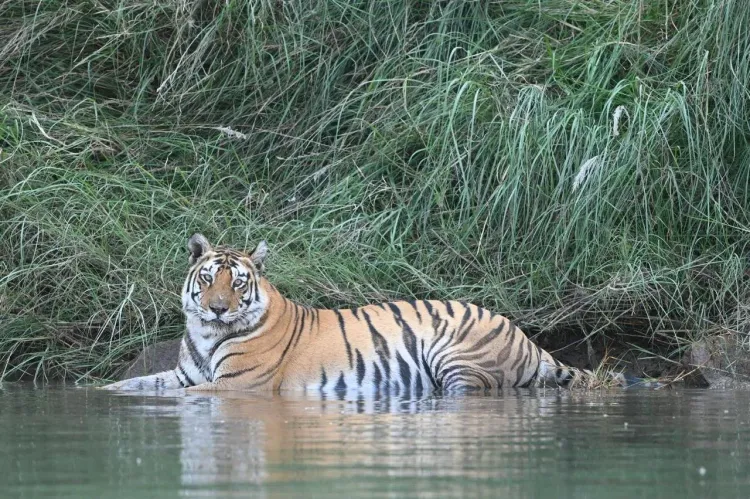
Synopsis
Prime Minister Narendra Modi on 29 July 2026 highlighted the role of forest personnel, scientists and conservationists in tiger protection and reaffirmed India's commitment to empowering local communities and reducing human-wildlife conflict, building on over five decades of Project Tiger policy.
Key Takeaways
PM Modi credited forest personnel, scientists and conservationists as key to India's tiger protection efforts.
India reaffirmed its commitment to empowering local communities living near tiger reserves.
Reducing human-wildlife conflict remains a stated policy priority alongside strict habitat protection.
Project Tiger , launched in 1973 , is India's flagship in-situ tiger conservation programme.
The National Tiger Conservation Authority was constituted in 2005 to provide statutory oversight of tiger reserves.
India pledged at the 2010 St.
Petersburg Tiger Summit to double its wild tiger population by 2022 .
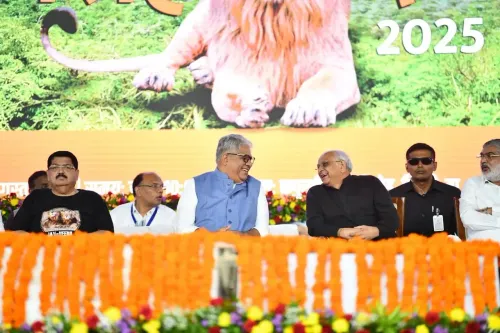
India's half-century effort to pull the tiger back from the brink has always rested on two pillars — science and people. On Wednesday, 29 July 2026, Prime Minister Narendra Modi underscored both, crediting the 'efforts and dedication of forest personnel, scientists and conservationists' as central to the country's tiger protection story — and reaffirming India's commitment to empowering local communities while reducing human-wildlife conflict.
From 1973 to Today: The Long Arc of Project Tiger
When Project Tiger was launched in 1973, fewer than 1,800 tigers remained across India's forests. The scheme designated protected reserves, enforced anti-poaching measures, and created a framework for in-situ conservation that became a global reference point. Three decades later, the National Tiger Conservation Authority (NTCA) was constituted in 2005 to sharpen the legal and administrative architecture — adding statutory muscle to what had been largely executive-driven policy. At the 2010 St. Petersburg Tiger Summit, India made a bold public pledge: double its wild tiger population by 2022. Periodic All India Tiger Estimation surveys have tracked progress, and the results have been cited internationally as evidence that political will, scientific monitoring, and field-level enforcement can reverse a species' decline.The Human Equation: Communities and Conflict
The harder, less celebrated challenge has always been the forest edge — the villages, farms, and livelihoods that sit alongside tiger habitat. Human-wildlife conflict is not an abstract policy phrase; it is a cattle killed overnight, a farmer's crop destroyed, occasionally a life lost. India's conservation model has gradually evolved to address this, weaving community-based eco-development initiatives into reserve management alongside strict protection zones. Modi's emphasis on 'empowering local communities' signals that this shift is not incidental but deliberate. Forest personnel — rangers, trackers, anti-poaching watchers — are the first line of defence in reserves that span thousands of square kilometres of difficult terrain. Recognising their role publicly matters as much for morale as for policy messaging.What Comes Next for India's Tiger Count
Attention in conservation circles will now turn to the next All India Tiger Estimation report and any updated guidelines on community participation in reserve management. The coexistence model — balancing strict habitat protection with genuine livelihood support for communities at the forest fringe — remains the defining test of whether India's tiger recovery is durable or fragile. A tiger thriving in a reserve surrounded by resentful communities is only half a conservation success. The other half is still being written.Point of View
India's tiger recovery is one of the few unambiguous wildlife success stories of the past 50 years, and periodic statements like this serve to keep that diplomatic asset visible. The real policy test, however, lies in the specifics of the next tiger estimation and whether community benefit-sharing frameworks have actually expanded on the ground.
NationPress
29 Jul 2026
Frequently Asked Questions
What is Project Tiger and when was it launched?
Project Tiger is India's flagship tiger conservation programme, launched in 1973 to protect tigers and their habitats across designated reserves through anti-poaching measures, habitat management, and scientific monitoring.
What is the National Tiger Conservation Authority?
The National Tiger Conservation Authority (NTCA) is a statutory body established in 2005 under the Wildlife Protection Act to provide oversight, policy direction, and administrative support for India's tiger reserves.
What did India pledge at the 2010 St. Petersburg Tiger Summit?
At the 2010 St. Petersburg Tiger Summit , India committed to doubling its wild tiger population by 2022 , a pledge that became a benchmark for measuring the success of Project Tiger and related conservation efforts.
Why is human-wildlife conflict important in tiger conservation?
Human-wildlife conflict — including livestock predation and crop damage by wildlife — creates resentment among communities living near tiger reserves, which can undermine conservation efforts. Addressing it through coexistence models and livelihood support is now central to India's tiger policy.
What role do forest personnel play in tiger protection in India?
Forest rangers, anti-poaching watchers, and field trackers form the frontline of tiger protection across reserves that span thousands of square kilometres. Their daily work in patrolling, monitoring, and responding to poaching threats is critical to the survival of tiger populations.