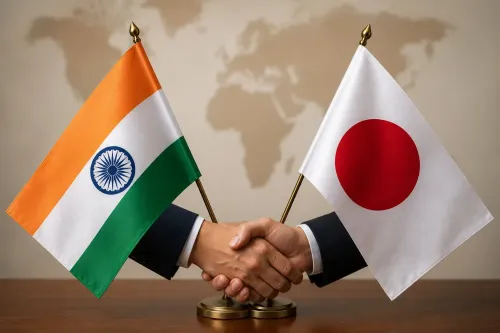
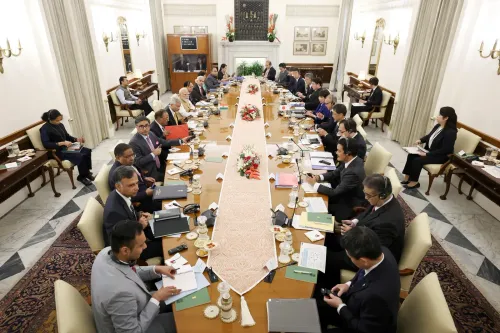
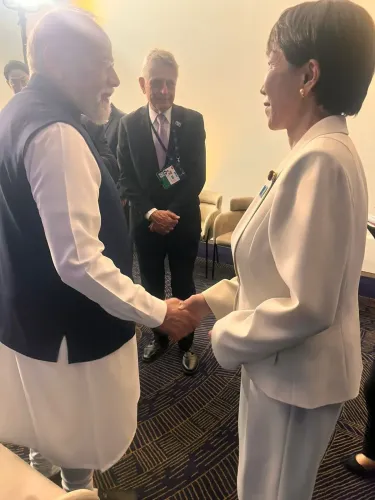
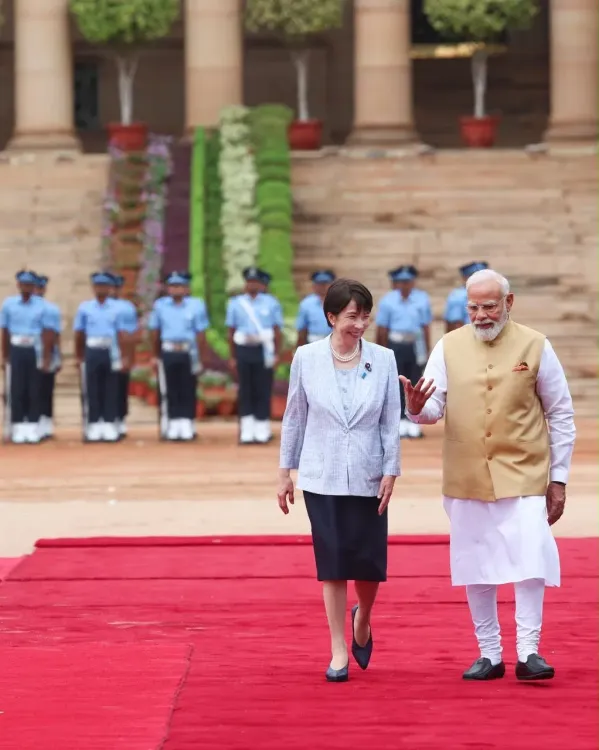
PM Modi, Japan PM Takaichi Issue Joint AI Statement
Synopsis
Prime Minister Narendra Modi and Japanese Prime Minister Sanae Takaichi issued a Joint Statement on Artificial Intelligence on 2 July 2026, with leading Indian AI institutions signing agreements with Japanese partners. The two leaders also discussed energy, education, and people-to-people cooperation, deepening their Special Strategic and Global Partnership.
Key Takeaways
India and Japan issued a Joint Statement on Artificial Intelligence on 2 July 2026 .
Leading institutions from India's AI ecosystem signed agreements with their Japanese partners on the same day.
PM Modi and PM Takaichi described technology partnership as 'the strongest pillar' of bilateral cooperation.
The two leaders also discussed cooperation in energy , education , and people-to-people ties .
The engagement builds on the Special Strategic and Global Partnership in place between India and Japan since 2014 .
Follow-up mechanisms, including possible working groups and pilot projects, are expected to be established.
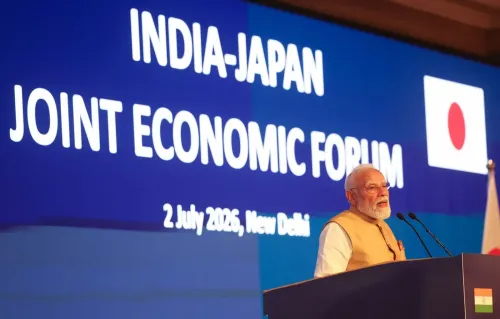
Prime Minister Narendra Modi announced on Thursday, 2 July 2026 that India and Japan have issued a Joint Statement on Artificial Intelligence, with leading institutions from India's AI ecosystem signing agreements with their Japanese counterparts, marking a significant expansion of the two nations' technology partnership.
Context
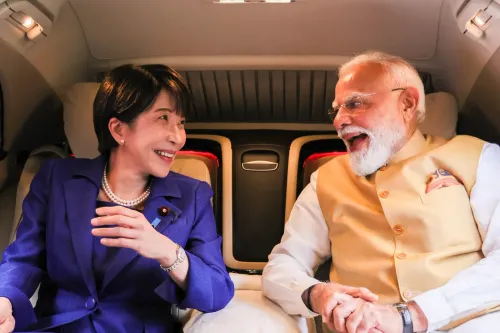
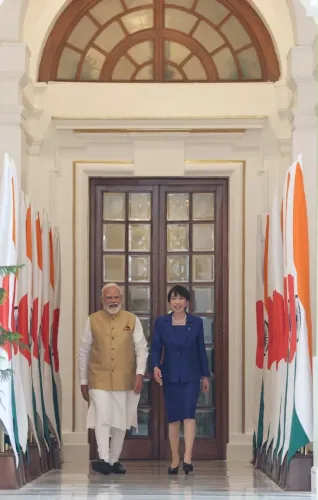
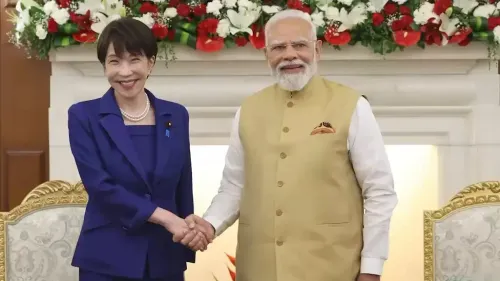
Posting on X, Prime Minister Modi stated that he and Japanese Prime Minister Sanae Takaichi share the conviction that 'technology partnership will become the strongest pillar of our cooperation.' The joint AI statement and the institutional agreements were issued and signed on the same day, signalling a concrete step beyond prior declarations of intent. The two leaders also discussed cooperation in energy, people-to-people ties, and education.
The announcement reflects a deepening of the Special Strategic and Global Partnership that India and Japan have maintained since 2014, when the relationship was upgraded from the original Strategic and Global Partnership established in 2006.
Policy Backdrop
Annual India-Japan summits have consistently produced joint statements on information and communications technology, space, and energy since the mid-2010s, but a dedicated Joint Statement on AI represents a new frontier in the bilateral agenda. The two countries also signed a Comprehensive Economic Partnership Agreement in 2011 that included provisions for science, technology, and education exchanges, laying the groundwork for today's institutional linkages.
Japan is an advanced technology power with deep industrial expertise in semiconductors, robotics, and precision manufacturing, while India has rapidly expanded its AI research base through government-backed programmes and a large pool of technology talent. The pairing addresses complementary strengths that both governments have sought to formalise. This move also aligns with broader Indo-Pacific supply-chain resilience strategies pursued by both nations.
Stakeholders and Impact
The agreements signed on 2 July 2026 directly involve AI research institutions and universities from both countries, opening pathways for joint research, faculty and student exchanges, and co-development of AI applications. Technology companies operating in both markets stand to benefit from the regulatory and institutional frameworks that such bilateral statements typically enable. Education and people-to-people linkages mentioned by Prime Minister Modi suggest the cooperation is designed to build long-term human capital alongside near-term technology projects.
Energy cooperation, also flagged in the post, reflects both countries' shared interest in clean-energy transitions — an area where Japan's financing capacity and engineering expertise have previously supported large-scale Indian infrastructure. The breadth of topics discussed indicates this was a substantive bilateral engagement rather than a ceremonial exchange.
What's Next
Attention will now turn to the follow-up mechanisms for the AI Joint Statement, including the possible formation of working groups, pilot projects, and timelines for deliverables. The next scheduled India-Japan summit and any upcoming Quad leaders' meeting could serve as milestones for reviewing progress. Observers will also watch whether the institutional agreements signed today translate into funded joint research programmes in the months ahead.
Point of View
A pattern that typically precedes funded programmes and regulatory alignment. For PM Modi, anchoring technology at the centre of the India-Japan relationship also serves the domestic narrative of positioning India as a global AI power. PM Takaichi's known emphasis on innovation policy makes her a natural counterpart for this agenda. The explicit mention of energy, education, and people-to-people ties alongside AI suggests the two sides are deliberately broadening the cooperation basket to insulate the relationship from single-sector volatility.
NationPress
2 Jul 2026
Frequently Asked Questions
What did India and Japan agree on in July 2026?
India and Japan issued a Joint Statement on Artificial Intelligence on 2 July 2026 , with leading Indian AI institutions signing agreements with Japanese partners. The two countries also discussed cooperation in energy, education, and people-to-people ties.
Who is Japanese Prime Minister Takaichi?
Sanae Takaichi is a long-serving Liberal Democratic Party politician and former Japanese minister known for her positions on security and innovation policy, who serves as Prime Minister of Japan.
What is the India-Japan Special Strategic and Global Partnership?
The Special Strategic and Global Partnership is the framework governing India-Japan relations, upgraded to this status in 2014 from the original Strategic and Global Partnership established in 2006 . It covers defence, technology, infrastructure, and economic cooperation.
Which Indian AI institutions signed agreements with Japan?
PM Modi stated that 'several leading institutions of India's AI ecosystem' signed agreements with Japanese partners on 2 July 2026 , but the specific names of the institutions were not disclosed in his post.
How does the India-Japan AI statement fit into broader Indo-Pacific strategy?
The AI joint statement aligns with both countries' efforts to build supply-chain resilience and deepen technology cooperation within the Indo-Pacific framework. India and Japan are also partners in the Quad , which has an emerging-technology working agenda.