PM Modi to Unveil Groundbreaking Rs 22,516 Crore Semiconductor Plant in Sanand on February 28

Synopsis
On February 28, PM Modi will inaugurate a cutting-edge semiconductor facility in Sanand, backed by a staggering Rs 22,516 crore investment, marking a monumental stride in India's semiconductor industry.
Key Takeaways
Inauguration Date: February 28 Investment: Rs 22,516 crore Job Creation: Aiming for 5,000 new jobs Technology Focus: Semiconductor memory products Global Market: Output for international markets
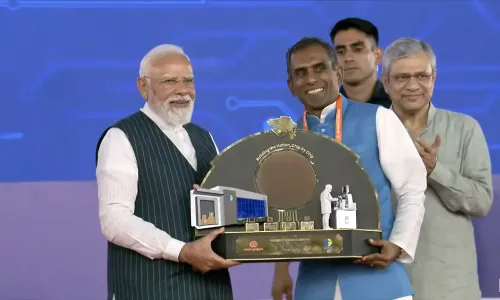
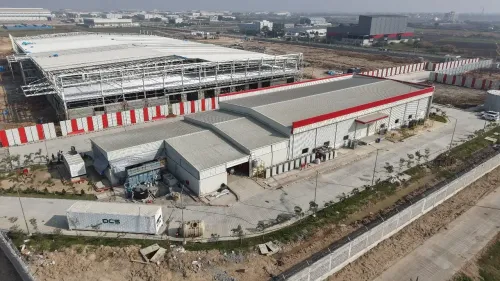
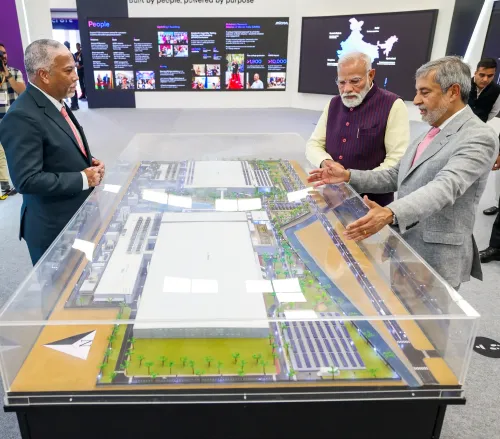
Gandhinagar, Feb 26 (NationPress) On February 28, Prime Minister Narendra Modi is set to launch a state-of-the-art semiconductor Assembly, Testing, Marking, and Packaging (ATMP) facility in Sanand. This inauguration represents a pivotal advancement in India’s aspirations for semiconductor manufacturing under the National Semiconductor Mission.
The Sanand facility, developed by Micron Semiconductor Technology India Pvt. Ltd., has been established with a substantial investment of Rs 22,516 crore.
This facility will focus on the assembly, testing, marking, and packaging of semiconductor memory products, such as solid-state drives (SSDs) and RAM-type DRAM and NAND devices intended for international markets.
Currently, a workforce of 2,000 employees is operational at the plant, with expectations to grow and provide direct employment opportunities for approximately 5,000 individuals in the near future.
The representatives from Micron emphasized their commitment to inclusivity, stating that individuals with disabilities are also employed as operators and technicians, with job opportunities available for qualified candidates.
The project has progressed as scheduled, with the state government highlighting Gujarat's ambition to be a leader in semiconductor manufacturing within India.
Sanjay Mehrotra, President and CEO of Micron Technology, stressed the critical role of memory and storage in emerging technologies, stating, "In today's technological landscape, especially with Artificial Intelligence, memory and storage are indispensable. AI systems cannot operate effectively without robust memory and storage support."
He further noted that as AI applications demand quicker and more immediate responses, the need for sophisticated memory solutions is rapidly increasing.
The semiconductor manufacturing process that feeds the ATMP facility begins with sand, from which pure silicon is extracted. The silicon is melted and formed into cylindrical ingots, which are then sliced into thin wafers.
In fabrication plants, electronic patterns are etched onto the wafers, and various layers are applied through photolithography, creating transistors and memory structures.
The sliced wafers are then divided into individual chips. These chips are sent to the ATMP facility in Sanand, where they undergo assembly, followed by rigorous performance and reliability testing, including evaluations of speed and memory capacity.
Upon successful testing, the chips are marked and packaged for distribution.
The Sanand facility will process advanced DRAM and NAND wafers produced at the company's global factories, converting them into finished memory products.
According to the company, the output will serve international markets and meet the growing demand for memory and storage solutions, particularly in Artificial Intelligence systems.
Point of View
The inauguration of the semiconductor plant by PM Modi underscores India's commitment to bolstering its technological infrastructure. This initiative not only paves the way for job creation and economic growth but also positions India as a vital player in the global semiconductor market.
NationPress
17 Sept 2026
Frequently Asked Questions
What is the purpose of the semiconductor plant in Sanand?
The semiconductor plant in Sanand will focus on the assembly, testing, marking, and packaging of semiconductor memory products, including SSDs and DRAM.
How much was invested in the Sanand semiconductor facility?
The facility was developed with an investment of Rs 22,516 crore by Micron Semiconductor Technology India Pvt. Ltd.
How many jobs will the Sanand facility create?
The Sanand facility currently employs 2,000 people, with plans to expand and provide direct employment for around 5,000 individuals.
What role does memory and storage play in technology?
Memory and storage are crucial for the functionality of AI systems and are increasingly in demand as technology evolves.
What markets will the Sanand facility serve?
The output from the Sanand facility will cater to global markets and meet the rising demand for memory and storage solutions, particularly in AI applications.