PM Modi marks Constitution Murder Day, recalls 1975 Emergency
Synopsis
Prime Minister Narendra Modi on 25 June 2026 observed Samvidhan Hatya Diwas, honouring all who resisted the 1975 Emergency. He called the period a dark era when Indian democracy was brutally crushed and reaffirmed commitment to the Constitution and citizens' rights.
Key Takeaways
Prime Minister Narendra Modi posted on X on 25 June 2026 to mark Samvidhan Hatya Diwas (Constitution Murder Day).
The post paid tribute to all leaders and citizens who opposed the 1975 Emergency declared by Indira Gandhi .
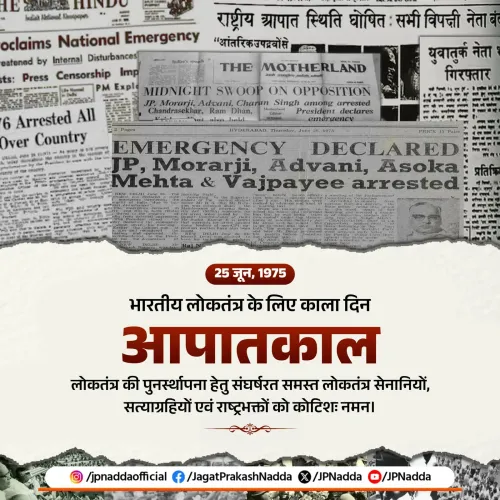
The Emergency lasted from 25 June 1975 to 21 March 1977 , during which fundamental rights were suspended and thousands were detained without trial.
Socialist leader Jayaprakash Narayan was among the most prominent figures imprisoned for resisting the Emergency.
The BJP-led government has observed 25 June as a day of democratic remembrance as part of a consistent political and historical narrative since 2014 .
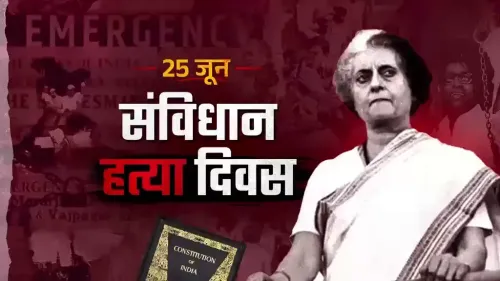
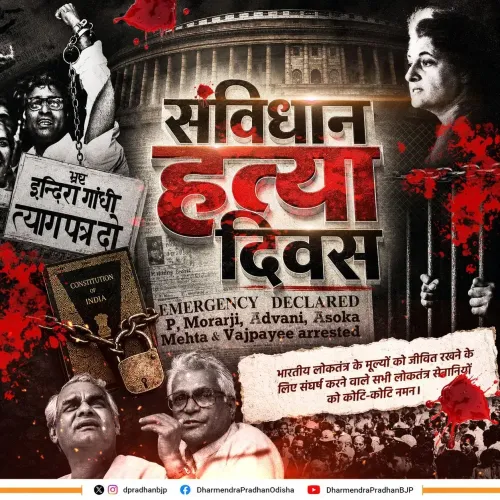
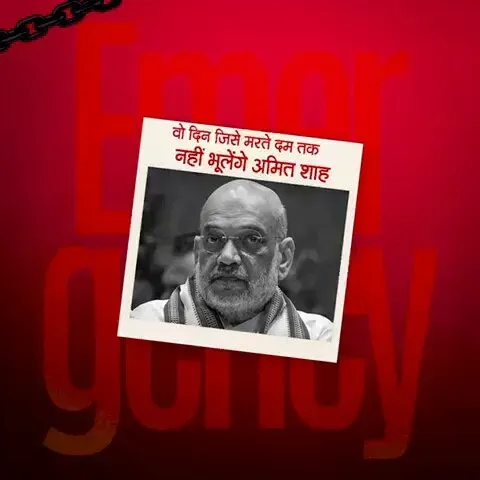
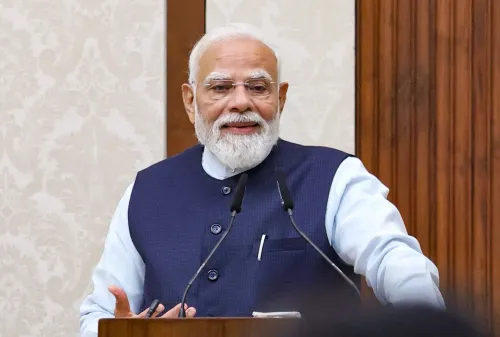
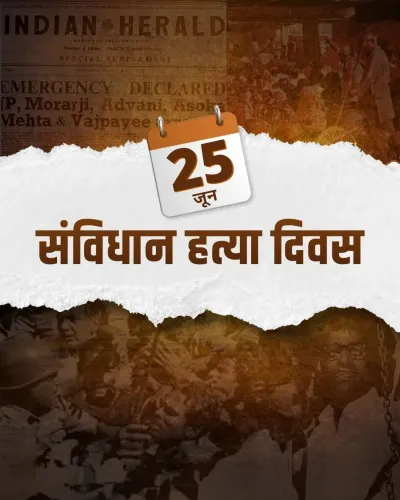
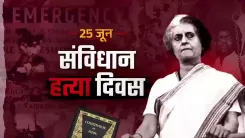
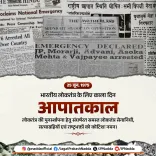
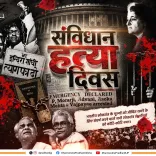
Prime Minister Narendra Modi on Thursday, 25 June 2026, marked Samvidhan Hatya Diwas (Constitution Murder Day) by paying tribute to all those who resisted the 1975 Emergency, calling the period one of the darkest chapters in Indian democratic history.
In a post on X in Hindi, Modi wrote: 'Samvidhan Hatya Diwas aaj hamein us kaale daur ki yaad dila raha hai' — 'Constitution Murder Day today reminds us of that dark era when Indian democracy was brutally crushed.' He added that the day inspires an abiding commitment to democracy, the Constitution, and the protection of citizens' rights, and offered his respectful salute to all the personalities who opposed the Emergency.
Context
The Emergency was proclaimed on 25 June 1975 by then Prime Minister Indira Gandhi under Article 352 of the Constitution of India, citing internal disturbance. It remained in force until 21 March 1977. During this period, fundamental rights were suspended, the press was subjected to heavy censorship, and thousands of political opponents and civil society figures were detained without trial.
Among the most prominent figures to resist the Emergency was socialist leader Jayaprakash Narayan, who spearheaded a nationwide opposition movement and was imprisoned during the period. His name and legacy remain central to the annual BJP commemoration of the anniversary.
Policy Backdrop
The BJP-led government has observed 25 June as Samvidhan Hatya Diwas as part of a sustained effort to anchor historical memory around the Emergency as a cautionary example of democratic erosion. This framing has been a consistent element of the ruling party's political discourse since 2014, contrasting the present government's stated constitutional commitments with the record of mass arrests and press restrictions from the 1970s.
The observance draws on Article 352 of the Constitution of India — the supreme law of the land — whose invocation in 1975 remains one of the most contested episodes in post-independence Indian political history.
Stakeholders and Impact
The annual commemoration resonates with civil liberties advocates, legal scholars, and opposition politicians who see the Emergency as a defining test of India's constitutional resilience. Veterans of the anti-Emergency movement — many now in their seventies and eighties — remain an important constituency that the tribute directly addresses.
The day also draws responses from opposition parties, including the Indian National Congress, whose founding leadership proclaimed the Emergency, making the anniversary a recurring flashpoint in partisan political discourse.
What's Next
Observers will watch for parliamentary references or formal resolutions marking the anniversary, as well as statements from opposition parties responding to the government's framing of the day. The commemoration reinforces a historical narrative that is likely to remain a fixture of BJP political communication ahead of future electoral cycles, underscoring the party's self-positioning as a guardian of constitutional values.
Point of View
The BJP reinforces its own identity as the custodian of democratic and constitutional values — a contrast that gains resonance each election cycle. The tribute to anti-Emergency figures also serves to legitimise the ideological lineage of the RSS-BJP ecosystem, many of whose members were jailed during 1975-77. As India's political contestation increasingly centres on competing historical narratives, the 25 June commemoration functions as both a memorial and a political statement.
NationPress
25 Jun 2026
Frequently Asked Questions
What is Samvidhan Hatya Diwas?
Samvidhan Hatya Diwas, or Constitution Murder Day, is observed on 25 June to mark the anniversary of the 1975 Emergency declared by Prime Minister Indira Gandhi, during which the Constitution's fundamental rights provisions were effectively suspended.
When was the 1975 Emergency declared and how long did it last?
The Emergency was proclaimed on 25 June 1975 under Article 352 of the Constitution and remained in force until 21 March 1977 , a period of roughly 21 months.
Who opposed the 1975 Emergency?
Jayaprakash Narayan was the most prominent leader of the anti-Emergency movement. Thousands of political figures, journalists, civil society activists, and ordinary citizens also resisted and were detained during this period.
Why does PM Modi observe 25 June every year?
Prime Minister Modi and the BJP observe 25 June annually to remind citizens of what they describe as a dark chapter of democratic erosion under the Congress government, and to reaffirm commitment to constitutional values.
What does the Indian Constitution say about Emergency powers?
Article 352 of the Constitution of India empowers the President to proclaim a national emergency on the advice of the Cabinet if the security of India or any part thereof is threatened by war, external aggression, or armed rebellion — or, as was cited in 1975, 'internal disturbance'.