PM Modi shares Rigveda unity verse on X
Synopsis
Prime Minister Narendra Modi posted a two-line Sanskrit verse from Rigveda Mandala 10.191 on X on 26 June 2026, calling for unity of movement, speech and thought, modelled on the harmony of the gods — continuing his practice of sharing Vedic texts on social media.
Key Takeaways
PM Modi posted a Sanskrit verse from Rigveda, Mandala 10, hymn 191 on 26 June 2026 .
The verse, known as the Samjnana Sukta or 'Hymn of Unity,' calls for collective movement, shared speech and convergence of minds.
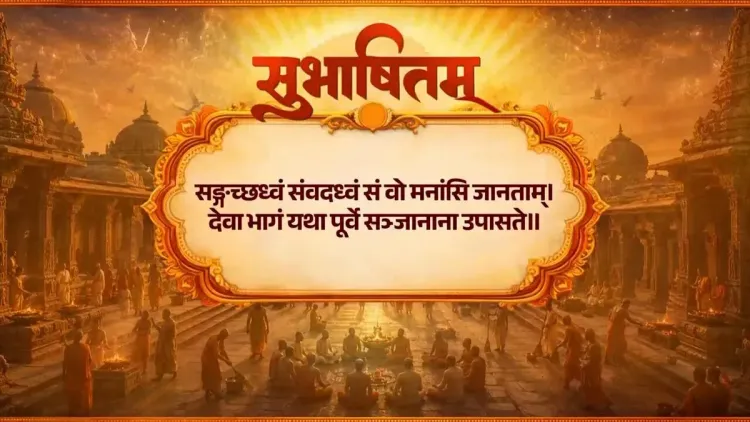
The post included a video attachment alongside the Sanskrit text.
This is part of a recurring practice by the Prime Minister of sharing Vedic and Upanishadic verses on social media to emphasise national unity and cultural rootedness.
The verse's divine analogy — gods acting in concert — frames social harmony as an ancient, civilisational ideal.
Prime Minister Narendra Modi on Friday, 26 June 2026, shared a Sanskrit verse from the Rigveda on X, invoking an ancient call for collective harmony, shared speech and aligned minds.
The Verse and Its Meaning
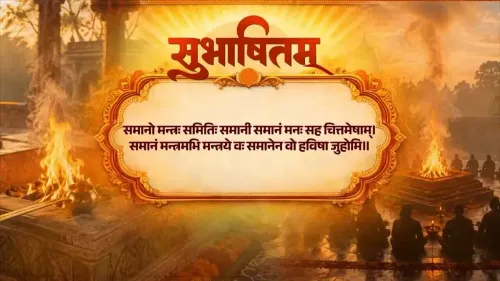
The two lines posted by PM Modi are drawn from Rigveda, Mandala 10, hymn 191 — one of the most cited passages in Vedic literature on social unity. A faithful English rendering reads: 'Sangacchadhvam samvadadhvam sam vo manaamsi jaanataam. Deva bhaagam yathaa poorve sanjaanaanaa upaasate.' — 'Come together, speak together, let your minds be in accord. As the gods of old, knowing their portions, come together in harmony.'
The verse addresses three registers of unity: physical togetherness (sangacchadhvam), shared discourse (samvadadhvam), and convergence of thought (sam vo manaamsi). The divine analogy — gods performing their duties in concert — frames collective action as both ancient and sacred.
Context
PM Modi has periodically shared Sanskrit shlokas from the Vedas and Upanishads on social media as part of a sustained public communication practice. These posts consistently foreground themes of national unity, consensus and cultural continuity. The choice of Rigveda 10.191 is notable: it is among the handful of Vedic verses most frequently invoked in public discourse on social cohesion in India.
The post carries a video attachment, suggesting the verse may be accompanied by a visual or audio treatment, though the precise content of the video could not be independently verified at the time of publication.
Policy Backdrop
The Prime Minister's use of classical texts on digital platforms reflects a broader communication strategy that links India's ancient civilisational heritage to present-day governance themes. Earlier posts in this vein have preceded or accompanied major policy addresses, Independence Day messaging, and cooperative federalism initiatives.
Scholars of Vedic literature note that Mandala 10 of the Rigveda, from which this verse is drawn, is among the later compositional layers of the text and contains several hymns oriented toward social order and collective ritual. The hymn 191 in particular is sometimes called the Samjnana Sukta — the 'Hymn of Unity.'
Stakeholders and Impact
The post is addressed to the general public and carries no specific policy directive. Its audience spans citizens across linguistic and regional backgrounds, given that Sanskrit occupies a pan-Indian cultural position recognised across the country's diverse traditions.
Cultural commentators observe that sharing such verses on a global platform like X simultaneously performs cultural pride domestically and signals India's civilisational depth to an international audience.
What's Next
Observers will watch whether PM Modi expands on the verse's themes of unity and consensus in forthcoming addresses — including any remarks ahead of Independence Day in August 2026 — potentially linking the Rigvedic ideal of collective harmony to programmes on cooperative federalism, social cohesion, or national integration.
Point of View
The Prime Minister allows the verse to function as ambient political communication: reinforcing a civilisational identity narrative while leaving the application open to multiple readings. The pattern of Vedic posts preceding major national addresses suggests this may be a deliberate tonal prelude. It also reflects a media strategy that uses classical culture to build emotional resonance with a broad, cross-regional audience in ways that conventional policy announcements cannot.
NationPress
24 Sept 2026
Frequently Asked Questions
What verse did PM Modi post on X on 26 June 2026?
PM Modi posted two lines from Rigveda Mandala 10, hymn 191 , known as the Samjnana Sukta or Hymn of Unity, which calls for people to come together, speak together and align their minds, drawing on the example of the gods acting in harmony.
What is the meaning of 'Sangacchadhvam Samvadadhvam'?
'Sangacchadhvam Samvadadhvam' translates broadly as 'Come together, speak together' — the opening of a Rigvedic verse that goes on to urge unity of thought and collective purpose, modelled on divine harmony.
Why does PM Modi post Sanskrit verses on social media?
PM Modi has made sharing Sanskrit shlokas from the Vedas and Upanishads a recurring part of his social media communication, consistently emphasising themes of national unity, cultural pride and social harmony.
Which part of the Rigveda is the unity verse from?
The verse is from Mandala 10, hymn 191 of the Rigveda, one of the later compositional sections of the text and a passage widely cited in Indian public discourse on social cohesion.
What is the Samjnana Sukta?
The Samjnana Sukta is the name scholars give to Rigveda 10.191 , a short hymn devoted entirely to the ideal of collective unity — in movement, speech and thought — and is among the most frequently quoted Vedic passages in Indian political and cultural contexts.