PM Modi Reaffirms India-UAE Strategic Partnership in Reply to UAE President
Synopsis
Prime Minister Narendra Modi on 11 June 2026 responded to UAE President Mohamed bin Zayed Al Nahyan, reaffirming the India-UAE Comprehensive Strategic Partnership and expressing commitment to deepening bilateral cooperation for the benefit of both nations' peoples.
Key Takeaways
PM Modi replied to UAE President Mohamed bin Zayed Al Nahyan on 11 June 2026 , thanking him for warm wishes.
Modi described the India-UAE Comprehensive Strategic Partnership as having 'reached new heights' under the UAE President's leadership.
The India-UAE CEPA , signed in February 2022 , liberalised tariffs on over 80 percent of traded goods.
The UAE hosts over 3 million Indian expatriates , underpinning strong people-to-people and economic ties.
India's engagement with the UAE is part of a broader West Asia outreach covering energy, investment and defence cooperation.
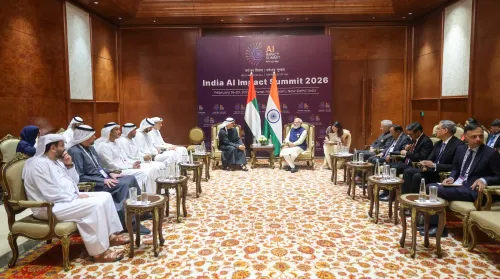
Prime Minister Narendra Modi on Thursday, 11 June 2026 responded to a message from United Arab Emirates President Mohamed bin Zayed Al Nahyan, reaffirming the depth of the bilateral relationship and expressing commitment to advancing cooperation between the two nations.
Context
In his post on X, PM Modi addressed the UAE President as 'my brother' — a term of personal warmth that has become a hallmark of the two leaders' public exchanges — and thanked him for 'warm wishes.' Modi wrote that the India-UAE Comprehensive Strategic Partnership 'has reached new heights' under the UAE President's 'visionary leadership,' and expressed his intent to continue working together 'for the mutual benefit of the people of our nations.'
The fraternal tone reflects a carefully cultivated personal diplomacy between the two leaderships that has underpinned a series of landmark bilateral agreements over the past decade.
Policy Backdrop
The India-UAE Comprehensive Strategic Partnership is an elevated bilateral framework covering defence, security, energy, trade and technology cooperation. A key milestone within this framework was the India-UAE Comprehensive Economic Partnership Agreement (CEPA), signed in February 2022, which liberalised tariffs on over 80 percent of traded goods between the two countries.
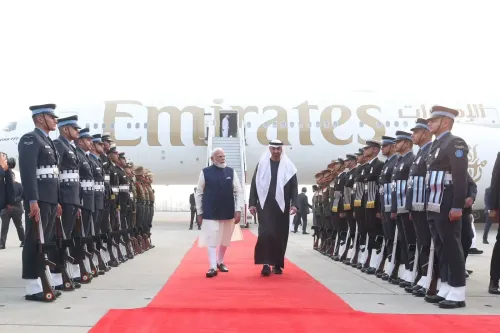
PM Modi undertook a landmark state visit to the UAE in August 2015 — the first by an Indian Prime Minister in 34 years — followed by further visits in 2018 and 2019 that expanded defence and energy ties. These visits laid the institutional groundwork for the comprehensive partnership framework that is now in place.
The bilateral relationship sits within India's broader West Asia outreach, aimed at securing energy supplies, attracting investment and expanding markets for Indian goods and services. High-level exchanges have also facilitated agreements on defence exercises, food security corridors and currency settlement mechanisms.
Stakeholders and Impact
The United Arab Emirates hosts over 3 million Indian expatriates, making it one of the largest destinations for the Indian diaspora globally. This community is a significant source of remittances and a living bridge between the two economies.
Bilateral traders and businesses in sectors ranging from energy and logistics to technology and food stand to benefit from continued high-level political engagement. The personal rapport between Modi and Mohamed bin Zayed has historically accelerated deal-making and smoothed implementation of agreed frameworks.
What's Next
Attention will now turn to progress reports on CEPA implementation and any new announcements on joint renewable energy or technology projects at upcoming bilateral or multilateral meetings. India's sustained engagement with the UAE — mirrored by similar intensification of ties with Saudi Arabia and other regional actors — signals that West Asia will remain a priority corridor in New Delhi's foreign policy calculus. The public exchange between the two leaders is likely to set the tone for the next phase of structured diplomatic engagement.
Point of View
Characterised by personal warmth and strategic affirmation, is consistent with New Delhi's deliberate use of leader-to-leader diplomacy as a force multiplier in its Gulf strategy. By publicly crediting Mohamed bin Zayed's 'visionary leadership' for the partnership's progress, Modi reinforces the bilateral relationship's personalised architecture — one that has delivered tangible agreements from CEPA to defence exercises. The exchange also signals continuity: at a time when India is navigating complex alignments across West Asia, keeping the UAE relationship visibly warm carries both economic and geopolitical weight. Observers will watch whether this public affirmation is followed by a structured engagement — a bilateral meeting or a new sectoral agreement — in the months ahead.
NationPress
25 Oct 2026
Frequently Asked Questions
What is the India-UAE Comprehensive Strategic Partnership?
The India-UAE Comprehensive Strategic Partnership is an elevated bilateral framework covering defence, security, energy, trade and technology cooperation. It built on earlier strategic partnership declarations and was significantly advanced by the Comprehensive Economic Partnership Agreement signed in February 2022.
What did PM Modi say to the UAE President on 11 June 2026?
PM Modi thanked UAE President Mohamed bin Zayed Al Nahyan for his warm wishes, said the India-UAE Comprehensive Strategic Partnership has reached new heights under his leadership, and expressed his intent to work together for the mutual benefit of both nations' peoples.
How many Indians live in the UAE?
The UAE hosts over 3 million Indian expatriates, making it one of the largest destinations for the Indian diaspora globally and a key source of remittances to India.
What is the India-UAE CEPA?
The India-UAE Comprehensive Economic Partnership Agreement (CEPA) was signed in February 2022 and liberalised tariffs on over 80 percent of traded goods between the two countries, marking a major step in bilateral economic integration.
How many times has PM Modi visited the UAE?
PM Modi has made multiple visits to the UAE, including a landmark state visit in August 2015 — the first by an Indian Prime Minister in 34 years — followed by additional visits in 2018 and 2019 that expanded defence and energy ties.