PM Modi Writes to Amarnath Yatra Pilgrims, Shares Five Sankalps
Synopsis
Prime Minister Narendra Modi on 3 July 2026 shared a personal letter on X carrying five resolutions for Amarnath Yatra pilgrims, describing the pilgrimage as an eternal expression of India's spiritual tradition and cultural unity, and praying for a safe and auspicious journey for all Shiv devotees.
Key Takeaways
PM Modi posted on 3 July 2026 to mark the beginning of the Shri Amarnath Yatra season.
He described the yatra as 'an eternal chapter of India's spiritual tradition and cultural unity.' The Prime Minister shared a personal letter containing five sankalps (resolutions) addressed to pilgrims.
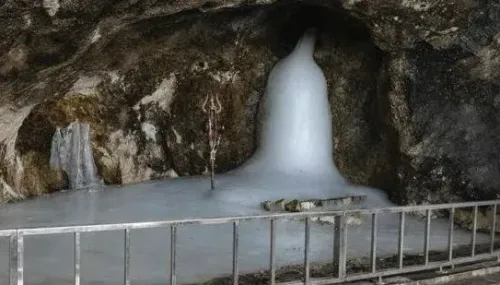
The Amarnath shrine in Jammu and Kashmir houses a naturally formed ice lingam known as Baba Barfani .
The yatra is administered by the Shri Amarnath Shrine Board with security provided by the CRPF , Indian Army , and J&K Police .
The pilgrimage holds economic significance for local communities in Anantnag and Ganderbal districts.
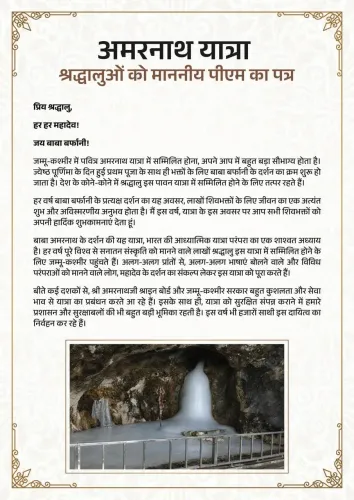
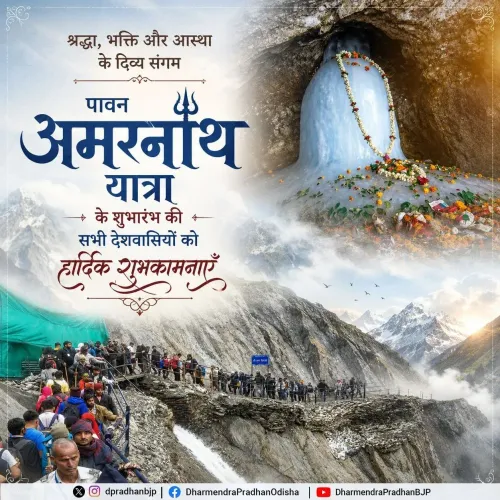
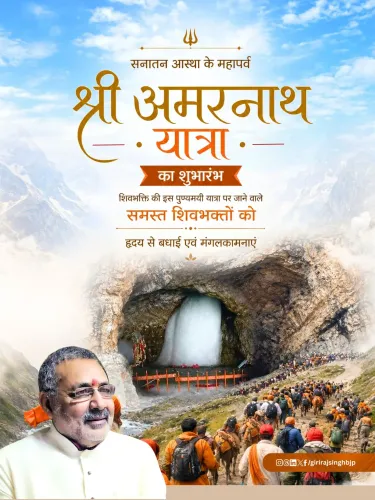
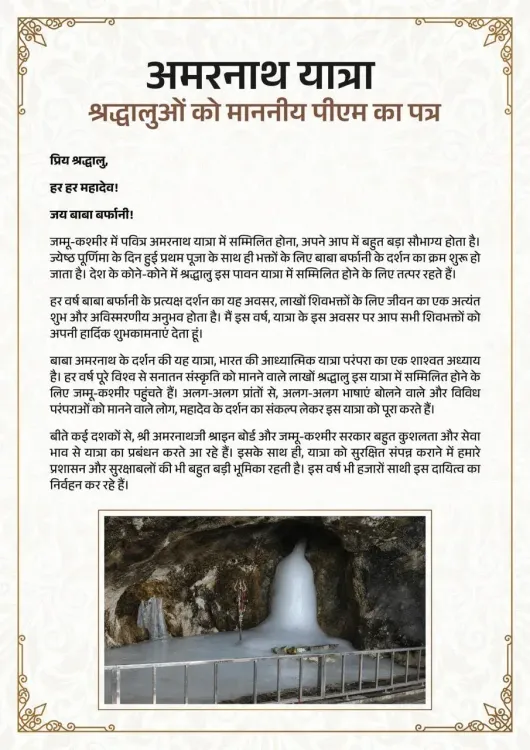
Prime Minister Narendra Modi on Friday, 3 July 2026, extended his wishes to pilgrims undertaking the Shri Amarnath Yatra, describing the annual pilgrimage as 'an eternal chapter of our spiritual tradition and cultural unity.' In a post on X, the Prime Minister shared a letter addressed to devotees outlining five resolutions, expressing hope that the journey of Shiv devotees remains 'safe and auspicious in every way.'
Writing in Hindi, PM Modi said: 'बाबा बर्फानी के दर्शन से जुड़ी श्री अमरनाथ यात्रा हमारी आध्यात्मिक परंपरा और सांस्कृतिक एकता का शाश्वत अध्याय है' — ('The Shri Amarnath Yatra, connected to the darshan of Baba Barfani, is an eternal chapter of our spiritual tradition and cultural unity.'). He accompanied the post with two images, one of which is understood to be the letter carrying five pledges, or sankalps, for pilgrims.
Context
The Amarnath Yatra is one of India's most significant Hindu pilgrimages, drawing hundreds of thousands of devotees each year to a high-altitude cave shrine in the Himalayas of Jammu and Kashmir. The shrine houses a naturally formed ice lingam — a sacred representation of Lord Shiva — venerated as Baba Barfani, literally 'the ice-clad saint.' The pilgrimage route passes through the Anantnag and Ganderbal districts of the Union Territory.
The yatra typically opens in late June or early July each year, coinciding with the Hindu month of Shravan, and runs for several weeks until the festival of Raksha Bandhan. Pilgrims reach the shrine via two main routes — the traditional Pahalgam route in Anantnag and the shorter Baltal route in Ganderbal.
Policy Backdrop
The Shri Amarnath Shrine Board (SASB), a statutory body constituted under the Jammu and Kashmir Shri Amarnath Shrine Act, oversees the administration, registration, and logistics of the yatra each year. Security arrangements involve the Central Reserve Police Force (CRPF), the Indian Army, and the Jammu and Kashmir Police in coordinated deployment across the high-altitude trek routes.
Successive central governments have treated the facilitation of the Amarnath Yatra as a priority, both as an expression of religious freedom and as part of broader efforts to promote religious tourism and connectivity in Jammu and Kashmir, particularly since the reorganisation of the former state into two Union Territories in August 2019. Pilgrim registration, helicopter bookings, and medical infrastructure have been progressively upgraded in recent years.
Stakeholders and Impact
The yatra has direct significance for millions of Shiv devotees across India and the diaspora who undertake or aspire to undertake the pilgrimage. Local communities along the trek routes in Jammu and Kashmir — including pony operators, porter services, and small traders — depend heavily on the annual pilgrimage season for their livelihoods.
Security forces deployed on the route face one of India's most demanding high-altitude operational environments. The Prime Minister's personal letter to pilgrims, with its five stated resolutions, signals the central government's continued emphasis on the yatra as both a spiritual and national-unity exercise.
What's Next
The specific content of the five sankalps outlined in the Prime Minister's letter is expected to draw attention from pilgrim groups and the Shri Amarnath Shrine Board, which may incorporate the guidance into its official communications for the season. Pilgrims, security planners, and the Jammu and Kashmir administration will be watching for any follow-up directives arising from the letter. The government's focus on a safe and spiritually fulfilling yatra underscores its broader commitment to positioning Jammu and Kashmir as a destination of religious and cultural significance for all Indians.
Point of View
Such as the 'Panch Pran' from his 2022 Independence Day address, suggesting a deliberate communication style designed to give citizens actionable roles in national narratives. By personally writing to pilgrims rather than issuing a routine government statement, Modi reinforces direct emotional connectivity with devotees — a political asset in a Union Territory that remains a sensitive theatre. The timing, at the yatra's opening, also keeps the administration's facilitation record in the public eye ahead of any broader J&K-related policy announcements.
NationPress
3 Jul 2026
Frequently Asked Questions
When does the Amarnath Yatra 2026 begin?
The Shri Amarnath Yatra typically begins in late June or early July each year; PM Modi's post on 3 July 2026 coincides with the opening of the pilgrimage season, though the official start date is announced by the Shri Amarnath Shrine Board.
What are the five sankalps PM Modi shared for Amarnath Yatra pilgrims?
The specific content of the five resolutions, or sankalps , is contained in the letter shared by PM Modi as an image on X on 3 July 2026; the post itself does not detail them verbally, and the full text is yet to be officially released in a public statement.
Who manages the Amarnath Yatra?
The Shri Amarnath Shrine Board (SASB) , a statutory body under the Jammu and Kashmir Shri Amarnath Shrine Act, manages the administration, registration, and logistics of the yatra, with security coordinated among the CRPF, Indian Army, and J&K Police.
Where is the Amarnath cave shrine located?
The Amarnath cave shrine is located in the high-altitude Himalayas of Jammu and Kashmir , accessible via two routes — the Pahalgam route in Anantnag district and the Baltal route in Ganderbal district.
Why is the Amarnath shrine called Baba Barfani?
Baba Barfani — meaning 'the ice-clad saint' — is the devotional name given to the naturally formed ice lingam inside the Amarnath cave, which Shiv devotees venerate as a manifestation of Lord Shiva .