Pradhan Hands Approval Letters to York, Bristol, UNSW for India Campuses
Synopsis
Union Education Minister Dharmendra Pradhan handed Letters of Approval to the University of York, University of Bristol, and the University of New South Wales on 9 June 2026, advancing NEP 2020's goal of bringing top global universities to India and positioning the country as an international education hub.
Key Takeaways
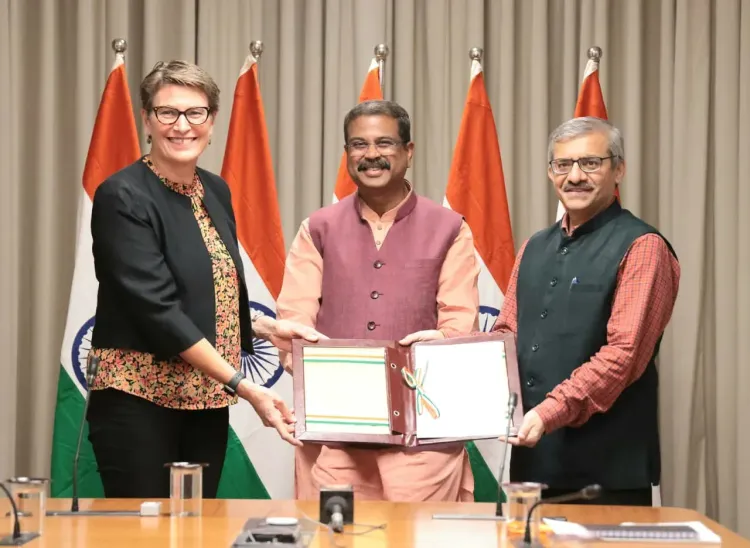
Union Education Minister Dharmendra Pradhan issued Letters of Approval to University of York , University of Bristol (UK), and University of New South Wales (Australia) on 9 June 2026 .
The approvals are issued under the UGC Foreign Higher Educational Institutions Regulations, 2023 , which operationalised the foreign campus provision of NEP 2020 .
UK High Commissioner Lindy Cameron and senior officials from the Australian and British High Commissions attended the ceremony.
The initiative aims to reduce student outflows by making globally recognised education accessible within India.
Actual campus launches, enrolment timelines, and joint degree structures remain to be announced.
The approvals form part of India's broader ambition to become a global hub of learning and innovation under NEP 2020.
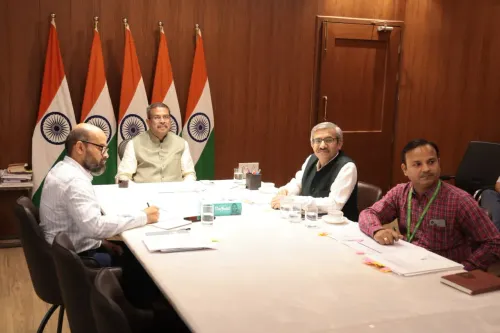
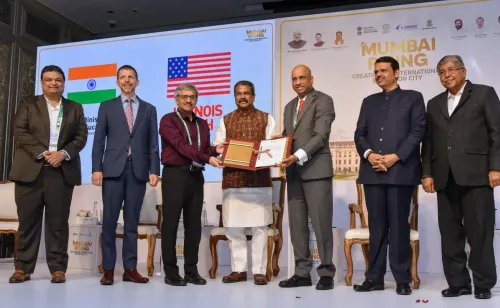
Union Education Minister Dharmendra Pradhan on Tuesday, 9 June 2026 handed over Letters of Approval to three leading foreign universities — the University of York and the University of Bristol from the United Kingdom, and the University of New South Wales (UNSW) from Australia — marking a formal step toward their establishment of campuses in India under the internationalisation framework of the National Education Policy (NEP) 2020. The ceremony was attended by UK High Commissioner H.E. Ms. Lindy Cameron, senior officials from the respective universities, and representatives from the Australian and British High Commissions and the Ministry of Education.
Context
Pradhan described the occasion as 'a significant step in bringing leading global institutions to India in line with India's internationalisation strategy under NEP 2020.' The minister expressed hope that the three universities would leverage their strengths in 'scientific inquiry, interdisciplinary learning and academic excellence to forge enduring collaborations with Indian academia and industry.' The event reflects the government's sustained push to attract top-ranked foreign institutions to set up physical campuses on Indian soil.
Policy Backdrop
The National Education Policy, approved in July 2020, for the first time opened the door for top-ranked foreign universities to establish campuses in India. To operationalise this provision, the University Grants Commission (UGC) notified the Foreign Higher Educational Institutions Regulations in 2023, creating the legal and regulatory framework through which institutions can apply for and receive approval. The Letters of Approval issued on Tuesday represent a formal milestone under this regulatory pathway.
The broader policy intent is to improve the quality of higher education, boost research output, and enhance India's global academic competitiveness. Internationalisation under NEP 2020 is also framed as a mechanism to reduce the significant outflow of Indian students seeking degrees abroad, by making world-class education accessible domestically.
Stakeholders and Impact
For Indian students, the approvals signal the prospect of accessing globally recognised degrees — from institutions such as York, Bristol, and UNSW — without leaving the country, potentially at lower costs than studying abroad. For the universities involved, India's large and growing youth population represents a significant academic and institutional opportunity. The involvement of both the Australian High Commission and the British High Commission underscores the bilateral diplomatic dimension of these education partnerships.
Indian academia and industry are also identified as key stakeholders, with the minister specifically calling for 'enduring collaborations' between the incoming foreign institutions and domestic partners. Such collaborations could include joint research programmes, faculty exchanges, and industry-linked curricula.
What's Next
The issuance of Letters of Approval is a regulatory green light, but the path to operational campuses involves further steps including land acquisition, infrastructure development, and programme approvals. Observers will watch for concrete timelines on campus launches, the commencement of enrolments, and the structure of any joint degree programmes offered under the Study in India initiative. The success of these three approvals is likely to influence the pace at which other global universities pursue similar applications under the UGC framework.
As India positions itself as a 'global hub of learning and innovation' — in Pradhan's own words — the operationalisation of these partnerships will be a key test of whether NEP 2020's internationalisation ambitions translate into tangible outcomes for students and researchers.
Point of View
Each such approval is a visible deliverable under NEP 2020, a flagship reform that has faced implementation scrutiny; foreign university approvals offer tangible proof of progress. The presence of the UK High Commissioner at the ceremony also reflects how education has become a substantive strand of India's bilateral relationships, not merely a soft-power footnote. The harder test — whether these campuses become operational, affordable, and academically competitive — lies ahead, and will define whether NEP 2020's internationalisation chapter succeeds on the ground.
NationPress
20 Sept 2026
Frequently Asked Questions
Which foreign universities have received approval to open campuses in India?
The University of York and the University of Bristol from the UK, and the University of New South Wales from Australia, received Letters of Approval from Union Education Minister Dharmendra Pradhan on 9 June 2026 to establish campuses in India.
What is NEP 2020 and how does it relate to foreign universities in India?
The National Education Policy 2020, approved in July 2020, introduced a provision allowing top-ranked foreign universities to set up campuses in India for the first time. The UGC notified the Foreign Higher Educational Institutions Regulations in 2023 to operationalise this framework.
What does a Letter of Approval mean for a foreign university in India?
A Letter of Approval is a formal regulatory clearance issued under the UGC's foreign university framework, permitting a university to proceed with establishing a campus in India. It is a necessary milestone, though further steps such as infrastructure development and programme approvals are still required before a campus becomes operational.
Will Indian students be able to get foreign university degrees without going abroad?
Yes, that is the stated intent. Once operational, campuses of institutions like York, Bristol, and UNSW in India would allow students to earn those universities' degrees domestically, potentially at lower costs than studying overseas.
What is the Study in India initiative?
Study in India is a government initiative aimed at attracting both Indian and international students to pursue higher education within India, aligned with NEP 2020's goal of making India a global education destination.