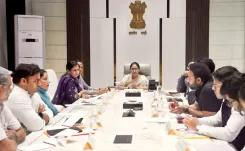
Pralhad Joshi: Anti-Exam Malpractice Bill Passed by Parliament
Synopsis
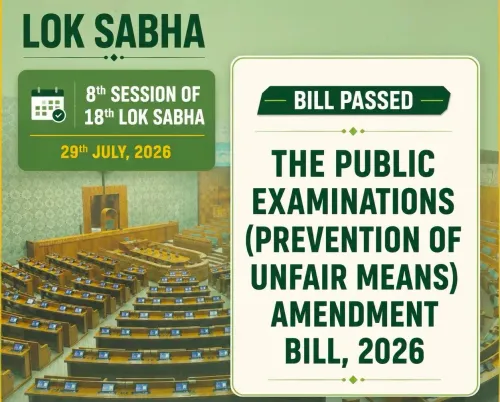
The Public Examinations (Prevention of Unfair Means) Amendment Bill, 2026, strengthening the 2024 anti-malpractice law, has been passed by both Houses of Parliament. Union Minister Pralhad Joshi announced the development, warning that anyone indulging in examination malpractices will face the strictest action.
Key Takeaways
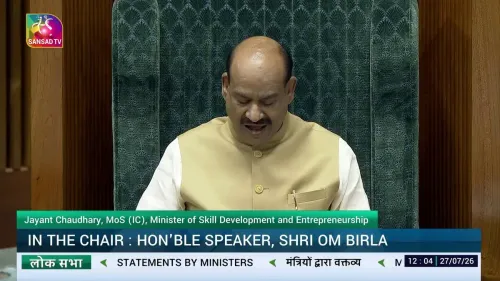
The Public Examinations (Prevention of Unfair Means) Amendment Bill, 2026 has been passed by both Lok Sabha and Rajya Sabha .
The bill amends the Public Examinations (Prevention of Unfair Means) Act, 2024 , introducing stricter provisions against examination malpractices.
The 2024 parent Act was enacted following major paper leak controversies in NEET-UG and JEE examinations.
Union Minister Pralhad Joshi issued a direct warning: those who tamper with students' futures 'will not be spared.' The law covers central public examinations conducted by bodies including NTA , UPSC , and SSC .
The next test of the amended law will be its application in the upcoming cycle of national competitive examinations.
Millions of students who sat sleepless through preparation cycles — only to watch paper leaks unravel their chances — just got a legislative answer. Union Consumer Affairs Minister Pralhad Joshi announced on Thursday, 30 July 2026 that the Public Examinations (Prevention of Unfair Means) Amendment Bill, 2026 has been passed by both Houses of Parliament, toughening the legal architecture built to protect India's high-stakes public examinations.
A 2024 law gets sharper teeth
The amendment builds on the Public Examinations (Prevention of Unfair Means) Act, 2024, which was itself Parliament's direct response to a wave of paper leaks and irregularities that convulsed national examinations — most visibly NEET and JEE — and triggered widespread student protests. That original law created a dedicated legal framework targeting organised malpractice in central public examinations conducted by bodies such as the National Testing Agency (NTA), UPSC, and SSC. The 2026 amendment, according to Joshi, introduces 'stricter provisions against examination malpractices,' reinforcing what the government describes as a commitment to 'fair, transparent and merit-based public examinations.'
Joshi's warning: 'They will not be spared'
The minister's statement carried an unmistakable edge. 'Let this be clear: Anyone who attempts to play with the future of our students or indulges in examination malpractices will face the strictest action. They will not be spared,' Joshi wrote, posting in both English and Hindi. The Hindi text reinforced the same message — 'किसी को भी बख्शा नहीं जाएगा' ('No one will be spared') — signalling that the communication was aimed as much at the public as at those who run organised cheating networks. The dual-language framing underlines the scale of the constituency at stake: the crores of aspirants who sit central examinations every year for government jobs and professional college seats.
Why the 2024 protests made this bill inevitable
The political pressure behind this legislation traces directly to 2024, when allegations of paper leaks in NEET-UG sparked protests across multiple states and a Supreme Court intervention. The crisis exposed systemic vulnerabilities in how question papers are printed, transported, and distributed — and put the government on the defensive with a student population that had lost faith in the examination machinery. The original 2024 Act was a first legislative response; the 2026 Amendment is the course correction after two years of implementation experience. The next test of the law's effectiveness will come in the next cycle of central examinations — whether the stricter provisions translate into prosecutions, deterrence, and, ultimately, a clean exam season.
Point of View
This is also political recalibration: the NEET controversy of 2024 was one of the sharpest moments of public anger directed at the administration, and a tougher law lets the government demonstrate decisive follow-through ahead of future examination cycles. The real measure of success, however, will not be legislative text but enforcement — whether the amended provisions lead to credible prosecutions that actually deter the organised networks behind paper leaks.
NationPress
30 Jul 2026
Frequently Asked Questions
What is the Public Examinations Amendment Bill 2026?
It is an amendment to the Public Examinations (Prevention of Unfair Means) Act, 2024, passed by both Houses of Parliament in July 2026, introducing stricter provisions to prevent malpractices such as paper leaks in central public examinations.
Why was the Public Examinations Act 2024 enacted?
The 2024 Act was enacted after widespread paper leak controversies in national examinations including NEET-UG and JEE triggered student protests and a Supreme Court intervention, exposing serious vulnerabilities in India's central examination system.
Which examinations does this law cover?
The law covers central public examinations conducted by bodies such as the National Testing Agency (NTA), the Union Public Service Commission (UPSC), and the Staff Selection Commission (SSC).
What did Pralhad Joshi say about the bill's passage?
Joshi stated that anyone who 'attempts to play with the future of our students or indulges in examination malpractices will face the strictest action' and that no one will be spared.
What happens next after the bill is passed by Parliament?
The bill will require Presidential assent to become law, after which the government will notify rules under the amended Act; its real test will come during the next cycle of major national examinations.