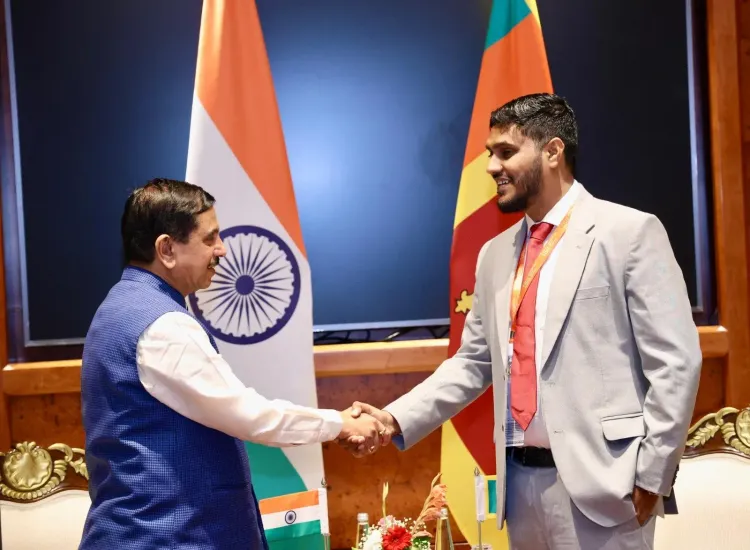
Pralhad Joshi meets Sri Lanka Energy Deputy Minister on solar push
Synopsis
Union Minister Pralhad Joshi met Sri Lanka's Deputy Energy Minister Arkam Ilyas on 6 November 2026 at the 9th ISA Assembly, discussing solar integration, energy storage, floating solar, agri-solarisation, and operationalising the STAR-C centre at the University of Moratuwa.
Key Takeaways
Union Minister Pralhad Joshi met Sri Lanka's Deputy Energy Minister Arkam Ilyas on 6 November 2026 on the sidelines of the 9th ISA Assembly .
Discussions covered solar integration, energy storage, digital grid management, floating solar, and agricultural solarisation.
Both sides agreed to explore 'concrete projects' and operationalise the STAR-C collaboration at the University of Moratuwa .
The International Solar Alliance was co-launched by India and France at COP21 in 2015 and serves as the platform for this bilateral engagement.
India reaffirmed its commitment to supporting Sri Lanka's renewable energy transition through practical cooperation and knowledge-sharing.
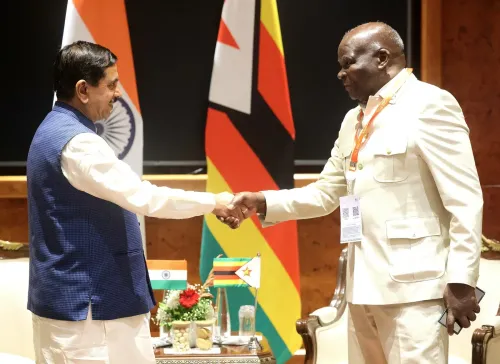
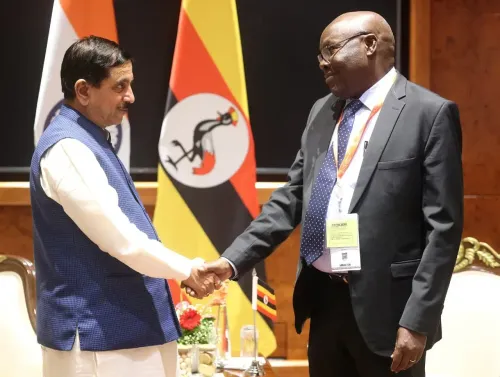
Solar diplomacy got a concrete new chapter on Friday, 6 November 2026, when Union Minister for New and Renewable Energy Pralhad Joshi sat down with H.E. Arkam Ilyas, Sri Lanka's Deputy Minister of Energy, to map out a sharper, project-driven future for India–Sri Lanka cooperation under the International Solar Alliance (ISA).
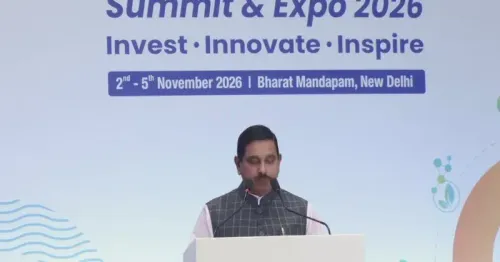
The meeting, held on the sidelines of the #BRESummit2026 and the 9th ISA Assembly, ranged across a striking breadth of technical ground: solar integration into existing grids, energy storage solutions, digital grid management, floating solar installations, and agricultural solarisation. Joshi described it as an 'engaging meeting', and the agenda backed that up — these are not aspirational talking points but working domains where both nations have already signalled intent.
STAR-C at Moratuwa: turning a partnership into a lab
The sharpest deliverable on the table is the operationalisation of the STAR-C (Solar Technology Application Resource Centre) collaboration with the University of Moratuwa, Sri Lanka's leading technical institution. STAR-C is an ISA capacity-building initiative that embeds solar technology expertise directly inside member-country universities — making knowledge transfer structural rather than episodic. Getting Moratuwa's centre fully live would give Sri Lankan engineers and policymakers a standing institutional resource, not just a bilateral promise.
The ISA itself was co-launched by India and France at COP21 in 2015 and has since grown into a multilateral platform for solar investment and technology sharing. India has consistently used the alliance as a vehicle for renewable energy diplomacy with its neighbours, and Friday's meeting slots neatly into that pattern — but with a post-crisis urgency that earlier engagements lacked.
Why Sri Lanka's energy transition matters right now
Sri Lanka's economy went through a severe crisis in 2022, and energy sector stabilisation remains central to its recovery. The island nation is pushing to diversify away from expensive fossil-fuel imports, and solar — given its geography and solar irradiance — is a logical anchor for that shift. India's neighbourhood-first approach means New Delhi has a strategic interest in that transition succeeding: a stable, energy-secure Sri Lanka is a more reliable partner across trade, connectivity, and regional diplomacy.
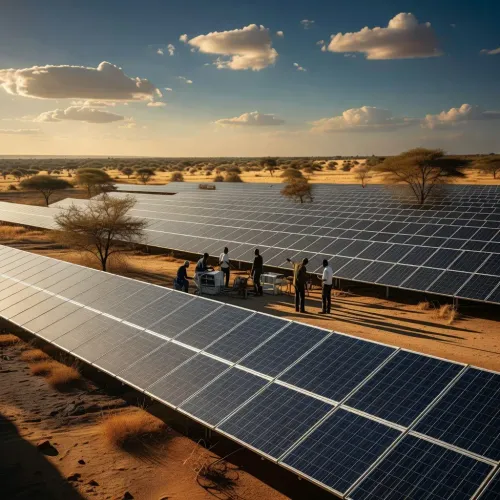
Floating solar and agri-solarisation are particularly significant here. Floating solar arrays on reservoirs reduce land-use conflicts on a densely populated island; agri-solarisation allows farmers to generate power without sacrificing cultivable land — a dual dividend that can accelerate rural electrification without political friction.
Reaffirming commitment at the 9th ISA Assembly
Joshi explicitly 'reaffirmed India's commitment to supporting Sri Lanka's renewable energy transition through practical cooperation and knowledge-sharing' — language calibrated for the multilateral audience of the ISA Assembly. The emphasis on 'practical cooperation' and 'concrete projects' signals that both sides want to move from frameworks to signed agreements and funded initiatives. The 9th ISA Assembly provides the institutional moment to do exactly that, with member-state ministers, development finance institutions, and solar industry representatives all in the same room.
Whether the STAR-C centre at Moratuwa gets a launch date, or whether a grid-interconnection pilot clears its final technical hurdles, the next few days of the Assembly could translate Friday's bilateral into something with a budget line and a deadline.
Point of View
It also reinforces the Modi government's 'neighbourhood first' credentials on clean energy at a moment when India is competing with China for infrastructure influence across South Asia. The real test will come at the Assembly's close: concrete project announcements or signed MoUs would signal substance; warm communiqués alone would suggest the ambition still outpaces the pipeline.
NationPress
6 Nov 2026
Frequently Asked Questions
What did Pralhad Joshi and Sri Lanka's Deputy Energy Minister discuss?
They discussed advancing solar integration, energy storage, digital grid management, floating solar projects, and agricultural solarisation under the International Solar Alliance framework, as well as operationalising the STAR-C centre at the University of Moratuwa.
What is the STAR-C programme and why does it matter for Sri Lanka?
STAR-C (Solar Technology Application Resource Centre) is an ISA capacity-building initiative that establishes solar technology hubs inside universities in member countries. For Sri Lanka, operationalising the centre at the University of Moratuwa would give local engineers and policymakers a standing institutional resource for renewable energy expertise.
What is the International Solar Alliance (ISA)?
The International Solar Alliance is a global initiative co-launched by India and France at COP21 in 2015 to scale up solar energy investments and technology sharing among member countries, particularly developing nations.
Why is India helping Sri Lanka with renewable energy?
India's neighbourhood-first policy prioritises energy and development cooperation with South Asian neighbours. Following Sri Lanka's economic crisis in 2022, supporting its energy transition serves both humanitarian and strategic interests, reducing the island's dependence on costly fossil-fuel imports.
What is floating solar and why is it relevant for Sri Lanka?
Floating solar refers to photovoltaic panels installed on water bodies such as reservoirs. For land-scarce Sri Lanka, it offers a way to generate solar power without competing with agriculture or settlements for land, making it a practical fit for the island's geography.