Pralhad Joshi meets Zimbabwe Energy Minister at 9th ISA Assembly
Synopsis
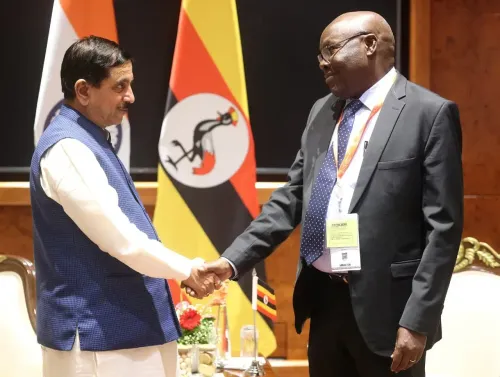
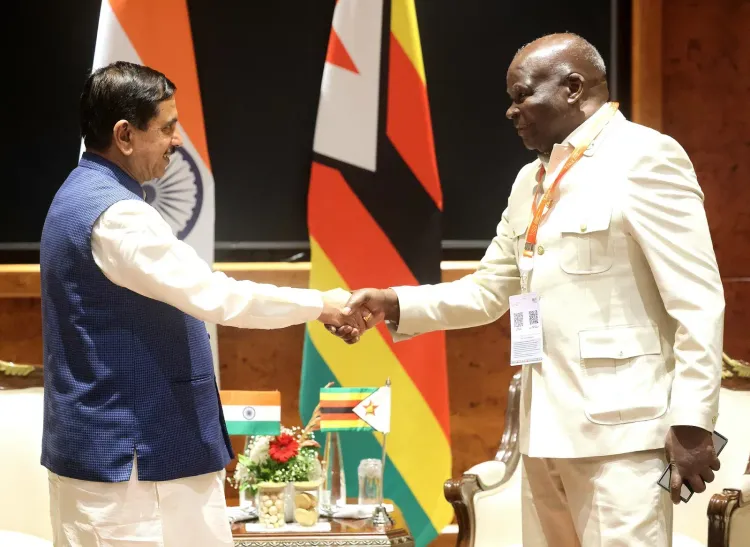
Union Minister Pralhad Joshi met Zimbabwean Energy Minister July G. Moyo at the 9th ISA Assembly on 6 November 2026, discussing solar Village Business Units, agricultural pumps, STAR-C capacity building, and women-led solar enterprises under 'Solar for She' within the India-Zimbabwe Country Partnership Framework.
Key Takeaways
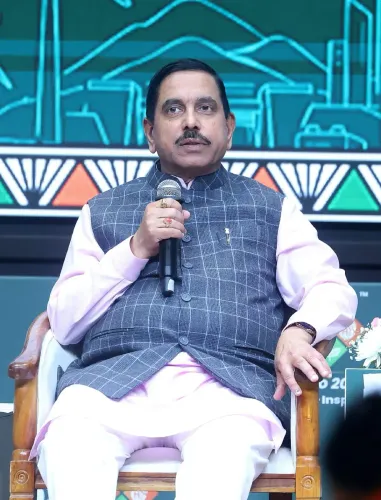
Pralhad Joshi met July G.
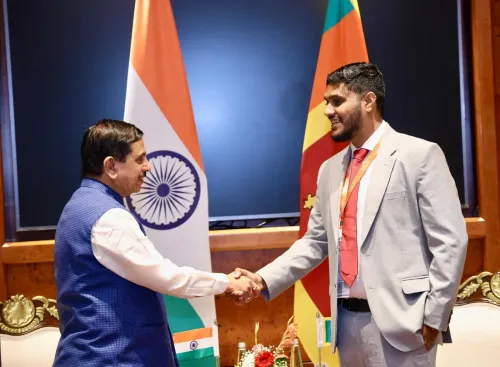
Moyo , Zimbabwe's Minister of Energy and Power Development, at the 9th International Solar Alliance Assembly on 6 November 2026 .
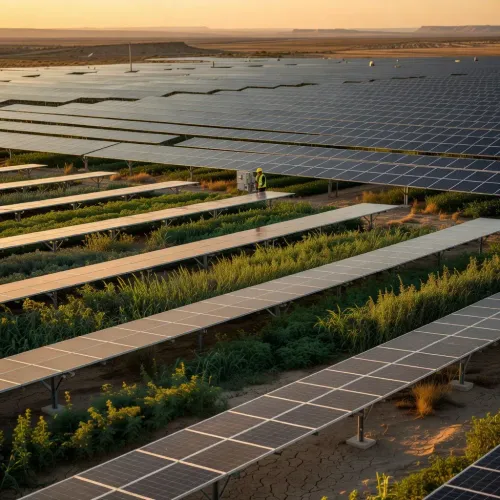
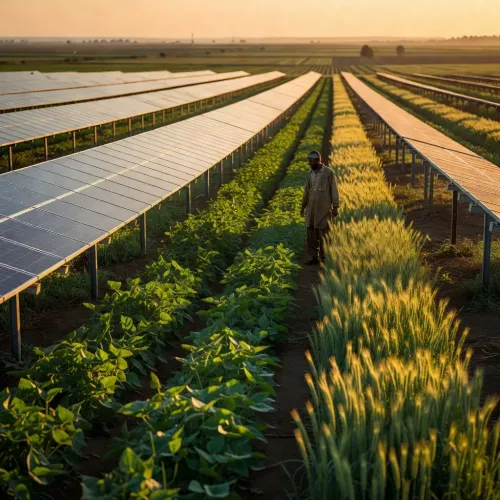
Discussions centred on the Country Partnership Framework for India-Zimbabwe solar cooperation, covering solar-powered Village Business Units and solar pumps for agricultural productivity.
STAR-C (Solar Technology Application Resource Centre) was identified as the capacity-building channel for Zimbabwean technicians and administrators.
The 'Solar for She' programme was explicitly named as a priority, aiming to integrate women into solar enterprises as operators and entrepreneurs.
The International Solar Alliance, co-founded by India and France in 2015 , now counts over 120 member countries and underpins India's South-South renewable energy diplomacy.
The meeting's framing under #BRESummit2026 links bilateral outcomes to a broader multilateral energy summit agenda.
On the sidelines of the 9th International Solar Alliance Assembly on 6 November 2026, Union Minister of New and Renewable Energy Pralhad Joshi held a bilateral meeting with H.E. July G. Moyo, Zimbabwe's Minister of Energy and Power Development — turning a multilateral gathering into a targeted push for deeper India-Africa solar cooperation.
Solar-powered villages and pumps at the heart of the agenda
The two ministers discussed reinforcing India-Zimbabwe collaboration under the Country Partnership Framework, with concrete attention on solar-powered Village Business Units and solar pumps to lift agricultural productivity in rural Zimbabwe. These are not abstract aspirations — they mirror programme architectures that India has already field-tested domestically under the PM-KUSUM scheme launched in 2019, now being adapted for partner countries through the International Solar Alliance's project pipeline.
The agenda also flagged STAR-C — the ISA's Solar Technology Application Resource Centre initiative — as a vehicle for capacity building, equipping Zimbabwean technicians and administrators with the skills to maintain and scale solar infrastructure on the ground.
'Solar for She' — women entrepreneurs in Zimbabwe's energy transition
One of the sharper signals from the meeting was the explicit mention of 'Solar for She', an ISA-led programme aimed at bringing women into solar enterprises as owners and operators, not just beneficiaries. Joshi posted in Kannada: 'ಸೋಲಾರ್ ಫಾರ್ ಶಿ ಯೋಜನೆಯಡಿ ಮಹಿಳೆಯರ ಭಾಗವಹಿಸುವಿಕೆ' ('women's participation under Solar for She'), underscoring that gender inclusion is a named deliverable in the bilateral framework — not an afterthought.
Rural Zimbabwean women and smallholder farmers stand to gain most directly if these commitments move from framework language into funded, implemented projects.
India's Africa solar arc — and where Zimbabwe fits
The International Solar Alliance, co-launched by India and France in 2015 and now spanning over 120 member countries, has become India's primary instrument for renewable energy diplomacy across the Global South. Zimbabwe is one of several sub-Saharan African nations where the ISA's Country Partnership Framework is being used to bundle technology transfer, training, and project deployment into a single bilateral relationship.
India-Zimbabwe ties in energy and agriculture date back to MoUs from the 1990s, but the post-2015 ISA architecture has given those links a sharper, more programmatic focus. The meeting's reference to the #BRESummit2026 hashtag suggests the conversation sits within a broader multilateral energy summit context, with outcomes expected to feed into that platform's agenda.
Joshi closed his post with an intent worth watching: 'Looking forward to translating our shared priorities into impactful initiatives for Zimbabwe's sustainable energy future.' The pipeline now runs from assembly-room handshake to field-level solar pump. How fast it moves is the story.
Point of View
New Delhi signals it wants implementation records, not just MoU counts, as proof of its Africa outreach. The gender-inclusion thread is also notable: folding women's enterprise into a bilateral energy framework is a reputational differentiator for India in multilateral development spaces. Progress on the Country Partnership Framework's actual project pipeline will be the real test of whether this meeting leaves a footprint.
NationPress
6 Nov 2026
Frequently Asked Questions
What is the International Solar Alliance and how many members does it have?
The International Solar Alliance is a treaty-based intergovernmental organisation co-launched by India and France in 2015 to accelerate solar energy deployment globally. It currently has over 120 member countries.
What is the 'Solar for She' programme?
'Solar for She' is an ISA-led initiative designed to integrate women into solar energy enterprises as owners and operators, promoting gender inclusion within the renewable energy transition in partner countries.
What is STAR-C under the International Solar Alliance?
STAR-C stands for Solar Technology Application Resource Centre, an ISA initiative that provides training and capacity-building support to member countries so local technicians and officials can deploy and maintain solar infrastructure effectively.
What is the India-Zimbabwe Country Partnership Framework?
The Country Partnership Framework is the bilateral structure under which India and Zimbabwe organise solar cooperation through the ISA, covering specific programmes like Village Business Units, solar pumps, and women-led enterprises. The exact scope and signing date of the current framework have not been officially confirmed.
What are solar-powered Village Business Units in the ISA context?
Solar-powered Village Business Units are small rural enterprises energised by solar installations, designed to boost local economic activity and agricultural productivity in off-grid or under-served communities — a model India has piloted domestically and is now exporting through ISA partnerships.