Pralhad Joshi Meets Uganda Energy Minister at ISA Assembly
Synopsis
Union Minister Pralhad Joshi met Uganda's Energy Minister on the sidelines of the 9th ISA Assembly, discussing agricultural solarisation, solar irrigation, cold chains, innovative financing with UECCC, and STAR-C capacity building at Busitema University as India deepens its Africa solar diplomacy.
Key Takeaways
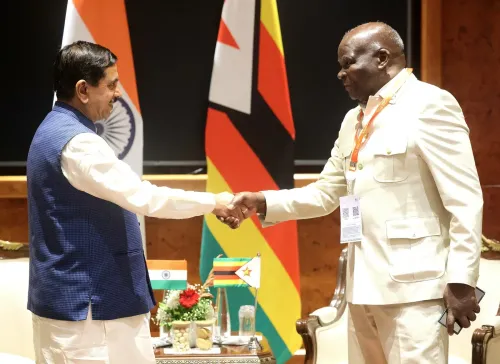
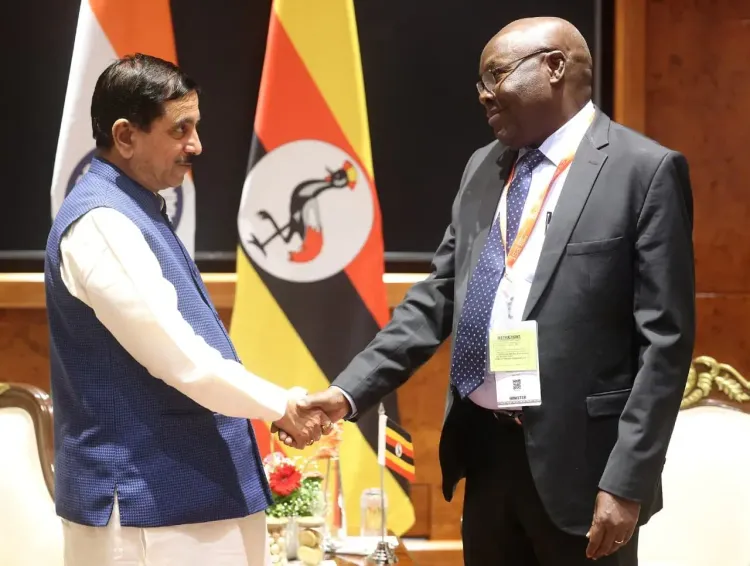
Union Minister Pralhad Joshi met Uganda's Minister of State for Energy Hon.
Okaasai on 6 November 2026 at the 9th ISA Assembly .
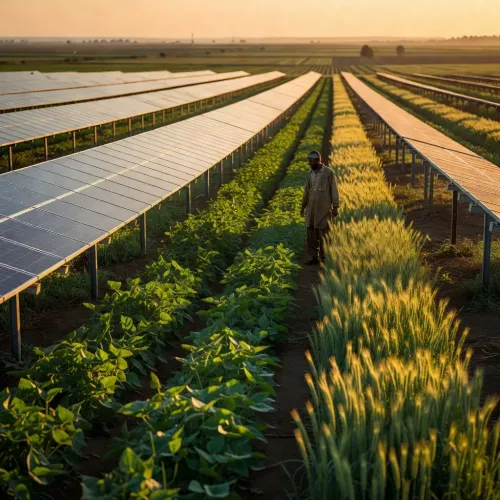
Discussions focused on agricultural solarisation, solar irrigation, agro-processing, and cold-chain infrastructure .
India offered to share expertise in solar pumps, rooftop solar, and mini-grids , with financing cooperation through UECCC .
Capacity building will be channelled through the STAR-C programme hosted at Busitema University in Uganda.
The meeting takes place within the broader International Solar Alliance framework, launched by India and France in 2015 .
Follow-up MoUs or project announcements are possible before the #BRESummit2026 / #9ISAssembly concludes.
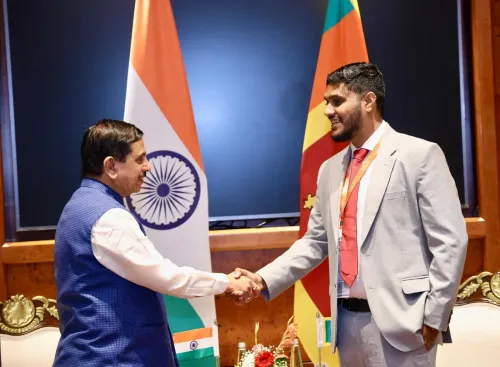
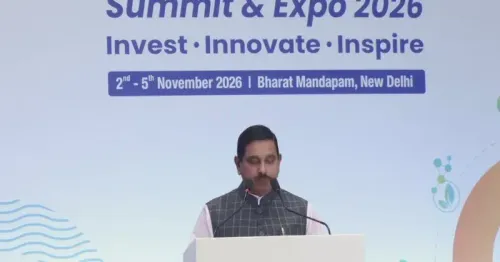
India's solar diplomacy touched down in Africa this week as Union Minister for New and Renewable Energy Pralhad Joshi met Hon. Okaasai, Uganda's Minister of State for Energy, on the sidelines of the 9th International Solar Alliance Assembly on Friday, November 6, 2026 — turning a multilateral gathering into a targeted bilateral push to rewire Uganda's agricultural economy with solar power.
Solar pumps, cold chains, and the farm at the centre of it all
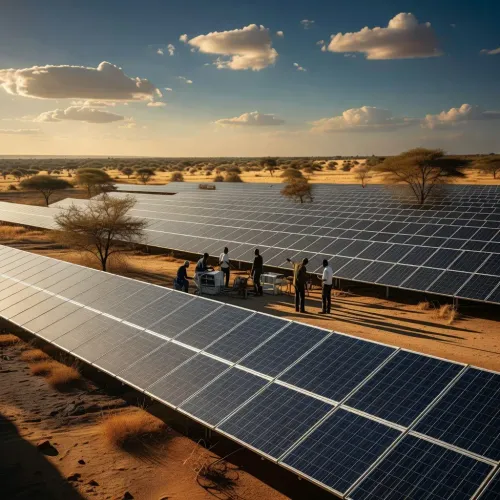
The conversation zeroed in on four concrete pillars: agricultural solarisation, solar irrigation, agro-processing, and cold-chain infrastructure. For Uganda, where smallholder farming dominates the economy and post-harvest losses remain stubbornly high, the promise of solar-powered cold chains and irrigation systems is not an abstract policy preference — it is a question of crop survival and farmer income.
Joshi indicated India's readiness to share its hands-on experience with solar pumps and rooftop solar installations, as well as mini-grid deployment in rural settings. These are areas where India has built significant scale domestically, and the ISA framework gives that experience a multilateral channel to travel.
UECCC, STAR-C, and the financing-plus-training formula
Two institutional anchors give the engagement operational weight. The first is the Uganda Energy Credit Capitalisation Company (UECCC), the country's dedicated renewable-energy financing body — Joshi flagged 'innovative financing mechanisms' in collaboration with UECCC as a key area of cooperation. Without affordable credit reaching farmers and small businesses, hardware alone stalls on the ground.
The second anchor is STAR-C — the Solar Technology Application Resource Centre programme — to be deployed through Busitema University in Uganda. The ISA's STAR-C model trains local technicians and engineers to install, maintain, and eventually manufacture solar systems, embedding know-how rather than simply delivering equipment. Busitema University, a public institution in eastern Uganda, becomes the classroom for that transfer.
India's Africa solar arc through the ISA lens
The meeting is a textbook example of how India uses the International Solar Alliance — launched jointly by India and France in 2015 — as a vehicle for south-south cooperation with African nations. Rather than a single headline project, the ISA model layers technology sharing, financing architecture, and institutional capacity building into a package that embeds India's solar ecosystem inside a partner country's development pipeline.
The hashtags #BRESummit2026 and #9ISAssembly signal that this bilateral conversation is unfolding inside a larger multilateral moment, raising the prospect of follow-up MoUs or project announcements before the assembly concludes. For Ugandan farmers waiting on affordable irrigation and cold storage, and for Indian solar technology providers eyeing the African market, the detail in that conversation is worth watching closely.
Point of View
Converting domestic solar scale into African market access and goodwill. By pairing financing mechanisms with institutional capacity building at Busitema University, New Delhi avoids the 'equipment dump' critique and positions itself as a long-term partner rather than a one-time supplier. For the BJP government, Africa-facing solar diplomacy doubles as an argument for India's global leadership credentials on climate action ahead of international review cycles. The concrete agricultural focus — irrigation, cold chains, agro-processing — also signals that the engagement is calibrated to Uganda's most pressing development needs rather than headline-grabbing megaprojects.
NationPress
6 Nov 2026
Frequently Asked Questions
What did Pralhad Joshi discuss with Uganda's Energy Minister at the ISA Assembly?
They discussed strengthening India-Uganda cooperation on agricultural solarisation, solar irrigation, agro-processing, and cold-chain infrastructure. India also expressed willingness to share expertise in solar pumps, rooftop solar, mini-grids, and innovative financing with UECCC, plus capacity building through STAR-C at Busitema University.
What is the International Solar Alliance (ISA)?
The International Solar Alliance is a global initiative launched by India and France in 2015 to accelerate solar energy deployment in member countries, with a focus on developing and tropical nations that receive abundant sunlight.
What is STAR-C and what role does Busitema University play?
STAR-C stands for Solar Technology Application Resource Centre, an ISA capacity-building programme that trains local technicians and engineers in solar technology installation and maintenance. Busitema University in Uganda is set to host STAR-C training activities as part of India-Uganda cooperation.
What is UECCC and why is it relevant to India-Uganda solar cooperation?
UECCC is the Uganda Energy Credit Capitalisation Company, a body focused on financing renewable energy and rural electrification. India proposed working with UECCC on innovative financing mechanisms to make solar solutions affordable for Ugandan farmers and businesses.
What is the significance of cold chains and solar irrigation for Uganda?
Uganda's economy is heavily dependent on smallholder agriculture, where post-harvest losses and limited irrigation are persistent challenges. Solar-powered cold chains preserve produce after harvest while solar irrigation reduces dependence on rainfall, directly improving farmer incomes and food security.