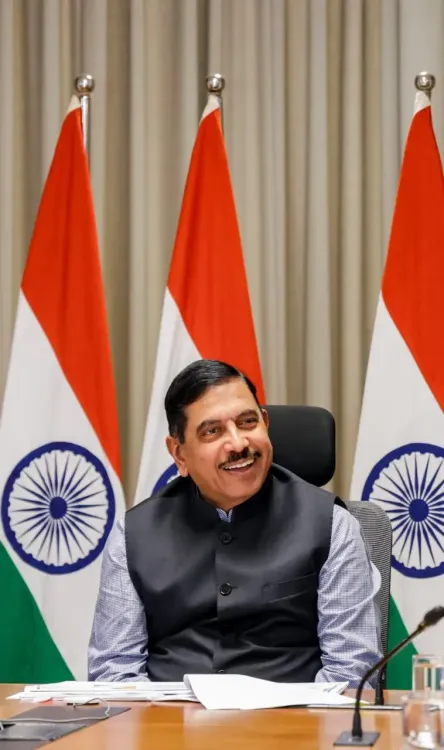
Pralhad Joshi Reviews School and Higher Education Priorities
Synopsis
Union Minister Pralhad Joshi has held back-to-back review meetings with India's School Education and Higher Education departments since assuming charge of the Ministry of Education, prioritising critical reforms and signalling continuity under the Modi government's policy framework.
Key Takeaways
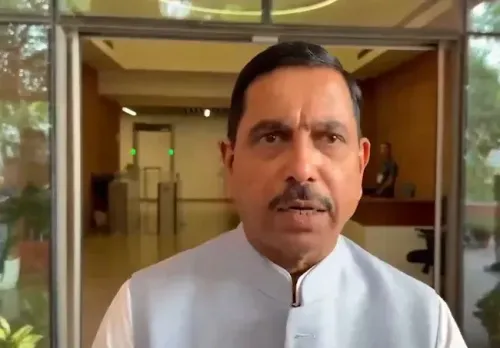
Pralhad Joshi is now holding charge of the Ministry of Education , adding it to his existing portfolios.
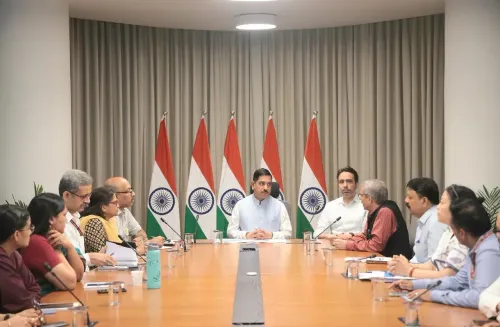
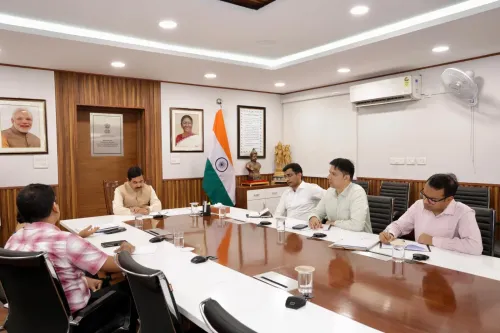
He has conducted detailed review meetings with both the Department of School Education and Literacy and the Department of Higher Education .
The minister stated that 'critical issues are being taken up on priority' for timely and effective resolution.
A comprehensive review meeting was held on 1 August 2026 covering a wide range of school and higher education issues.
The work is framed as proceeding under the guidance of Prime Minister Narendra Modi .
The inherited policy framework is the National Education Policy 2020 , whose implementation across India remains an ongoing task.
A new hand is on the wheel at India's education ministry — and the first order of business is a thorough audit of what needs fixing. Union Minister Pralhad Joshi, now holding charge of the Ministry of Education, has conducted a series of detailed review meetings with both the Department of School Education and Literacy and the Department of Higher Education, signalling an active transition-phase push to identify critical gaps and set reform priorities.
Back-to-back reviews signal reform urgency
Joshi confirmed that the meetings have covered 'a wide range of issues concerning both School Education and Higher Education,' with a stated emphasis on 'timely reforms and effective implementation.' The minister noted that officers across both departments have been 'extremely supportive during this transition' — language that points to a deliberate effort to maintain administrative continuity while a new political leadership settles in.
Central ministries routinely run such internal audits after leadership changes, but the explicit public messaging around these reviews — posted to X on Saturday, 1 August 2026 — suggests Joshi is moving quickly to establish his reform agenda rather than easing into the role.
NEP 2020 as the inherited framework
The policy backdrop Joshi inherits is anchored by the National Education Policy 2020, which restructured both school and higher education with a focus on foundational literacy, multidisciplinary study, and outcome-based learning. Implementing NEP 2020 across a country of India's scale — spanning hundreds of millions of school students and thousands of higher education institutions — remains an ongoing, resource-intensive task, and any new minister must quickly map where implementation has stalled.
Joshi framed his work explicitly as operating 'under the guidance of Hon'ble Prime Minister Shri Narendra Modi,' tying the ministry's direction to the broader political mandate of the ruling government.
What the education sector will be watching
For teachers, school administrators, and university heads, the immediate question is which 'critical issues' the minister has flagged for priority resolution — and whether the next Union Budget will carry the allocations needed to back them up. Joshi's post stops short of naming specific schemes or targets, keeping the current communication at the level of process and intent.
The coming weeks of ministry-level announcements will reveal whether this transition review translates into concrete policy movement — or remains a statement of intent.
Point of View
Whose primary expertise lies outside education, moves to accelerate stalled NEP 2020 implementation targets or pivots toward new priorities. The absence of specific schemes or timelines in this post means the real policy signal is still pending.
NationPress
1 Aug 2026
Frequently Asked Questions
Is Pralhad Joshi the new Education Minister of India?
Pralhad Joshi has assumed charge of the Ministry of Education in addition to his existing portfolios of Consumer Affairs, Food and Public Distribution, and New and Renewable Energy. As of 1 August 2026, he is conducting review meetings with both education departments.
What did Pralhad Joshi say about education reforms?
Joshi stated that detailed review meetings have been held to assess priorities, that 'critical issues are being taken up on priority,' and that a comprehensive review on school and higher education was held on 1 August 2026, with focus on timely reforms and effective implementation.
What is the National Education Policy 2020?
The National Education Policy 2020 is India's central framework for restructuring school and higher education, emphasising foundational literacy, multidisciplinary study, and outcome-based learning. It is the key inherited policy framework for the current Ministry of Education leadership.
What departments come under the Ministry of Education?
The Ministry of Education oversees two main departments: the Department of School Education and Literacy, and the Department of Higher Education, both of which Joshi has been reviewing since assuming charge.
What should we expect next from the Ministry of Education?
The education sector will be watching for specific reform announcements, implementation timelines for NEP 2020 programmes, and any education-related allocations in the next Union Budget following these ministerial review meetings.