Pralhad Joshi warns of foreign 'Regime Change' plot targeting India
Synopsis
Union Minister Pralhad Joshi warned on October 16, 2026 that a foreign-scripted 'Regime Change' project — citing Libya, Nepal, and Bangladesh as precedents — is attempting to weaponise public anger and stall India's growth, urging citizens to resist politically engineered sabotage.
Key Takeaways
Pralhad Joshi , Union Minister of Consumer Affairs and New and Renewable Energy, accused an unnamed 'external script' of attempting to destabilise India on October 16, 2026 .
He labelled the effort a 'highly calculated Regime Change project' that weaponises public anger to spark chaos and stall economic progress.
Joshi cited Libya , Nepal , and Bangladesh as countries where a similar external playbook had already caused political fracture.
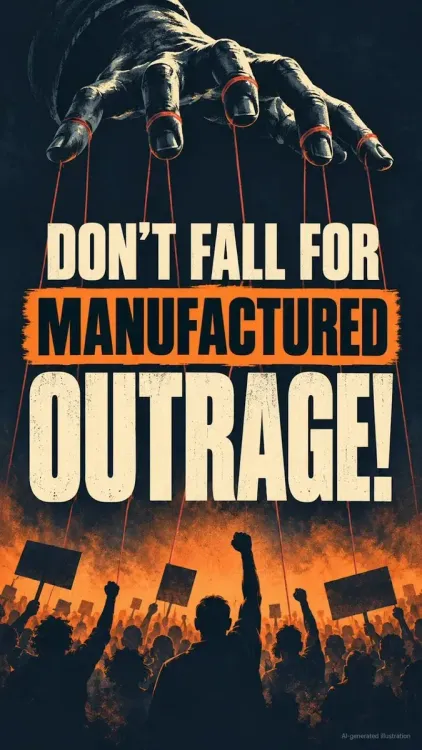
The post called on Indian citizens not to become 'pawns' of 'puppet masters' and to prioritise stability over politically engineered sabotage.
The Ministry of External Affairs had not issued a corroborating formal statement at the time of the post.
The messaging aligns with a recurring BJP framing that links domestic unrest to foreign interference and national sovereignty concerns.
A calculated foreign hand is at work — that is the blunt charge Union Consumer Affairs and New and Renewable Energy Minister Pralhad Joshi levelled on Friday, October 16, 2026, warning that the same external playbook that fractured Libya, Nepal, and Bangladesh is now being deployed against India's political stability and economic momentum.
In a sharply worded post on X, Joshi described the threat as a 'highly calculated Regime Change project' in which public anger is deliberately stoked to engineer chaos. 'Do not let the puppet masters use our citizens as pawns,' he wrote, calling on Indians to 'stand firm with stability and national progress over politically engineered sabotage.'
The three countries Joshi invoked — and why
Libya descended into prolonged civil war after a 2011 NATO-backed military intervention ousted Muammar Gaddafi, leaving the country fragmented between rival governments and armed factions for over a decade. Nepal has cycled through repeated political transitions since the abolition of the monarchy, with successive governments falling to street pressure and parliamentary manoeuvring. Bangladesh has its own record of acute political upheaval, with periodic mass protests reshaping the country's leadership. By stringing these three names together, Joshi signals a familiar BJP framing: domestic unrest, wherever it appears, may carry a foreign fingerprint.
Weaponising public anger — the core accusation
The minister's language is precise and loaded. The phrase 'weaponised public anger' implies that genuine grievances are being amplified and redirected by outside actors rather than addressed on their merits. This is a well-worn argument in sovereign-state discourse — governments from Washington to Beijing have used versions of it — but its deployment by a senior Cabinet minister in India carries institutional weight. It signals that the BJP's top leadership views current domestic turbulence, whatever its immediate cause, through a national-security lens rather than a purely political one.
Where this fits India's sovereignty narrative
Indian government messaging has periodically attributed domestic protest waves to external interference. The framing borrows authority from documented cases of foreign-backed regime change elsewhere in the world and presents India's size, democratic record, and growth trajectory as both a prize worth destabilising and a fortress worth defending. For Joshi's party, the argument serves a dual purpose: it delegitimises organised opposition and reinforces the government's 'India First' brand ahead of any electoral or legislative contest on the horizon.
The Ministry of External Affairs has not yet issued a formal statement corroborating specific foreign actors or incidents. Whether this post marks the opening of a coordinated government communications campaign — or a senior leader's individual read of the moment — is the question observers will be tracking in the days ahead.
India's growth story has survived far older storms. But if the government is now naming 'puppet masters' in public, the next move is to name them on the record.
Point of View
It shifts the frame from internal dissent to external aggression. The invocation of Libya, Nepal, and Bangladesh is deliberate — each carries a distinct emotional charge for different Indian audiences — and the language of 'puppet masters' and 'pawns' is designed to delegitimise organised opposition without engaging its specific demands. Whether the Ministry of External Affairs or the Prime Minister's Office follows with harder evidence of foreign actors will determine whether this becomes a sustained national-security communication strategy or remains a senior minister's political signalling.
NationPress
16 Oct 2026
Frequently Asked Questions
What did Pralhad Joshi say about foreign interference in India?
On October 16, 2026, Joshi posted on X that an 'external script' which fractured Libya, Nepal, and Bangladesh is now targeting India's stability through a calculated 'Regime Change' project that weaponises public anger to stall India's growth.
Why did Joshi mention Libya, Nepal, and Bangladesh?
Joshi cited these three countries as cases where foreign-backed interference caused political upheaval — Libya after the 2011 NATO intervention, Nepal through repeated post-monarchy transitions, and Bangladesh through cycles of protest-driven government change — drawing a parallel to what he claims is now happening in India.
What is the 'Regime Change' project Pralhad Joshi referred to?
Joshi used the term to describe what he alleges is a coordinated foreign effort to engineer domestic chaos in India by inflaming public anger, thereby stalling the country's economic and developmental momentum.
Has the Indian government officially confirmed foreign interference plans against India?
As of October 16, 2026, the Ministry of External Affairs had not issued a formal statement naming specific foreign actors or incidents to corroborate Joshi's claims.
Is Pralhad Joshi a senior BJP leader?
Yes. Pralhad Joshi is a senior BJP leader from Karnataka and currently serves as Union Minister of Consumer Affairs, Food and Public Distribution, and Minister of New and Renewable Energy in the Central government.