Pranav Adani calls for 'intellectual infrastructure' investment at CRF Foundation Day
Synopsis
At the Chintan Research Foundation's Foundation Day in New Delhi, Adani Enterprises Director Pranav Adani made a pointed case: India's next infrastructure bet should be intellectual, not just physical. With AI, climate, and geopolitics converging, the argument is that without sharper institutions, even the best roads and ports won't be enough.
Key Takeaways
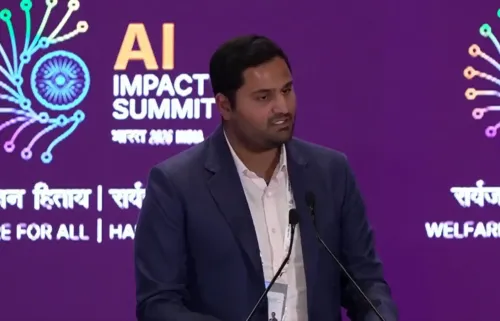
Pranav Adani , Director of Adani Enterprises Ltd , called on 21 June for nations to treat 'intellectual infrastructure' as seriously as physical infrastructure.
He cited energy security , AI , climate transition , water stress , and geopolitical competition as interconnected challenges demanding integrated policymaking.
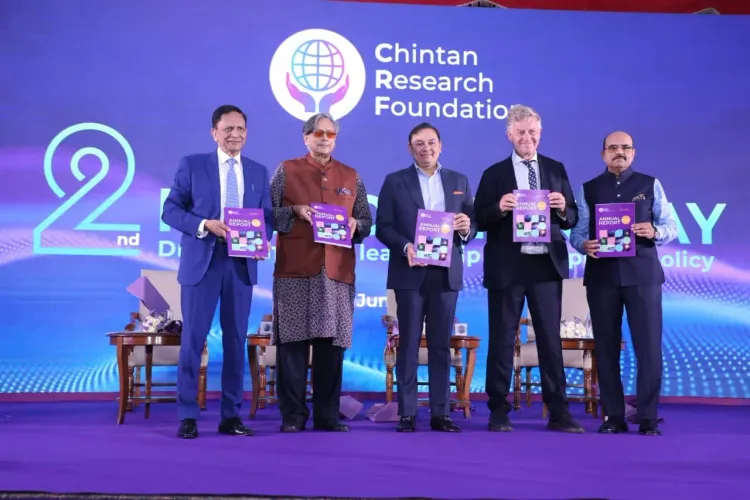
CRF President Shishir Priyadarshi said think tanks must combine 'intellectual honesty with strategic clarity and practical solutions' as India takes a larger global role.
Erik Solheim , former Norwegian Climate Minister, stressed aligning economic growth with sustainability goals as a prerequisite for long-term national competitiveness.
Dr Shashi Tharoor , MP, said CRF has arrived at a moment when India urgently needs institutions capable of clear thinking about rapid global change.
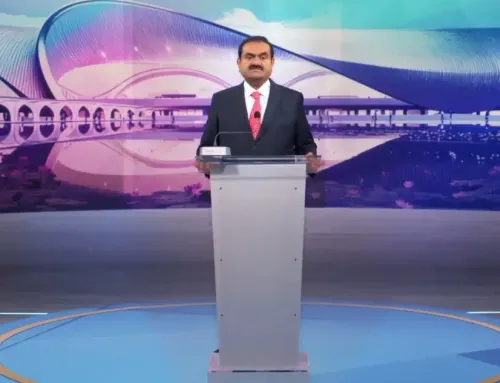
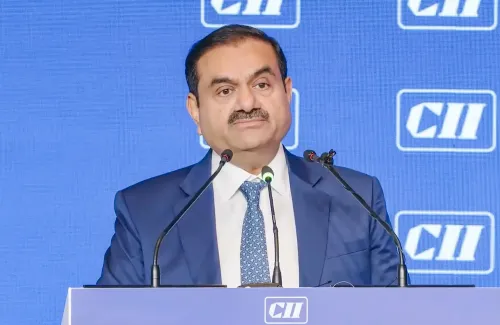
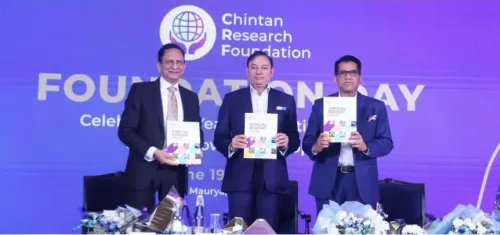
Pranav Adani, Director of Adani Enterprises Ltd, on 21 June called on nations, including India, to invest in 'intellectual infrastructure' with the same urgency they bring to physical infrastructure, warning that the complexity of modern governance demands institutions capable of long-range, cross-sectoral thinking. He made the remarks at the Foundation Day celebrations of the Chintan Research Foundation (CRF) in New Delhi.
Why Intellectual Infrastructure Matters
Adani argued that as nations grow more influential, the challenges confronting them also multiply in complexity. He identified energy security, climate transition, artificial intelligence, demographic change, urbanisation, water stress, and geopolitical competition as deeply interconnected forces that can no longer be addressed in silos.
'Energy security, climate transition, artificial intelligence, demographic change, urbanisation, water stress, and geopolitical competition are increasingly interconnected, requiring policymakers to adopt a more integrated and long-term approach to decision-making,' he told the gathering.
He stressed that institutions capable of looking beyond immediate headlines, challenging conventional assumptions, identifying emerging risks, and connecting developments across sectors would play a critical role in helping societies navigate uncertainty and sustain long-term growth.
CRF President on the Moment India Is In
Shishir Priyadarshi, President of the Chintan Research Foundation, reflected on the profound transformations reshaping the global landscape — intensifying geopolitical competition, technological disruption altering the nature of work and governance, climate change affecting economies and societies, and growing pressure on international institutions.
Priyadarshi observed that periods of global transition place a premium on ideas, institutions, and informed debate. 'As India assumes a larger role in shaping the global order, the country needs institutions that can combine intellectual honesty with strategic clarity and practical solutions. Ideas matter most when the world becomes uncertain,' he said.
He underlined that think tanks have a critical role to play in helping policymakers, businesses, and citizens better understand the complex choices that will shape the country's future.
Global Voices on Growth and Sustainability
Erik Solheim, former Minister of Climate and Environment of Norway and an internationally recognised sustainability leader, highlighted the importance of aligning economic growth with environmental stewardship. He argued that countries which successfully integrate development objectives with sustainability goals would be best positioned to thrive in the decades ahead, and stressed the value of innovative policy thinking and international cooperation in tackling shared global challenges.
Tharoor on Policy and Governance
Dr Shashi Tharoor, Member of Parliament and a special invitee at the event, said that CRF had 'arrived at the exact moment when India needs institutions capable of thinking clearly about a world that is changing with dizzying speed, certainly faster than our traditional categories for understanding this change.'
Tharoor argued that by integrating practical industry insights into advocacy and governance, India should ensure that policy is 'neither formulated in an ideological vacuum nor left to the whims of short-term transnationalism.'
The event brought together policymakers, diplomats, industry leaders, academics, and researchers to discuss the growing importance of ideas, institutions, and long-term thinking in an era marked by rapid technological change, geopolitical uncertainty, climate challenges, and economic transformation. The CRF Foundation Day signals a broader push to institutionalise strategic thinking in India's policy ecosystem at a time when the country's global footprint is expanding rapidly.
Point of View
But India's think-tank ecosystem remains chronically underfunded and, in many cases, ideologically tethered to government or corporate patrons — including, notably, the Adani Group itself. The credibility of such institutions hinges on their independence, and that question went unaddressed at the CRF event. Tharoor's warning against policy made in an 'ideological vacuum' is well-taken, but the more pointed challenge is whether India's emerging think tanks can hold power to account rather than merely advise it.
NationPress
19 Sept 2026
Frequently Asked Questions
What did Pranav Adani say at the CRF Foundation Day?
Pranav Adani, Director of Adani Enterprises Ltd, called on India and other nations to invest in 'intellectual infrastructure' — institutions capable of long-range, cross-sectoral thinking — with the same seriousness they apply to physical infrastructure. He made these remarks at the Chintan Research Foundation's Foundation Day in New Delhi on 21 June.
What is the Chintan Research Foundation (CRF)?
The Chintan Research Foundation is an Indian think tank whose Foundation Day event in New Delhi brought together policymakers, diplomats, industry leaders, academics, and researchers. Its President, Shishir Priyadarshi, described its mission as combining intellectual honesty with strategic clarity to help India navigate complex global transitions.
Why does Pranav Adani argue intellectual infrastructure is critical for India?
Adani argued that challenges such as energy security, climate transition, AI, demographic change, urbanisation, water stress, and geopolitical competition are deeply interconnected and cannot be addressed through short-term or siloed thinking. He said institutions that can identify emerging risks and connect developments across sectors are essential for sustained long-term growth.
What did Dr Shashi Tharoor say at the CRF event?
Dr Shashi Tharoor, Member of Parliament, said CRF had arrived at the exact moment India needs institutions capable of thinking clearly about a rapidly changing world. He argued that policy must integrate practical industry insights and avoid both ideological vacuums and short-term transnationalism.
What was Erik Solheim's message at the CRF Foundation Day?
Erik Solheim, former Minister of Climate and Environment of Norway, stressed that countries which align economic development with sustainability goals will be best placed to thrive in coming decades. He underlined the need for innovative policy thinking and international cooperation to address shared global challenges.