Punjab's 'Yudh Nashian Virudh' Hits Day 472, 68,514 Arrested
Synopsis
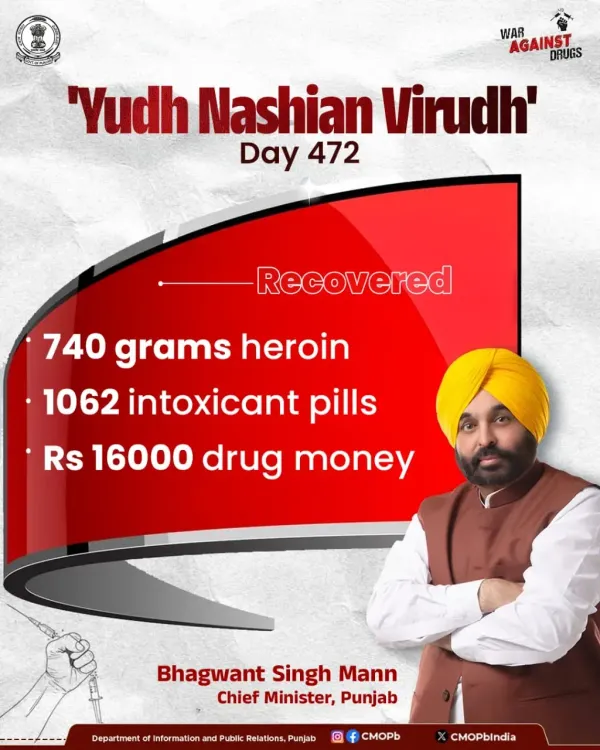
Punjab's 'Yudh Nashian Virudh' campaign marked its 472nd day on June 17, 2026, with police recovering 740 grams of heroin, 1,062 intoxicant pills, and Rs 16,000 in drug money. Total arrests since the drive began now stand at 68,514, the Chief Minister's Office announced.
Key Takeaways
The 'Yudh Nashian Virudh' anti-drug drive completed its 472nd consecutive day on June 17, 2026.
Police recovered 740 grams of heroin and 1,062 intoxicant pills in the latest round of operations.
Rs 16,000 in drug money was also seized from arrested smugglers.
Cumulative arrests of drug smugglers since the campaign began have reached 68,514 .
The drive is led by Punjab Police under the Bhagwant Mann -led AAP government, which has prioritised daily public reporting of enforcement data.
Punjab's border districts and youth remain the primary focus of the supply-side disruption strategy.
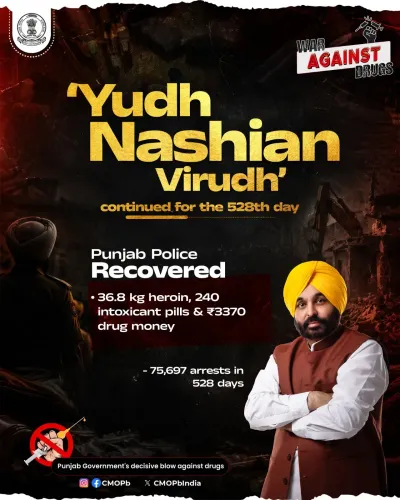
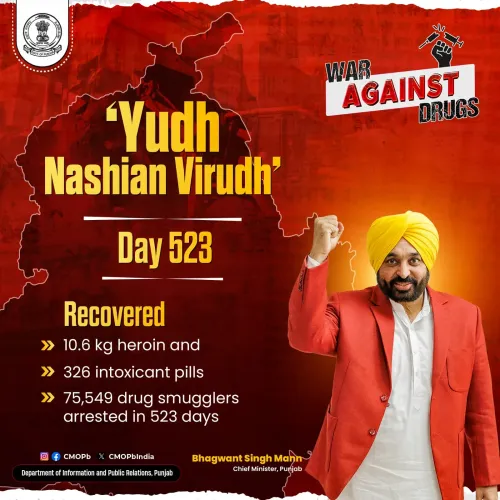
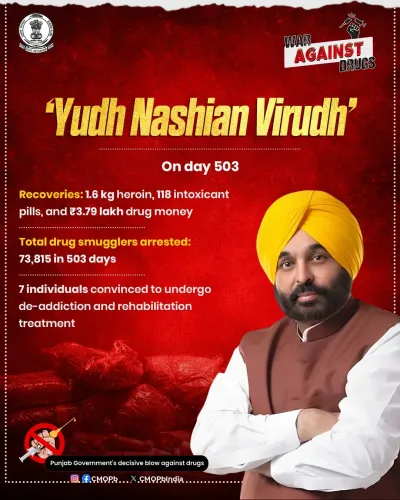
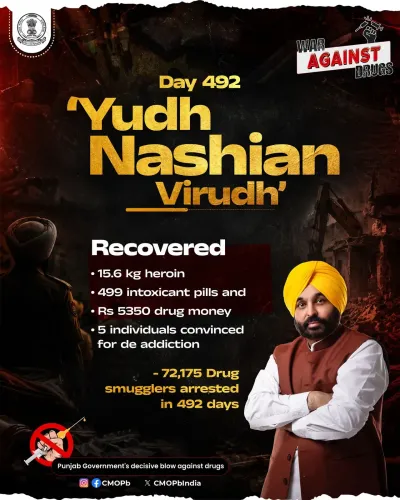
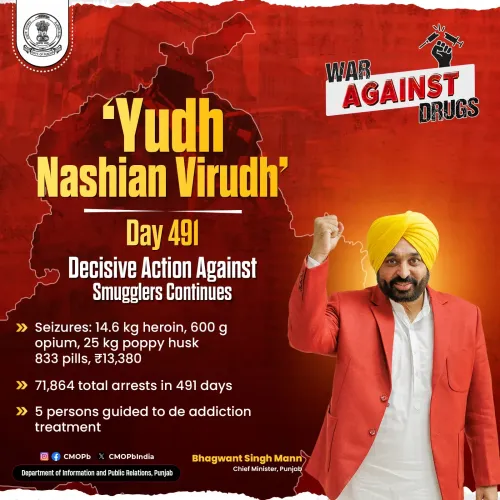
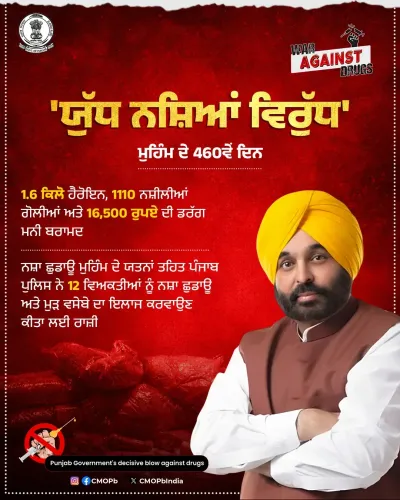
The Chief Minister's Office of Punjab announced on Wednesday, June 17, 2026 that the state's ongoing anti-narcotics drive, 'Yudh Nashian Virudh' (War Against Drugs), has entered its 472nd consecutive day, with cumulative arrests of drug smugglers reaching 68,514 since the campaign began.
In the latest round of operations, police teams recovered 740 grams of heroin, 1,062 intoxicant pills, and Rs 16,000 in drug money from arrested smugglers. The daily update, shared via the official CMO Punjab handle, underscores the government's commitment to sustained, publicly reported enforcement action.
Context
Punjab has long grappled with high rates of opioid and synthetic drug abuse, driven in significant part by cross-border smuggling routes along the Indo-Pakistan border. The state's border districts have historically been identified as primary entry points for heroin and pharmaceutical opioids. Successive state governments have responded with large-scale police operations, and the current Aam Aadmi Party administration under Chief Minister Bhagwant Mann has maintained a policy of daily public reporting of arrests and seizures to signal enforcement momentum.
Policy Backdrop
'Yudh Nashian Virudh' — Punjabi for 'War Against Drugs' — is the flagship anti-narcotics campaign of the Mann government, launched after the AAP came to power in March 2022. The drive focuses on supply-side disruption: arresting smugglers, seizing contraband, and recovering proceeds of the drug trade. Punjab Police teams operate continuously, with the CMO releasing cumulative data to maintain public accountability and signal that the campaign is not episodic but structural.
Punjab governments have pursued successive anti-drug operations since at least the mid-2010s, but the current administration has distinguished its approach through near-daily public communication of granular figures — arrests, seizure weights, and cash recovered — making enforcement visible in real time.
Stakeholders and Impact
The campaign's primary beneficiaries are Punjab's youth, who have been disproportionately affected by drug dependency, and families in border districts where supply-chain activity has historically been concentrated. Each arrest and seizure, however incremental, is intended to constrict supply and raise the cost and risk for smugglers operating in the state.
For Punjab Police, the sustained operational tempo also signals institutional capacity and political will to maintain pressure beyond short-term crackdowns. The recovery of drug money — even modest sums such as Rs 16,000 in a single operation — reflects an effort to disrupt the financial incentives underpinning the trade.
What's Next
Analysts and civil society groups tracking the campaign will watch for the release of consolidated monthly seizure data and any announced integration of enforcement outcomes with de-addiction and rehabilitation infrastructure — the demand-side complement to supply disruption. The government's ability to demonstrate rehabilitation outcomes alongside arrest numbers will be a key measure of the campaign's long-term effectiveness.
As 'Yudh Nashian Virudh' crosses its 472nd day, the scale of cumulative arrests points to a sustained institutional commitment, but converting enforcement gains into measurable reductions in drug prevalence among Punjab's population remains the larger, unfinished challenge.
Point of View
514 arrests over 472 days signals institutional persistence, but supply-side arrests alone do not resolve Punjab's deep-rooted drug crisis, which has demand-side and rehabilitation dimensions the current data does not address. The Mann government's challenge will be to eventually shift the narrative from arrest tallies to demonstrable reductions in drug prevalence, lest the campaign be seen as performative policing. How it integrates enforcement with rehabilitation infrastructure will define whether 'Yudh Nashian Virudh' is remembered as a structural shift or a prolonged crackdown.
NationPress
21 Sept 2026
Frequently Asked Questions
What is 'Yudh Nashian Virudh' in Punjab?
'Yudh Nashian Virudh' means 'War Against Drugs' in Punjabi and is the flagship anti-narcotics campaign launched by the Bhagwant Mann-led AAP government in Punjab after it came to power in March 2022. It focuses on arresting drug smugglers and seizing contraband through continuous police operations.
How many drug smugglers have been arrested in Punjab's anti-drug drive?
According to the Chief Minister's Office of Punjab, a total of 68,514 drug smugglers have been arrested since the 'Yudh Nashian Virudh' campaign began, as of its 472nd day on June 17, 2026.
What was seized in Punjab's latest anti-drug operation on June 17, 2026?
In the latest operation, Punjab Police recovered 740 grams of heroin, 1,062 intoxicant pills, and Rs 16,000 in drug money from arrested smugglers.
Why is Punjab particularly affected by drug smuggling?
Punjab shares a border with Pakistan and has long been identified as a primary entry point for heroin and synthetic drugs smuggled into India. High drug prevalence, especially among youth in border districts, has made anti-narcotics enforcement a central political and governance issue in the state.
Who is responsible for running the 'Yudh Nashian Virudh' campaign?
Punjab Police conducts the daily enforcement operations under the 'Yudh Nashian Virudh' drive, which is a key initiative of Chief Minister Bhagwant Mann's Aam Aadmi Party government. The Chief Minister's Office publicly reports arrest and seizure figures on a near-daily basis.