Punjab Assembly passes SIR resolution to protect voter rights
Synopsis
Punjab's Vidhan Sabha has unanimously fired a formal legislative salvo at the Centre and the Election Commission, demanding constitutional safeguards and an impartial probe into large-scale electoral roll deletions under the SIR process — and copying the President, Prime Minister, and Chief Election Commissioner on the resolution. It is one of the sharpest state-legislature interventions yet in the national SIR controversy.
Key Takeaways
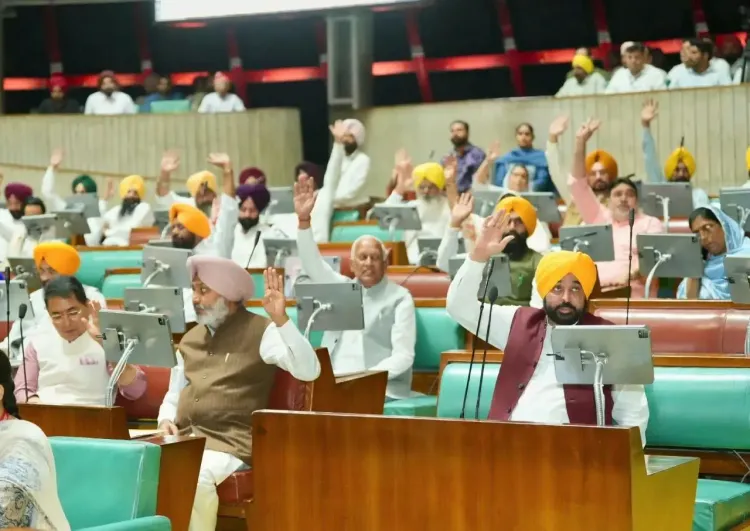
The Punjab Vidhan Sabha unanimously passed a resolution on 23 October 2026 demanding constitutional protection of voter rights under the Special Intensive Revision (SIR) process.
The resolution was moved by Finance Minister Harpal Singh Cheema and calls for transparency and accountability in electoral roll revisions.
Cheema cited Articles 324, 325, and 326 and invoked Babasaheb Ambedkar's constitutional legacy on universal adult suffrage.
The resolution demands an impartial inquiry into reported large-scale deletion of voter names, with specific references to controversies in Delhi and other states.
Copies of the resolution will be sent to the President , Prime Minister , and Chief Election Commissioner Gyanesh Kumar .
The Punjab Vidhan Sabha on Friday, 23 October 2026, unanimously passed a resolution calling for constitutional safeguards to protect the voting rights of eligible citizens during the Special Intensive Revision (SIR) process for electoral rolls. The resolution was moved by Finance Minister Harpal Singh Cheema and also urged the Union government and relevant constitutional authorities to ensure transparency, impartial scrutiny of electoral roll discrepancies, and accountability in the election process.
What the Resolution Demands
Through the resolution, the Vidhan Sabha called on the Centre and constitutional authorities to guarantee the protection of voting rights, order an impartial inquiry into reported discrepancies in electoral rolls, and establish accountability wherever irregularities are found. Copies of the resolution will be forwarded to the President, the Prime Minister, and the Chief Election Commissioner (CEC) for appropriate follow-up action.
Cheema's Case on the Floor
Addressing the House, Cheema argued that protecting every eligible citizen's right to vote was essential to strengthening Indian democracy. He cited Articles 324, 325, and 326 of the Constitution as pivotal in supervising the electoral machinery, preventing discrimination in voter rolls, and guaranteeing universal adult suffrage.
Invoking the pre-Independence era — when voting rights were restricted to a select section of society — Cheema paid tribute to Bharat Ratna Babasaheb Ambedkar for laying the constitutional foundation for equal voting rights. 'The right to vote was a hard-won democratic privilege that enabled the poor, labourers, Dalits, minorities and all sections of society to participate equally in the governance of the country,' he said.
Concerns Over Electoral Roll Deletions
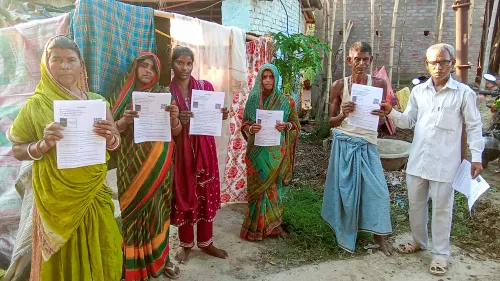
Cheema expressed concern over reports of large-scale deletions of names from electoral rolls and the exclusion of eligible voters, saying the SIR process had 'raised serious questions about the integrity of the electoral process in different parts of the country.' He noted past controversies surrounding electoral rolls in Delhi and other states, highlighting complaints that supporters of Opposition parties and marginalised communities had been selectively targeted.
He called for a thorough and impartial investigation into such complaints, asserting that any deliberate attempt to undermine the electoral process must invite strict criminal action under the law if established by evidence. 'Public confidence in democratic institutions could be maintained only by ensuring that no eligible voter was excluded,' Cheema said.
A Direct Critique of the Election Commission
In a pointed remark, Cheema called for an independent, transparent, and credible mechanism to examine reported irregularities in electoral rolls and scrutinise administrative conduct under Chief Election Commissioner Gyanesh Kumar. 'Institutional autonomy, neutrality and accountability of the Election Commission were indispensable to the functioning and survival of constitutional democracy,' he added.
The unanimous passage of the resolution reflects a broader political pushback by Aam Aadmi Party (AAP)-governed Punjab against the Centre and the Election Commission of India (ECI) over the SIR exercise. This comes amid mounting Opposition concerns across multiple states about the transparency of electoral roll revisions ahead of upcoming assembly elections. The Punjab resolution now formally places on record a state legislature's demand for federal accountability on voter rights — a notable escalation in the SIR controversy.
Point of View
However, is any concrete legislative remedy Punjab itself could offer: sending copies to the President and CEC is symbolic unless followed by judicial or parliamentary action. The deeper question — whether the SIR process systematically disadvantages marginalised voters — remains unresolved and demands independent verification, not just political resolutions.
NationPress
23 Oct 2026
Frequently Asked Questions
What is the Punjab Vidhan Sabha's SIR resolution about?
The resolution, passed unanimously on 23 October 2026, calls for constitutional safeguards to protect the voting rights of eligible citizens during the Special Intensive Revision (SIR) of electoral rolls. It urges the Union government and constitutional authorities to ensure transparency, impartial inquiry into reported discrepancies, and accountability in the election process.
What is the Special Intensive Revision (SIR) process?
The SIR is an exercise conducted by the Election Commission of India to revise and update electoral rolls, including adding new voters and removing ineligible entries. Opposition parties and several state governments have raised concerns that the current SIR round has led to large-scale and allegedly selective deletions of eligible voters, particularly from marginalised communities.
Who moved the resolution and what did he argue?
Finance Minister Harpal Singh Cheema moved the resolution in the Punjab Vidhan Sabha. He cited Articles 324, 325, and 326 of the Constitution, invoked Babasaheb Ambedkar's legacy on universal adult suffrage, and called for a credible, independent mechanism to examine irregularities in electoral rolls under Chief Election Commissioner Gyanesh Kumar.
Who will receive copies of the resolution?
Copies of the Punjab Vidhan Sabha resolution will be forwarded to the President, the Prime Minister, and the Chief Election Commissioner for appropriate follow-up action.
Why does this resolution matter beyond Punjab?
Punjab's resolution formalises at the state-legislature level a concern that Opposition parties have been raising across multiple states — that the SIR process risks disenfranchising eligible voters, especially from marginalised and minority communities. A unanimous state assembly resolution demanding federal accountability adds legislative weight to what had largely been a political controversy.